
Women in Motion Volume 16
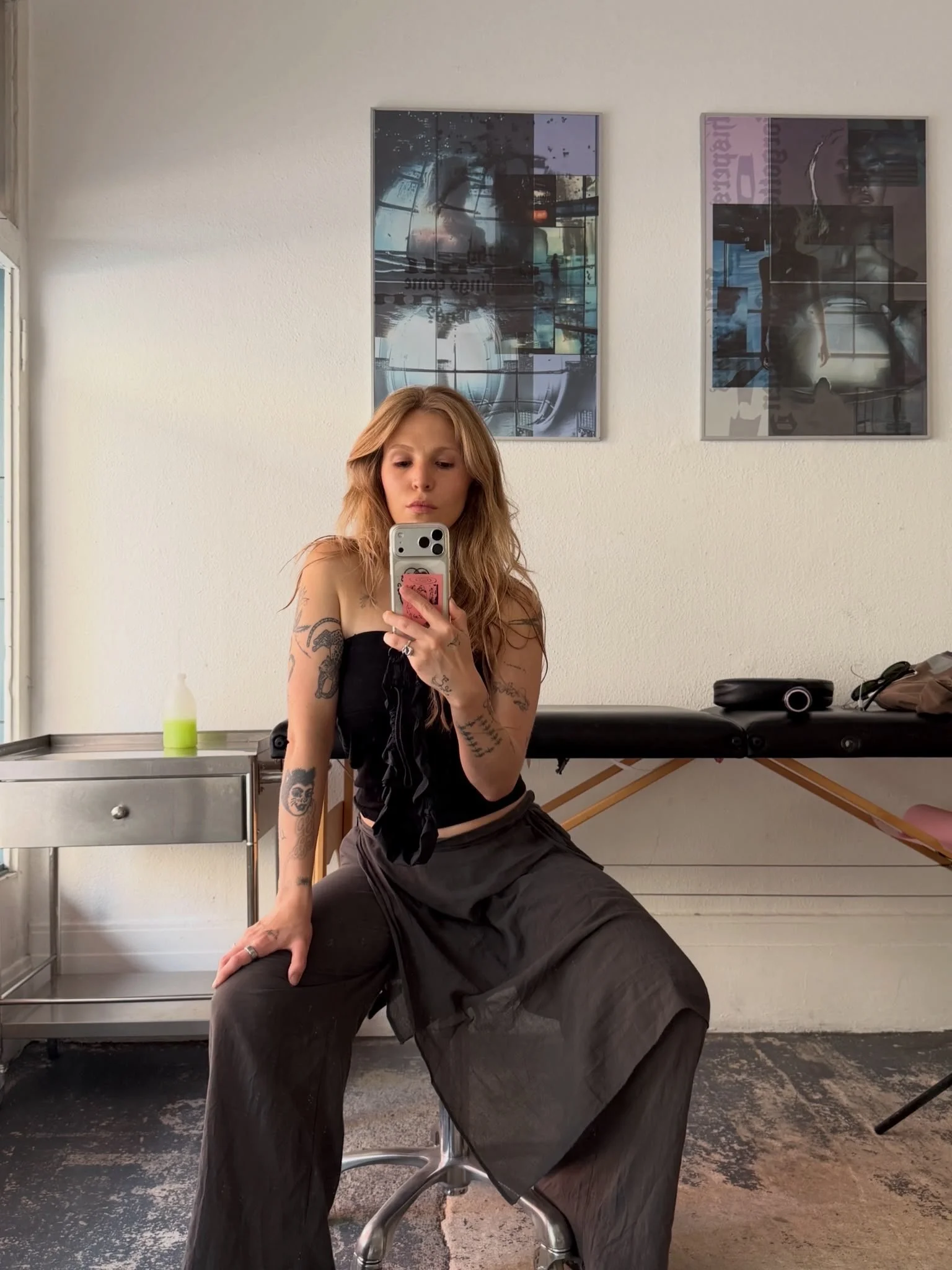
My first impression of Marta, a tattoo artist and graphic designer based in Berlin, came through her work: delicate, abstract shapes, soft shading, and something immediately recognisable even when each design was different. Speaking with her, I began to understand how much thought lives inside those details. She is funny and candid, quick to question herself, and just as quick to become excited about something new she is working on.
Her two crafts share a visual language. Typography was an early influence, gradually opening into shapes and textures that found their way onto skin. It is still changing. She speaks about finding a style as something that happens through drawing, trying, adjusting, and returning to the work over time.
What stays with me is the wonder she still feels about someone choosing her art for their body. A drawing on an iPad becomes something another person wants to carry forever. Alongside the practical demands of running a studio and the doubts that sometimes follow her home, that feeling remains.
We spoke about creative freedom, perfectionism, the care involved in working with another person’s skin, and the women changing tattooing - making their own work, finding their own clients, and opening possibilities for one another.
You studied graphic design before becoming a tattoo artist. How did those two paths come together?
I studied graphic design at the University of Arts in Poznań. My ex-boyfriend was a tattoo artist, and a lot of his friends were tattooing too, so I was around it quite a lot. I really loved the idea of having that kind of job.
Graphic design is great, but working as a graphic designer isn’t always amazing. Sometimes you have to do things that aren’t your style. Someone needs a designer, but they don’t necessarily care about your creative input.
With tattooing, once you develop your own style—and if you can find clients for it, which is obviously difficult—people come because they want your work. They care about what you think. That feels really good.
My ex-boyfriend taught me the basics, but mostly I learned from one of my best friends - Olga, whom I shared a studio with. She always had amazing knowledge of tattoing and working alongside her taught me a lot. At first, I just wanted to try to tattoo my friends. I wasn’t taking it that seriously yet.
Do you remember your first tattoo?
Yes, totally. It was on a friend of mine. She kept saying, just do it, do it on me! My boyfriend was there, so he could help if anything went wrong.
It was a tiny word in Polish: “nic,” which means “nothing.” So whenever someone asked what she had got tattooed, she could say, “Nothing.” That was the joke.
It was only three letters, but lettering is difficult. People think text tattoos are easy, and they’re really not. We’re so used to how letters look that you can see the tiniest mistake. And you’re doing it on a body, which isn’t straight or perfectly symmetrical.
I think it took me something like two hours. For three letters! She was brave. But we survived.
What made you decide to move to Berlin?
I was born and raised in Poznań. It’s not a tiny city, but at some point it felt like everyone knew everyone. The tattoo bubble, the graphic design bubble, the art university bubble—they all overlapped.
I felt like I couldn’t meet anyone new. I knew every little corner of the city. And I think, for me, I need new things around me to feel inspired.
I did a few guest spots in Berlin first. I was really worried, because there were already so many tattoo artists. You always feel like everyone is better than you and has more experience. I was thinking, why would anyone want a tattoo from me?
But people actually wanted the designs I was doing. In Poznań, the more abstract things were harder to sell. People would ask what they meant. In Berlin, people wanted something different. They were more open to it just looking a certain way.
I ended up having more clients than I thought I would, so I decided to move.
And you moved during the pandemic?
Yes, in 2020. Which was crazy timing.
The studios closed for months, and I had just moved, so I couldn’t get financial support. I basically had to figure out how to survive.
But at the same time, I met really great people. We became close because nobody had much to do. We spent so many days just hanging out in the apartment.
It was a strange time. Financially, definitely difficult. But some really good things came out of it too.
How did your graphic design background influence your tattoo style?
I think it was the biggest influence, honestly.
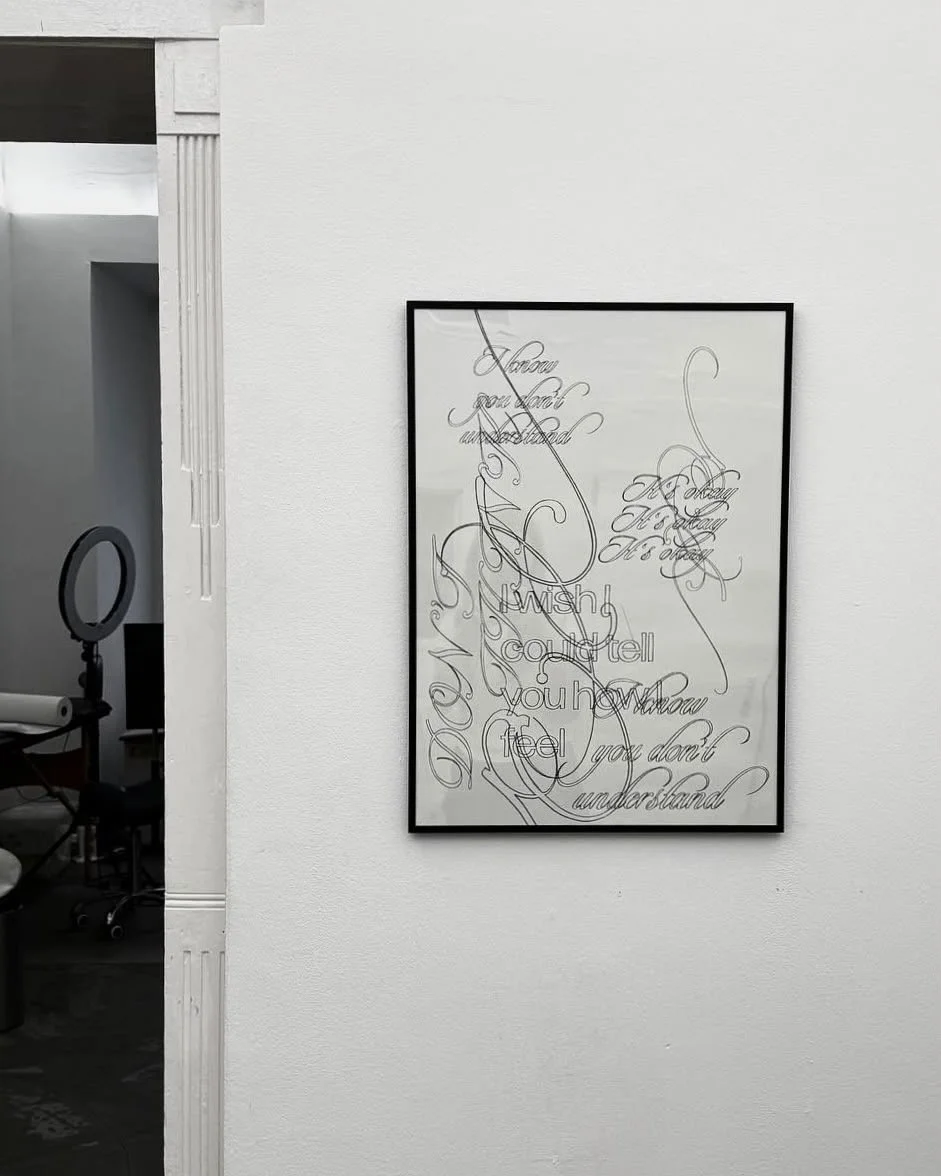
I was already using the tools from graphic design—working digitally, working with vectors—and I was really inspired by typography. I loved how type designers could make letters look so interesting.
I did a lot of text at first. When someone wanted a text tattoo, I would think, why would we use Times New Roman when there are so many amazing designers making such cool fonts?
I started working with type designers and buying licences to use their typefaces for tattoos, which was really fun.
Then it moved into abstract shapes. It started with very simple things: a couple of lines becoming a little wavier. I would twist them, stretch them, add something, move something somewhere else. These little elements could become so many different designs.
Then I started playing with texture—little horizontal lines, dots. It all kind of built up from there.
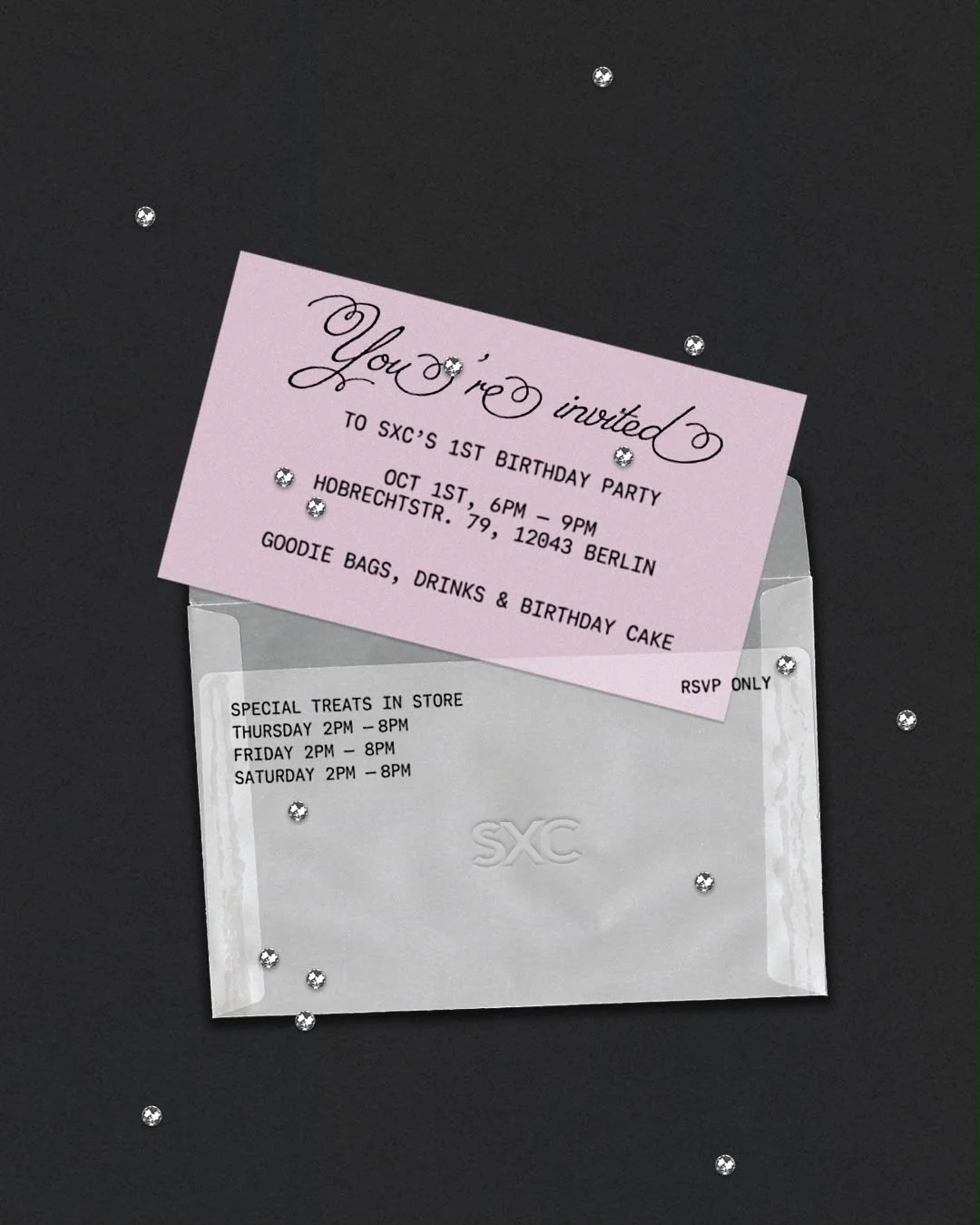
Did you ever feel that you had found your style, or is it still developing?
It’s definitely still developing. Finding inspiration isn’t really the problem for me. Staying with the same thing is more difficult, because I come up with new things quite quickly.
Sometimes I worry that I’m changing too much and that it won’t feel consistent anymore. But for me, it’s a pretty linear process. I don’t just jump from one completely different thing to another.
If you go back through my work, you can see where things came from. I change something, and then that leads to the next thing.
I hope people can still recognise that it’s me. That’s what I want.
How would you describe your work?
Definitely abstract. Definitely graphic.
I think when people see my tattoos and then find out that I studied graphic design, they’re not surprised. It shows.
Most of what I do is ornamental. It’s there because you like it and because it makes you feel good about yourself. Like wearing jewellery or choosing clothes you love.
And I want the designs to be unique. I want them to have a connection, to belong to the same style, but not to be the same thing over and over.
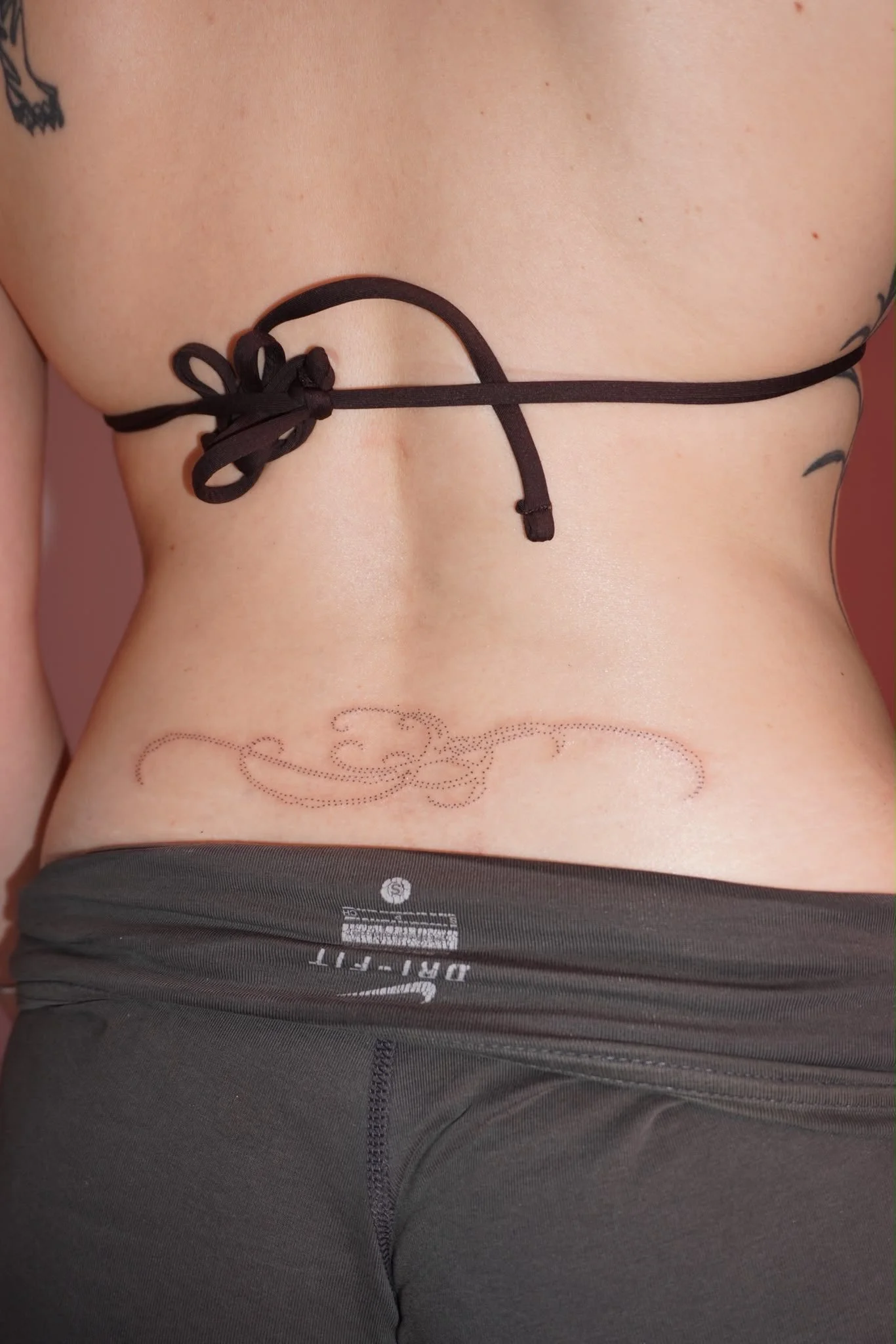
Your tattoos often look very soft, almost as though they blend into the skin. Is that something you work towards?
Yes, I really like that.
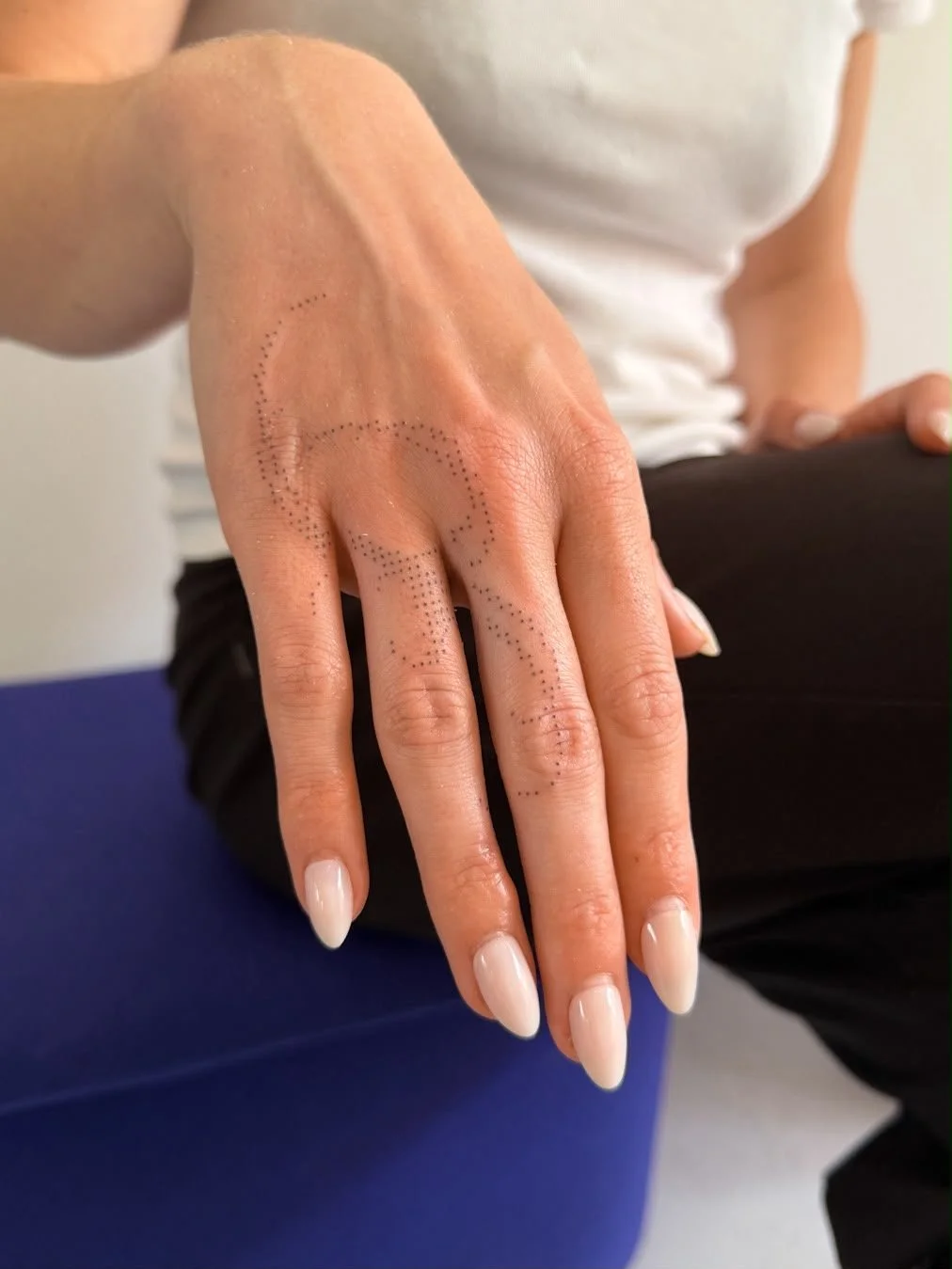
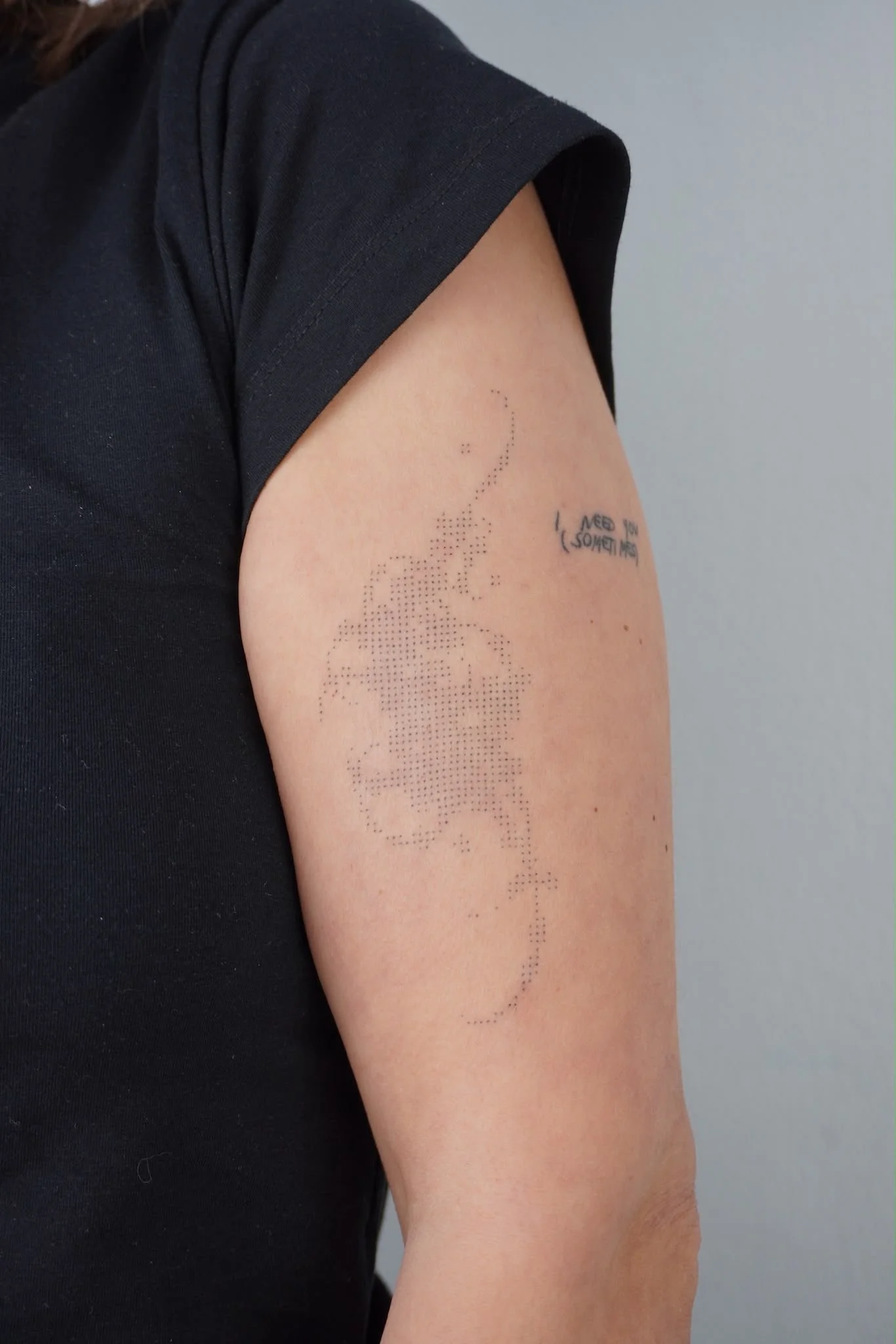
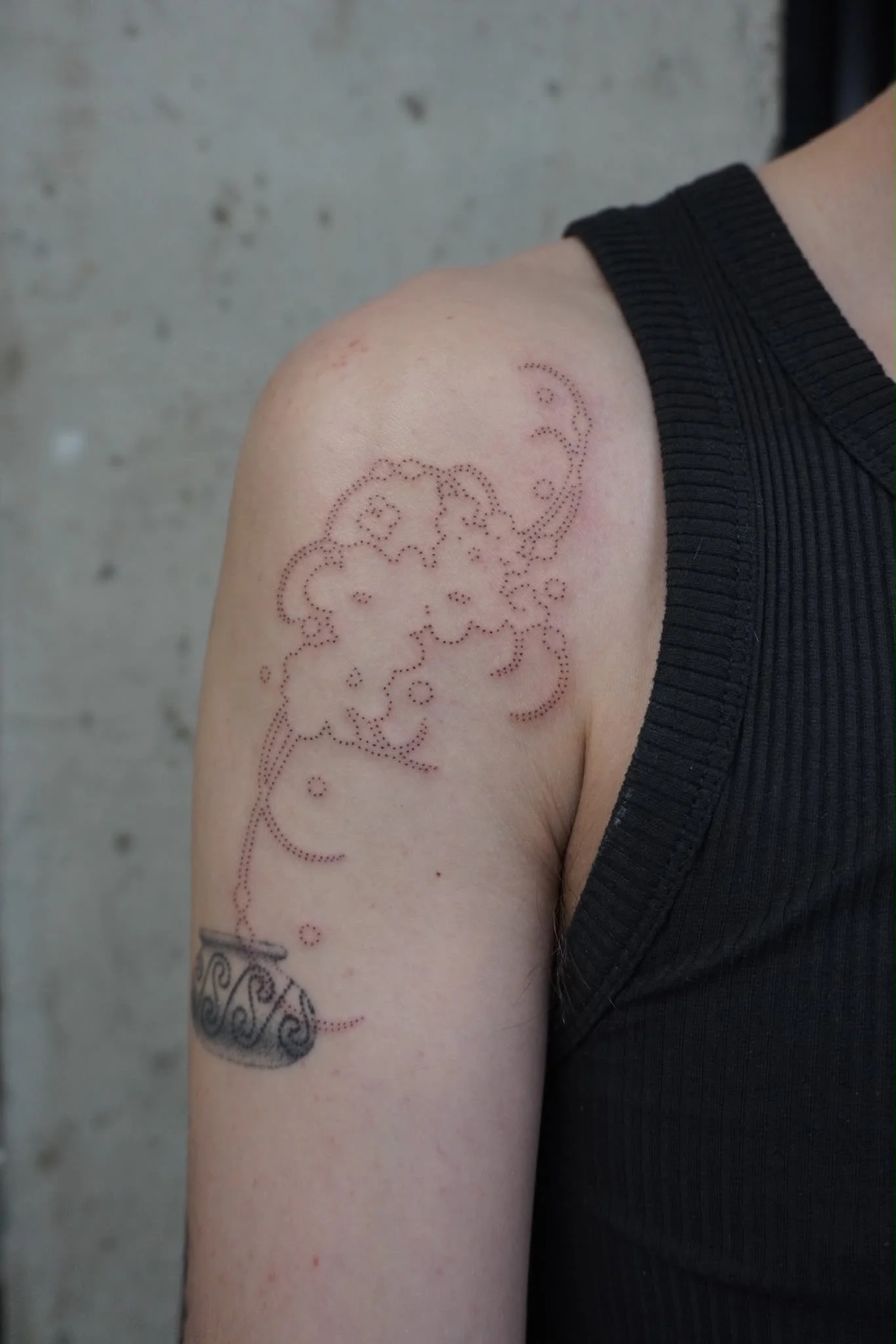
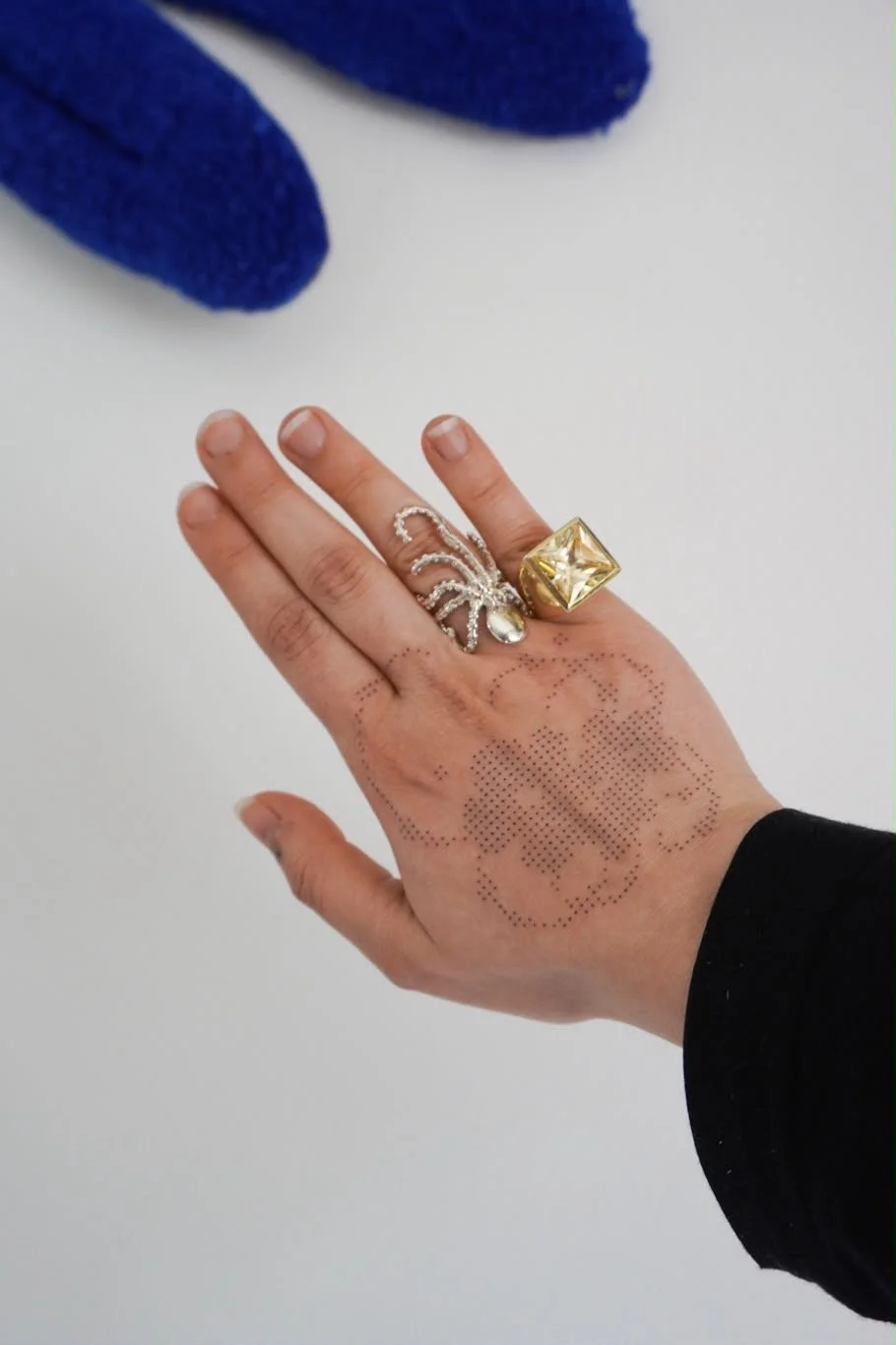
With halftone, the dots create shading. It’s obviously not a technique I invented, but people use it very differently.
I tend to make it lighter. I like having more of a transition, so it isn’t just a big block of dots. I spend a lot of time making it feel delicate and letting it blend into the skin.
That’s just what I personally like. If someone likes big black dots, go for it! But for my work, I love that softness.
I also sometimes use grey wash, which is diluted black ink. It can be really nice for something like a hand tattoo, where someone doesn’t want it to be so dark or so in your face.
And it’s interesting for layering tattoos too. You can have a darker piece underneath and something very light over it, so they work together in a different way.
Do you have favourite placements?
I don’t have one favourite, but I love arms. They’re a pretty basic placement, obviously, but you can do so much with them.
I like longer, organic shapes that wrap around the body. On an arm, something can show from the front and then continue around the back. It almost gives this jewellery feeling, like a permanent bracelet.
I also love hands. Especially when a design goes across different fingers or continues up the wrist. I think that works really well with my designs.
And symmetrical placements can be beautiful, like on the chest. But symmetry on a body is difficult.
What makes it difficult?
Bodies aren’t symmetrical! One shoulder might be lower than the other. One side might be wider. The things you expect to be in the middle aren’t always in the middle.
I recently did a symmetrical placement around someone’s hips, and her belly button was slightly to one side. You naturally look at a belly button and think, okay, that’s the centre. But it wasn’t aligned with the rest of her body.
So you have to work with that. The most important thing is that it looks right on the person. You can measure everything, but in the end it needs to work visually.
It’s really cool how different bodies are. Skin is such a strange medium when you think about it. It’s alive. It moves. It’s someone’s body.
It’s kind of crazy that we can do this at all.
What do you want people to feel when they wear your tattoos?
Good about themselves. I want them to feel hot and fun!
I think tattoos are such a good way to express yourself. Like clothes or accessories—it’s another way to show what you like.
I love the feeling after getting a new tattoo. I think that’s part of why people keep getting them. You get this new piece and you’re so excited about it.
Then, quite quickly, it becomes part of your body. You don’t think about it as much anymore.
I have tattoos on my back that I only remember when someone takes a photo of me. I’ll look at it and think, oh my God, right, I have that!
They can also become reminders of different moments in your life.
Yes, and I really like that.
One of my best friends gets tattoos when something important happens in her life. Sometimes something difficult. She got one when her grandmother died.
I think it’s an interesting way to remember things. It happened, it was part of your life, and you can mark it.
And some people get tattoos whenever they travel. It’s almost like a postcard. I think that’s really nice too.
Being a client yourself, what have you learned about the experience you want to offer?
I think it’s really important that you feel you can say no.
I’m such a people pleaser. Especially when I was younger, I would sometimes think, I don’t want to be difficult, I’ll just agree.
When you’re a young girl and someone has much more experience, you can feel like you should listen to everything they say. But it should feel like a collaboration.
I want my clients to be able to say they want something changed. We can make it smaller, try a different placement, put the stencil on again.
In the end, it’s going on your body, not mine.
What does the drawing process look like for you?
It’s quite intuitive now. I’ve done so many designs that my hand just kind of goes.
I love abstract work because you’re making something that doesn’t exist in the real world. You have to invent it. I really enjoy that process.
But I also have folders and folders of designs I’ve never published. Sometimes I work on something for so long that I can’t tell anymore whether it’s good.
And I can be very particular. I’ll change one dot or make a line curve a tiny bit differently. No one else would probably notice, but it looks different to me.
You mentioned perfectionism. What does that mean for you?
I think the word gets used a lot to mean that someone likes things to be perfect. But we all like it when things turn out well.
For me, it’s more about how you deal with a mistake and how much weight you put on it.
Especially at first, I wanted to quit so many times. I would make a small mistake, go home, and zoom in on the photo a million times. I’d think I couldn’t post it because everyone would notice and think I was terrible.
I was comparing myself to people who had been tattooing for years. And I’d only been doing it for a few months!
I still make mistakes now. They’re usually smaller, sometimes things nobody else would notice. But I notice.
Does it help you improve, or does it mostly make things harder?
Both, I think.
When I make a mistake, I really try not to repeat it. I learn from it. There’s always something I can do better or something new I can try.
I don’t want to think I’ve reached a point where there’s nothing left to learn.
But I remember a friend showing me a tattoo she’d made and saying how much she loved it. She was really proud of it. And I thought, wow, that’s so nice that you can feel that way about your own work.
I don’t usually show my friends something and say, look at this amazing tattoo I did today. In my head, there’s always something I could have done differently.
I’m working on that. And on accepting compliments. Sometimes people tell you they love your work, and you have to let yourself believe them a little.
What do people not see about being a freelance artist?
There are so many things around the actual work. Rent, taxes, insurance, accounting. Things a lot of my friends with regular jobs don’t have to think about.
And travelling for work can look very different from the outside. My dad will call and ask where I am—New York, Japan, somewhere else—and think I have this amazing life.
And it is nice sometimes! I love travelling. But usually those are work trips. I don’t always have much extra time.
When I actually go on holiday, I have to make sure I have enough money for everything that keeps coming out of my account. My apartment, my studio, all the other costs. Nobody pays me while I’m away.
The work-life balance is difficult too. You see an email on a Sunday and think, I should answer that on Monday. And then you answer it anyway.
What would you want another woman to know before starting tattooing?
I think it’s really great that more women are starting. The industry has changed so much.
There are more women tattooing, more styles, more spaces where you can get the kind of work you want without someone judging it for being too small or too feminine.
When I started out, the industry was heavily male-dominated. Women often gravitate toward lighter, more subtle tattoo styles that some men would dismiss as 'girly' or complaining that fine-line work isn't 'real tattooing' or that it will just fade away. It’s actually great to do girly tattoos, that often means your client based will also be female-based. Keep developing your style, whatever it is and try not to worry about the comments.
But you also have to think about your own safety. You can be alone in a private studio with someone you’ve only spoken to online. There’s touching involved, sometimes undressing. It’s very personal work.
Sometimes I’ve booked male clients when someone else would be at the studio, just in case.
I’m really happy more women are entering the industry. I think we’re making a difference. But your own comfort and safety matter too.
And what would you tell someone who is trying to find their style?
You have to draw.
Don’t expect to know from day one. It takes time. It’s okay to make mistakes, and it’s okay to need time to develop things.
It’s so easy to look at amazing artists online and think, I’ll do something like that. And of course you can be inspired. We all are.
But just making different versions of someone else’s work isn’t how you find your own thing.
For me, it came from trying something, changing it, and trying again. It took a long time.
If I compare my work now with the same time last year, I can see progress. You don’t always notice it while it’s happening, but it’s there.
Finally, what does “Women in Motion” mean to you?
I think it’s women getting into different fields and actually changing things.
In tattooing, it’s so visible. When I was getting my first tattoos, there were very few women tattooing in my hometown. And that wasn’t so long ago.
Now there are so many more. We’re creating our own styles, and there are more women coming to get tattooed too. My clients are almost all women, and I love that.
I think seeing another woman succeed makes it easier to imagine doing it yourself. You see her and think, I can do that too.
There used to be so much gatekeeping. Now there are styles and spaces that weren’t there before, and more women can find somewhere they feel comfortable.
I love seeing that change. I think it’s really, really great.
