
vol xI: set designer alma
Women in Motion Vol 11
Showcasing Alma Josefine Thiele
Alma’s work is about creating worlds. Sometimes they exist on a theatre stage, sometimes within the frame of a film, and sometimes in an exhibition or music video. What connects them is her interest in how spaces can carry a feeling, shape a story and change the way we experience what is happening within them.
Her path into this world was not completely straightforward. She started with architecture, found her way into theatre and film, and built much of her practice by saying yes to opportunities, learning while doing and following the projects and people that felt right.
How would you describe what you do?
I think spatial designer probably describes it best. What I find exciting about my work is how broad it is, because you can work in theatre, film or exhibitions, but in the end it is always about shaping spaces and creating a certain atmosphere.
And space can mean many different things. It can be an interior or an exterior, but it can also be understood in a broader sense, even as a social space. I think that openness is what I like about it most.
Do you remember where that interest in spaces started?
I think very early. I sometimes have this theory that, as adults, we eventually return to the things we naturally did as children. When I was young, I was always drawing spaces, imaginary houses and little worlds.
My parents recently gave me a box with old drawings, and there were all these caves and places I had invented, where I would imagine who lived there and what their surroundings looked like. So I think that interest was always somewhere inside me.
Then puberty happened, I finished school and suddenly had no real idea what I wanted to do. I took a year off and eventually reached the point where I thought, I just have to start somewhere. Architecture felt like the most logical choice at the time.
Did architecture feel like the right place for you once you started?
Not completely. I spent quite a large part of my studies with this feeling that it was not exactly what I wanted to do.
There was always this inner conflict of, I started this now, so should I finish it? Do I actually want to do this? Architecture is also incredibly time-consuming, so for a while I was caught between the degree itself and this constant question of whether it was really the right path for me.
But something very valuable happened alongside it. While studying, I slowly started building a second world for myself.
Was that when theatre first came into your life?
Yes. I think it was around my second year of university. I met a theatre director at a party, and at that point I did not even really understand what that job meant. She was working in Weimar and told me, “Alma, I have the feeling this could be the right thing for you.”
She invited me to work with her, and I spent two months in Weimar. After that, I started working in theatre during my semester breaks, and later film sets came into the picture as well.
It became a huge hustle because I was doing all of this alongside my degree, but at the same time it was incredibly fulfilling because it expanded the field I had originally entered through architecture and showed me how many other directions it could lead to.
Did you immediately feel at home in theatre?
The theatre world is a very particular cosmos, and if you have never been part of it before, it can be difficult to understand how everything works. It is a hierarchical world, as a lot of working fields are, that at first you can feel quite thrown into. Someone really taking you by the hand is god sent, because such a different language is spoken here.
I remember feeling like I was physically in the room, but in the beginning I did not really understand what people were talking about and how the social dynamics worked. That was exhausting for me because I am someone who really likes to understand the spaces I am in, not only physically but socially as well.
After those two months, we had a beautiful premiere, but I still came back to Berlin thinking, I do not know if I want to be part of this world. So for a little while, I left theatre alone.
And then film came in almost by chance?
Yes, again through someone I met. I was working in a jazz bar in Berlin called A-Trane, and I met someone there who was studying at film school.
One evening, I told him that I would really love to experience a film set at least once. Some weeks later, he told me they were about to start shooting a graduation film and asked if I wanted to join.
I spoke to the director, we met, and suddenly I was part of the project. I remember being incredibly nervous because I could feel that this might open another door for me.
What was different about that first film set?
It felt completely different. I joined as an assistant in the set design department and was involved from the beginning of the production, and what immediately struck me was how collaborative everything felt.
There were so many people working together, but it still felt very much on eye level. Everyone wanted to create something together, everyone was curious about what the others were doing, and you could really feel how one creative idea became stronger through all these different people contributing to it.
Of course, part of that probably came from it being a student film. There was less hierarchy and more room to experiment. We had shooting days that lasted thirteen or fourteen hours, and somehow people were still joking around while someone walked through the set handing out cheese toast.
Everyone was exhausted, but there was this feeling that people genuinely wanted to be there because they believed in what they were making. That energy was incredibly motivating.
Was that also the moment when you realised that you could actually do this?
Yes, and that was probably one of the most encouraging parts. On the third day, one of the cinematographers came up to me and told me he thought I was doing a really good job. Then he asked if I wanted to work on his film as well.
From there, it developed almost entirely through recommendations. Someone would work with me, pass my number on to someone else, and then another project would come along. That word-of-mouth culture is incredibly strong in this field.
You eventually returned to theatre. What drew you back?
I talked to the head of design at the Schaubühne in Berlin, explained a little about my background and said that I would love to work there. We met, and that became my way back into theatre.
I was working in a very small team and ended up covering quite a few different areas throughout the production. At times, I was assisting the director, Milo Rau.
One thing I really value about this profession is that you constantly meet very different personalities. You observe how people work, how they enter a room, how they communicate and what kind of energy they bring with them.
I think you take little parts of those encounters with you. They somehow become part of your own way of working and even part of your own identity.
What feels different about designing for theatre and film?
The biggest difference is probably the way space is seen. In theatre, you usually have a frontal situation, so the audience is sitting on one side and looking into this kind of box where everything happens.
Of course, you can change the space through projections, moving elements or different transformations, but the audience is still seeing the whole stage space as a space.
Film works very differently because you are building for the frame. Sometimes what looks like a complete room on screen is actually just one wall, a lamp and a very carefully composed camera angle. Everything outside that frame might simply be equipment, lights and twenty people standing around.
So you have to learn to think in fragments. You are not necessarily creating an entire room. You are creating exactly the part of the room that the camera needs to see, and I find that incredibly fascinating.
Has that changed the way you watch films yourself?
Completely. Once you have spent enough time behind the scenes, especially on film sets, you start watching films with a different kind of attention.
Suddenly I am thinking, That must have been incredibly difficult for the make-up department, or, How did they manage that camera movement? You start seeing all these technical decisions that you probably would not have noticed before.
Sometimes it is almost annoying because you cannot switch that part of your brain off anymore, but at the same time it gives you a much deeper appreciation for how many people and how much work are behind a single image.
Do you feel like you have to choose between theatre and film?
Right now, I feel very connected to theatre. I am really looking forward to the production I am starting at the Deutsches Theater, and at this moment it feels like the right place for me to be.
But I do not think it necessarily has to be one or the other. Film is something that can also happen quite spontaneously, and I can imagine moving between both in the future.
For now, I am leaving that completely open.
You have also worked on music videos. What do you like about them?
I love music videos. They are probably one of my favorite things to work on because it allows so much freedom.
In a narrative film, I sometimes think of set design as being a kind of midwife for the story. The story already exists, and your job is to help give it a visual and physical form.
With a music video, you can often be much more focused on atmosphere. You are there for the feeling, the aesthetic and the world around the music. It does not necessarily have to tell a clear story. It can simply create a visual language that works together with the song and becomes a kind of a “Gesamtkunstwerk”.
Because I am also very interested in music and make music myself, that intersection feels especially exciting to me.
How does a visual world like that begin?
Usually, everything starts with one idea. Someone has a song and maybe already a rough image or feeling in mind, and then the question becomes, How can we translate this visually?
From there, you start bringing people into the process. You might have someone responsible for costume, someone for make-up, set design, cinematography and, of course, the director.
Then everyone comes together and starts defining the aesthetic world of the project. For me, it is really important to make that world as clear as possible quite early on.
If we decide, for example, that the costumes are all blue, then maybe I build a yellow wall. The different departments should respond to one another, and the closer everyone works together at that stage, the stronger the final visual concept becomes.
Is there a project that you feel especially connected to?
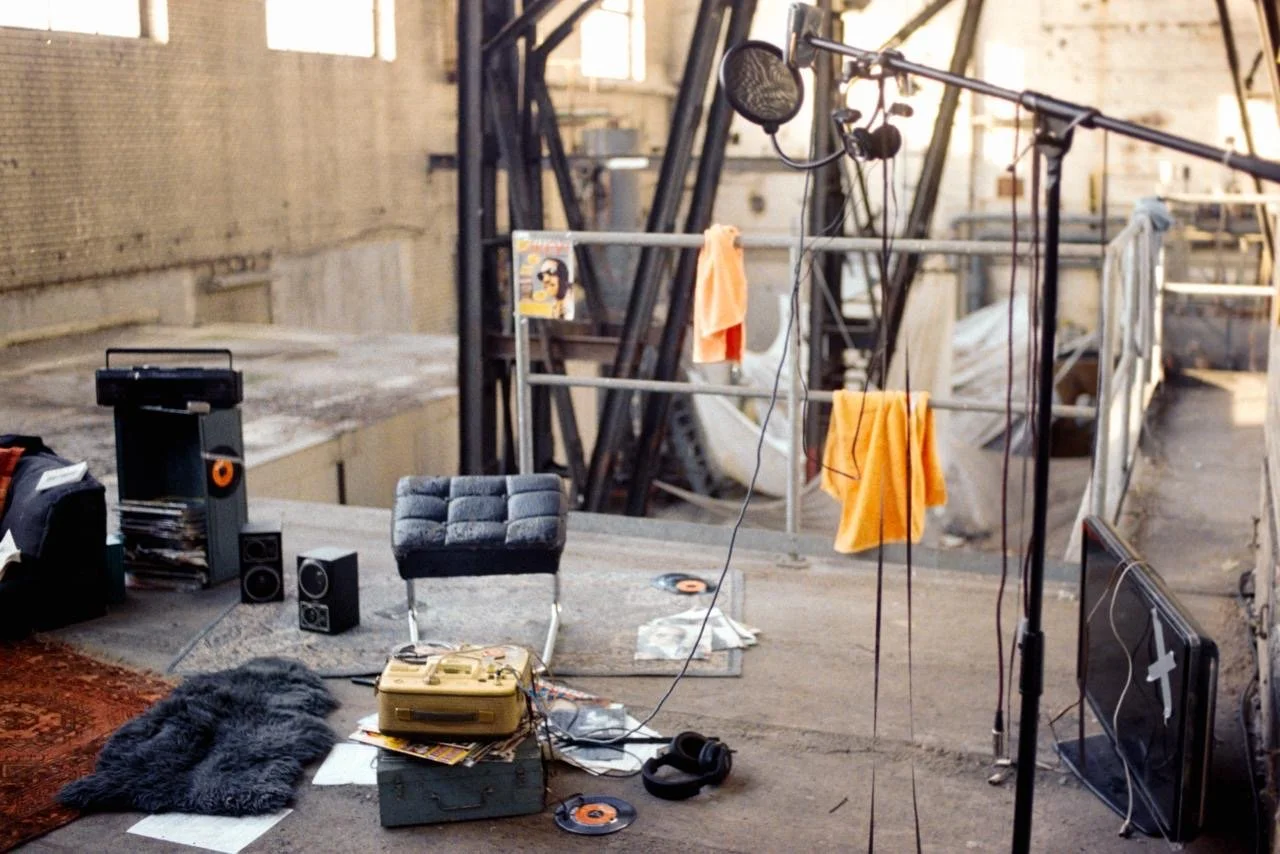
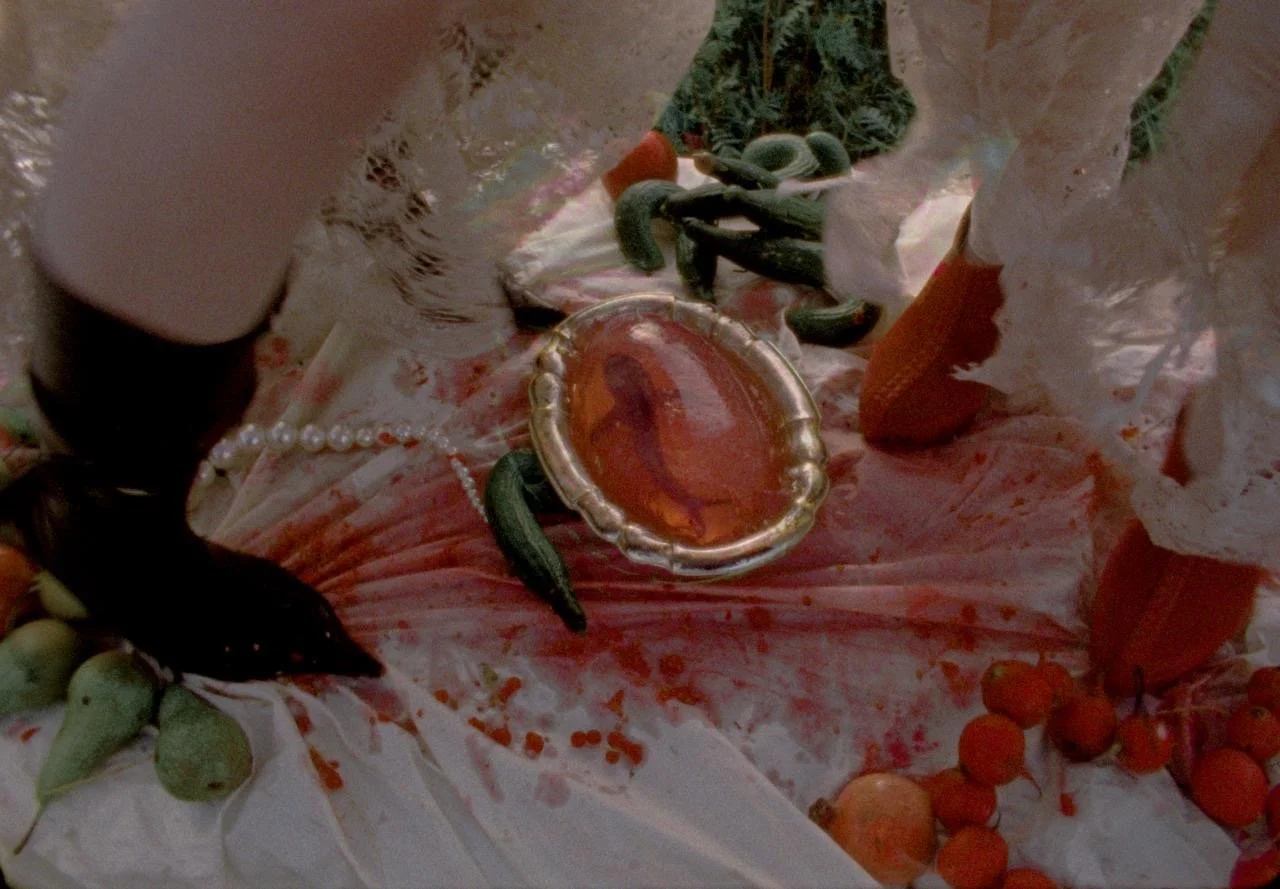
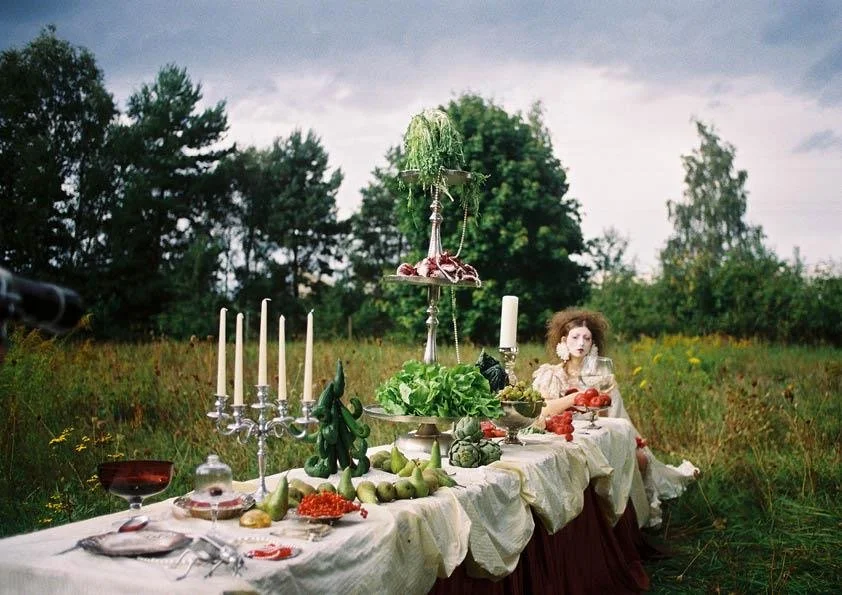
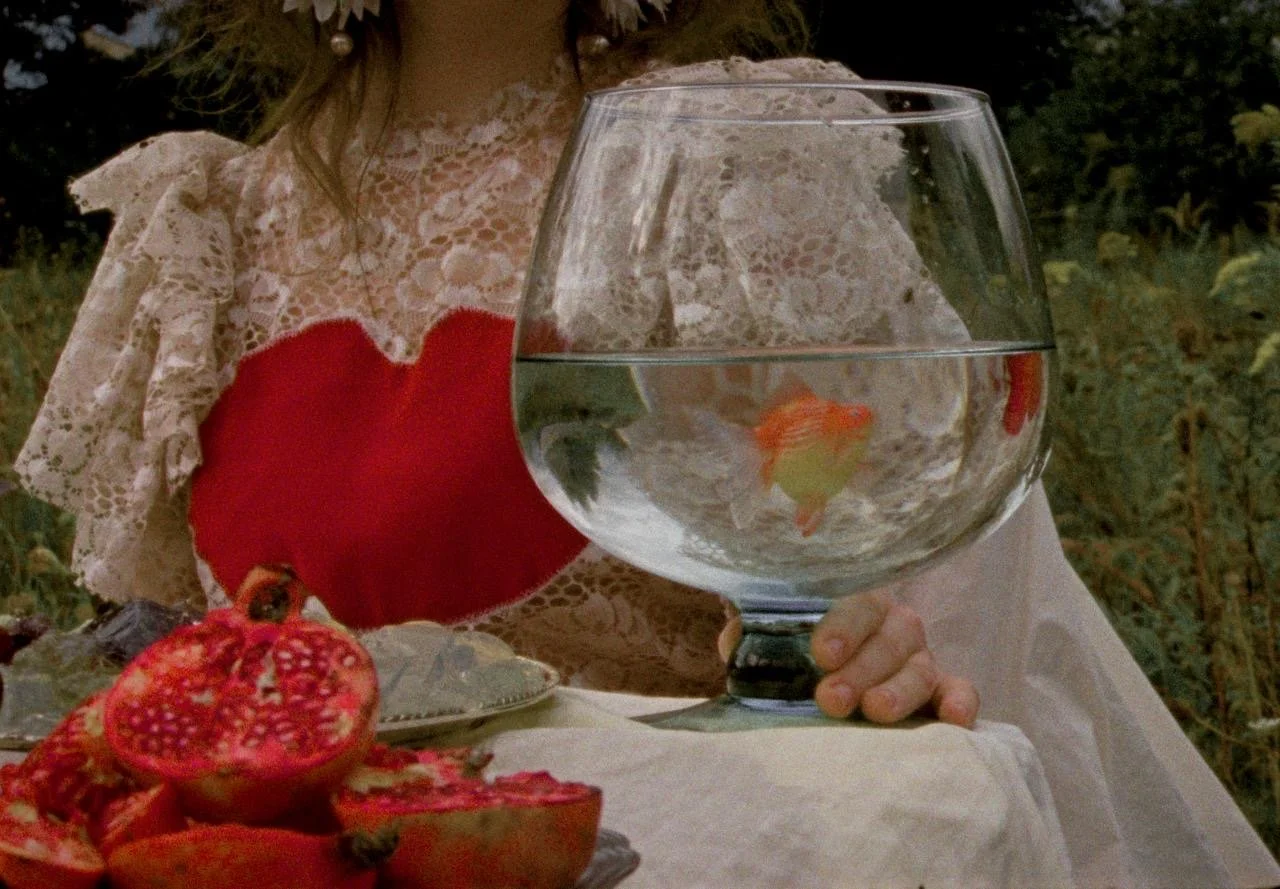
There are two film projects that immediately come to mind. One of them is Spit It Out, a music video I worked on with Lail & Lomar.
The concept was inspired by Alice in Wonderland, and once we had that idea, everything started growing from it. That is one of my favourite parts of the process, because you begin with one visual direction and suddenly start seeing ordinary objects differently.
I remember walking through a market and looking at vegetables thinking, This could look incredible on the table. A cabbage could suddenly become almost like a flower. We made a jelly cake, found strange little objects at flea markets and kept adding things that somehow belonged to this world we were creating.
At some point, you become completely absorbed in it.
Was there another project that stayed with you?
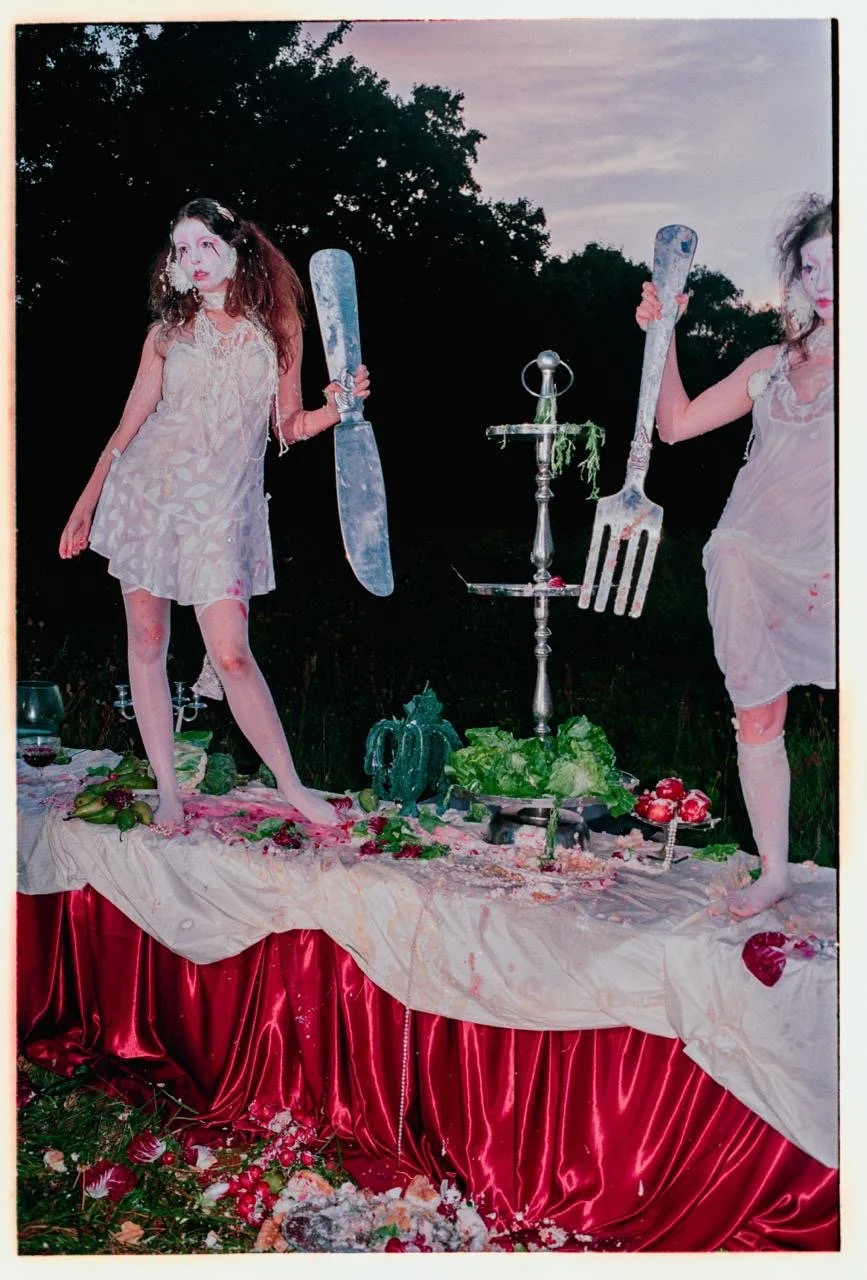
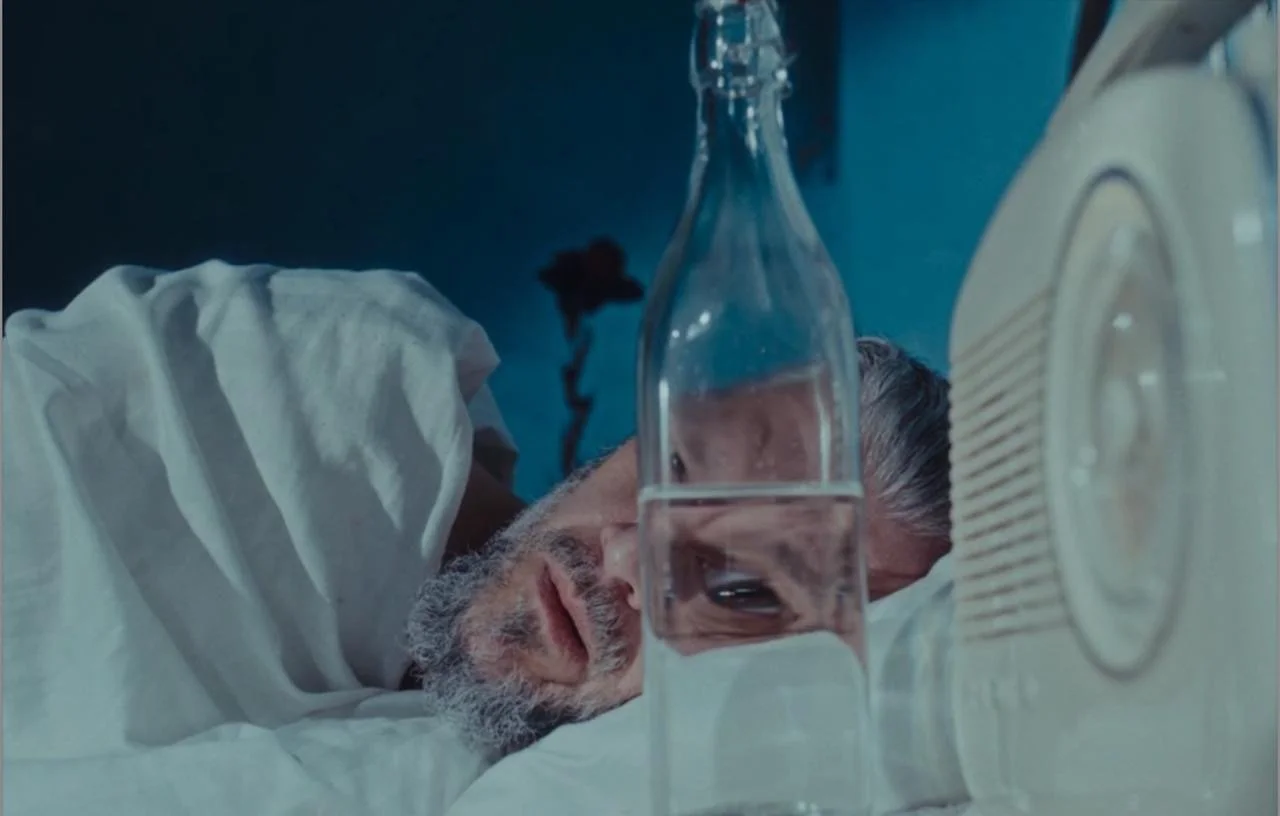
Yes, another music video, this time for the Vianova Choir in Munich.
I got asked about a week before the shoot while I was on holiday in Italy, so it was all very spontaneous. Then they told me something that is basically every set designer’s dream: there was a prop warehouse in Hamburg and I could choose whatever I wanted from it.
Usually, you are constantly thinking about the budget and asking yourself what is actually possible. This time, they basically said, We have two vans. Take what you need.
So of course I said yes.
What kind of world were you creating for that video?
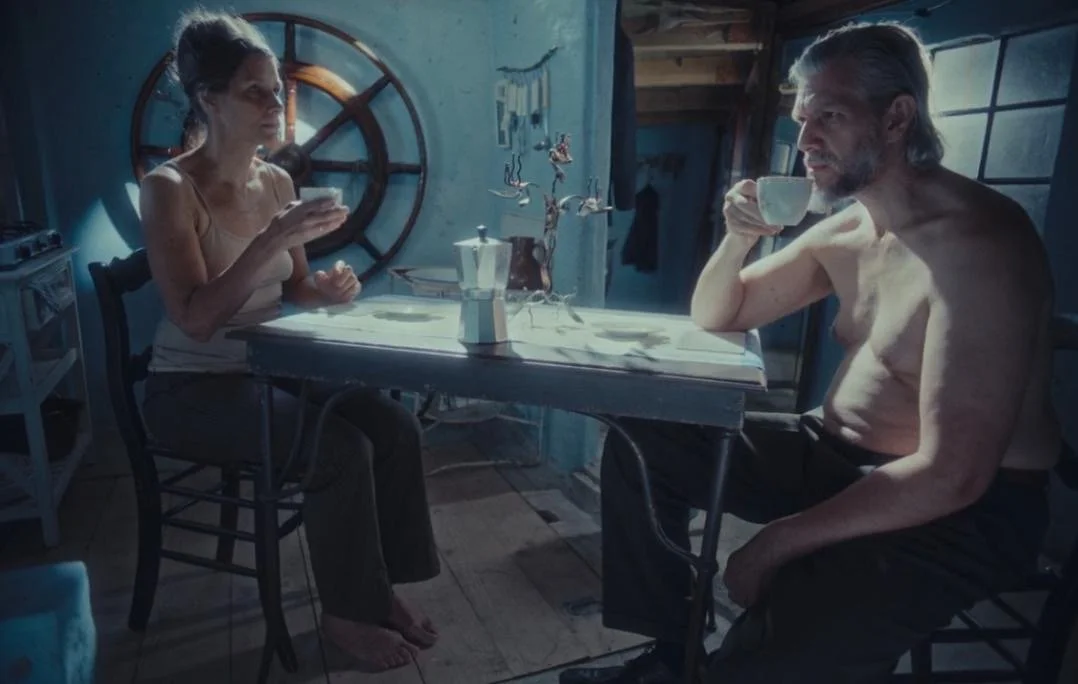
The project was called Seewetter, and the idea centred around an old fishing couple living in a very small house.
As the video continues, everything becomes more surreal and absurd, and eventually the couple is confronted with this almost catastrophic flood.
The room we filmed in was completely empty when we arrived. Everything you see in the final set came from what we selected in that warehouse.
That is something I find incredibly satisfying about set design. You walk into an empty room, bring all these individual objects into it, and suddenly it becomes a place with its own history and atmosphere.
Does it feel like you are creating a world for a story that already exists?
Definitely. That is why I sometimes describe set design as being a kind of midwife for a story.
The story already exists, but you help give it an aesthetic and physical form, and the two really depend on each other. A beautiful set cannot save a bad story, but at the same time, the way a space is designed can completely change how a story feels.
I think I have always had this desire to create worlds. Even as a child, I was imagining places and the people who might live inside them, and I still live quite strongly in fantasy worlds myself.
So there is something very natural about getting to do that as a profession, taking an empty space and asking, What could exist here?
What have you learned through all these different productions?
I think one of the biggest things I learned is how important it is to agree on a clear concept before you start.
That word, agree, is really important because all of this is such collaborative work. The clearer everyone is about the direction, the better the project becomes.
And from that comes probably an even bigger lesson: communication is everything. Good communication within a production makes such a huge difference, and I think that is something I have taken with me far beyond just this profession.
What would you tell someone who sees your work and thinks, “I would love to do that too”?
Take every opportunity you can in the beginning, and do not underestimate how important the social side is.
If you finish a production and people ask if you want to go for a drink afterwards, and you genuinely enjoy being around them, go. Not because you have to force yourself to network, but because relationships matter so much in this field.
I also think it helps to keep putting yourself into spaces where things are happening. I went to a lot of premieres, for example, and sometimes you might go somewhere alone and think, Am I trying too hard right now?
But I think you should not be embarrassed by that. If your passion brings you into a room, then be proud that you got yourself there.
You do not have to know exactly how to fill that space yet. Just being there, talking to people and staying open can lead to something, and when an opportunity comes, take it.
So there is also something about not being afraid to embarrass yourself a little?
Definitely. I think being afraid of looking too eager can stop you from doing so many things.
Sometimes you just have to show up. You might go to an event alone, introduce yourself to someone or ask if you can be part of something without knowing what will happen.
That can feel uncomfortable, but I would much rather follow something I am genuinely excited about than hold myself back because I am worried about how it looks.
And finally, what does motion mean to you
For me, motion is very connected to constantly moving toward something.
I have a very productive way of living, which is not always necessarily healthy, but there is usually some kind of vision that I am moving toward. And that means movement quite literally too, moving from one project to another, from one conversation to another, going outside, meeting people and experiencing things.
But I do not think motion should only be about work. It can also mean dancing, learning, following curiosity or simply doing things that make you feel alive.
For me, it is about staying open, staying curious and staying in motion.
Want to keep up with Alma? Below, you can find links to her projects and her social media.
vol x: occupational therapist ida
Women in Motion, Volume 10
In Conversation with Ida
Ida and I first met at a dinner organised by a friend of mine, who often brings women from different circles together around one table. It was a summer evening last year, and my first impression of Ida was how effortless she seemed. Her sense of style immediately stood out to me, but even more than that, she had a presence that made me curious about her. As we began talking, I discovered how many different interests and perspectives exist behind her and her work as an occupational therapist.
How did you first find your way into occupational therapy?
I enjoyed being around people and found it easy to connect with them, so it somehow always seemed natural that I would eventually work in a social field.
When I graduated during the pandemic, I suddenly had to decide what I wanted to do next. I came across occupational therapy for the first time. Before that day, I had never even heard of it.
The woman presenting the programme was incredibly enthusiastic about her work, especially within geriatrics. The way she spoke about it immediately drew me in. I had always loved spending time with my grandmother and her friends, and for a long time, I even imagined opening my own retirement home one day.
I often felt that residential care was discussed as though moving into a home meant losing your independence, personality and enjoyment of life. I wanted to imagine something different. That interest, combined with the enthusiasm of the woman I met that day, ultimately convinced me to study occupational therapy.
For someone unfamiliar with it, how would you explain occupational therapy?
Occupational therapy is about helping people become as independent as possible in their everyday lives. What that means can look completely different from one person to another.
Someone may need support returning to daily routines after an illness or injury, while another person may struggle with planning, concentration, motivation or completing tasks. The work can involve physical rehabilitation, mental health, neurology, paediatrics or geriatrics. Our focus is strongly connected to everyday life: What does this person need or want to be able to do, and how can we help make that possible again?
What was the beginning of your education like?
I began my studies during the pandemic, so almost everything initially took place online. Occupational therapy is such a practical and interpersonal profession, so learning about it entirely through a screen felt very disconnected.
Once the practical internships began, the subject became much more tangible. The programme introduced us to many different areas, including anatomy and physiology, paediatrics, neurology, orthopaedics, psychiatry and geriatrics.
What did those different internships teach you about the kind of therapist you wanted to become?
They showed me very clearly how strongly the environment and the people within it shape the work. A field can sound interesting in theory, but the atmosphere of a workplace, the way a team communicates and how patients are treated can completely change the experience.
Some internships were inspiring, while others showed me approaches I did not want to repeat.
At the same time, working in different settings taught me that there is no single type of occupational therapist. The profession can be shaped in many ways, and I began to understand that I did not have to fit into one particular image in order to belong within it.
Did you ever question whether occupational therapy was the right path for you?
Definitely. There were moments during my studies when I sat at the kitchen table with my parents and said that I could not continue because I was no longer sure whether the subject interested me enough.
I had always assumed that being a social person meant I needed to work in a social profession. At some point, I began questioning that.
I also struggled with the expectation that work should be a calling and that I should identify completely with my profession. I like being an occupational therapist and believe in the value of the work, but it is not the only thing that defines me. For me, it is also employment—a profession I chose and trained for, but not my entire identity.
In the end, I decided to complete the degree. Looking back, I am incredibly grateful that I did.
What happened after you completed your degree?
After graduating, I moved to Milan for three months to take an Italian course. I had studied Italian at school without ever really learning it, so I felt that I owed it to myself to try again. I cannot say that I became fluent during those three months, but I had a wonderful time.
When I returned, I had to decide whether I wanted to move to Berlin or Vienna. I had completed several internships in Berlin and already knew the city well, while my sister lived there. My brother lived in Vienna, and I had also spent a few months there when I was younger.
Eventually, I chose Vienna. It felt a little more manageable and closer to home while still giving me the experience of living somewhere new. I initially shared a room with my brother while looking for work, which was intense, but also surprisingly fun.
Which areas of occupational therapy did you encounter when you began working?
One of the settings I explored was a correctional facility. Occupational therapy there can involve helping people maintain or relearn everyday skills through activities such as cooking, creative work or practical group sessions. After spending a long time in prison, even ordinary routines can become unfamiliar.I found the field extremely interesting, but also emotionally intense.
I eventually began working at a rehabilitation centre in Vienna. I started with only a few days and gradually increased my hours.
What does your work at the rehabilitation centre look like today?
I work primarily within mental health, but I also support people living with Long Covid and ME/CFS. The needs can be very different, but the focus is always on how someone can navigate everyday life with the energy and abilities available to them.
Within mental health, occupational therapy may involve developing routines, creating structure or finding ways to begin tasks. With Long Covid or ME/CFS, the work is often about managing limited energy and avoiding doing too much at once. Many people are still left alone with these conditions because there is so little public understanding and no simple solution.
The work requires a great deal of flexibility. You cannot arrive with one fixed method and apply it to everyone. You have to understand where the person is at that moment, what matters to them and where you might be able to connect.
Why is it important to you not to define yourself entirely through your profession?
I have always been interested in many different things. Alongside my work, I completed a year-long photography course and also worked in social media for my brother. I often feel as though I need another project or some form of education happening at the same time.
For a while, that frustrated me because I thought I should have one clear passion and pursue it completely. I sometimes envied people who seemed to know exactly what their field was and could develop an incredible depth of knowledge within it.
Now I am beginning to see it differently. I am more like a collection of everything I have done and learned. This give me different ways of understanding people and the world around me.
What made you want to continue studying alongside your work?
When I am not learning something new, I quickly begin to feel restless. I had already considered doing a master’s degree the year before, but postponed it and continued looking at different universities and postgraduate programmes.
While working in healthcare, I became increasingly interested in the relationship between culture and medicine. I realised how rarely a person’s cultural and social context is properly considered within medical settings, even though it can influence how they communicate, understand illness, experience pain or approach treatment.
That eventually led me to a master’s programme called transcultural medicine and diversity care.. It allows me to continue working while studying, as the classes take place in intensive weekend blocks.
What does transcultural medicine mean to you?
For me, it means seeing every person within their individual cultural and social context rather than assuming that one approach will work for everyone.A person’s context is always individual and shaped by many different influences.
Healthcare professionals need to remain aware of this. If we only understand one way of communicating or responding to illness as normal, we will inevitably fail to reach many people. Transcultural medicine/diversity care is about becoming more reflective, recognising your own assumptions and creating care that is accessible to more than one kind of patient.
Have you experienced situations in which this awareness was missing?
Yes, especially during conversations within medical teams. I sometimes heard dismissive or stereotypical comments about patients with migration backgrounds, particularly when they expressed pain differently from what the staff expected.
Instead of asking why someone might communicate their pain in a certain way, their behaviour was sometimes treated as excessive or less credible. Those moments made me realise how quickly cultural differences can be turned into judgement.
Pain is always subjective, and people learn different ways of expressing and responding to it. The same applies to pregnancy, mental health, grief and many other experiences. Some people externalise what they feel, while others become very quiet. Neither response is automatically more legitimate than the other.
This is why it is so important to see people as individuals rather than relying on cultural stereotypes. Culture should be considered, but it should never become another label through which we make assumptions about someone.
What are you learning through the master’s programme?
The programme is extremely broad. Different organisations and specialists introduce us to topics across healthcare and the social sector, including women’s health, migration, homelessness, gender roles, violence and access to psychological support.
We learn from organisations that provide counselling or therapy in multiple languages, as well as services working specifically with women or men.
How would you like to use this knowledge in the future?
The purpose of the programme is not only to change how we work individually with patients. It is also about returning to our workplaces and creating greater awareness within our teams and institutions.
I would like to help make healthcare more reflective and accessible, particularly in relation to culture and gender. If we do not consider the realities of people with different backgrounds, we will continue designing systems that only work well for a limited group.
Do you ever recognise yourself in the strategies you teach?
All the time. Sometimes I am explaining a strategy during a workshop and suddenly realise that I should be using it in my own life.
It is funny to stand in front of a group and speak confidently about structuring everyday life, overcoming task paralysis or working with low motivation while knowing that I also postpone things. Having the knowledge does not mean that you always manage to apply it perfectly yourself.
That is also what makes the relationship between therapist and patient less one-sided than people might imagine. I learn something from almost every person I work with. A patient may describe a belief, habit or difficulty that makes me reflect on my own life for weeks afterwards. Therapy is not only one person giving something to another; something is always moving in both directions.
What interests you about meeting people within their own homes?
Home visits can reveal aspects of a person’s life that remain invisible within a practice or rehabilitation centre. In a clinical setting, it is easier to present a certain version of yourself or hide the things you struggle with.
Inviting someone into your home is much more vulnerable. You begin to understand how the person actually moves through their day, what their surroundings make easier or more difficult and where support could be most meaningful.
I find that closeness incredibly interesting. It allows occupational therapy to work directly with the reality of someone’s everyday life rather than only speaking about it in an abstract way.
How would you like to connect occupational therapy with your creative interests?
I am still discovering what that could look like, but I would love to combine photography with occupational therapy and use it to create more awareness around health.
At the moment, I work with many people living with Long Covid and ME/CFS. These conditions can profoundly change someone’s daily life, yet they are still poorly understood and often receive very little public attention. Many of the people affected spend much of their time at home and feel left alone with their experiences.
What does Women in Motion mean to you?
In occupational therapy, movement often means continuously adapting to the person in front of you. A therapy session rarely follows a perfectly straight line. You have to remain flexible and move with the process, almost like following a wave.
Sometimes you spend an entire session trying to find one small point of connection and leave feeling as though very little happened. The next time, the person may return and tell you that they tried something you discussed or experienced a moment of independence because of it.
For me, motion exists within those small changes. It is about meeting someone where they are, finding a place to connect and helping them experience self-efficacy in their own life. Even when progress is not immediately visible, something is often moving in the other person and in me as well.
Want to keep up with Ida? You can find links to her social media below.
vol ix: dancer ada leonie
Women in Motion, Volume 9
Showcasing Ada Leonie Sanderell
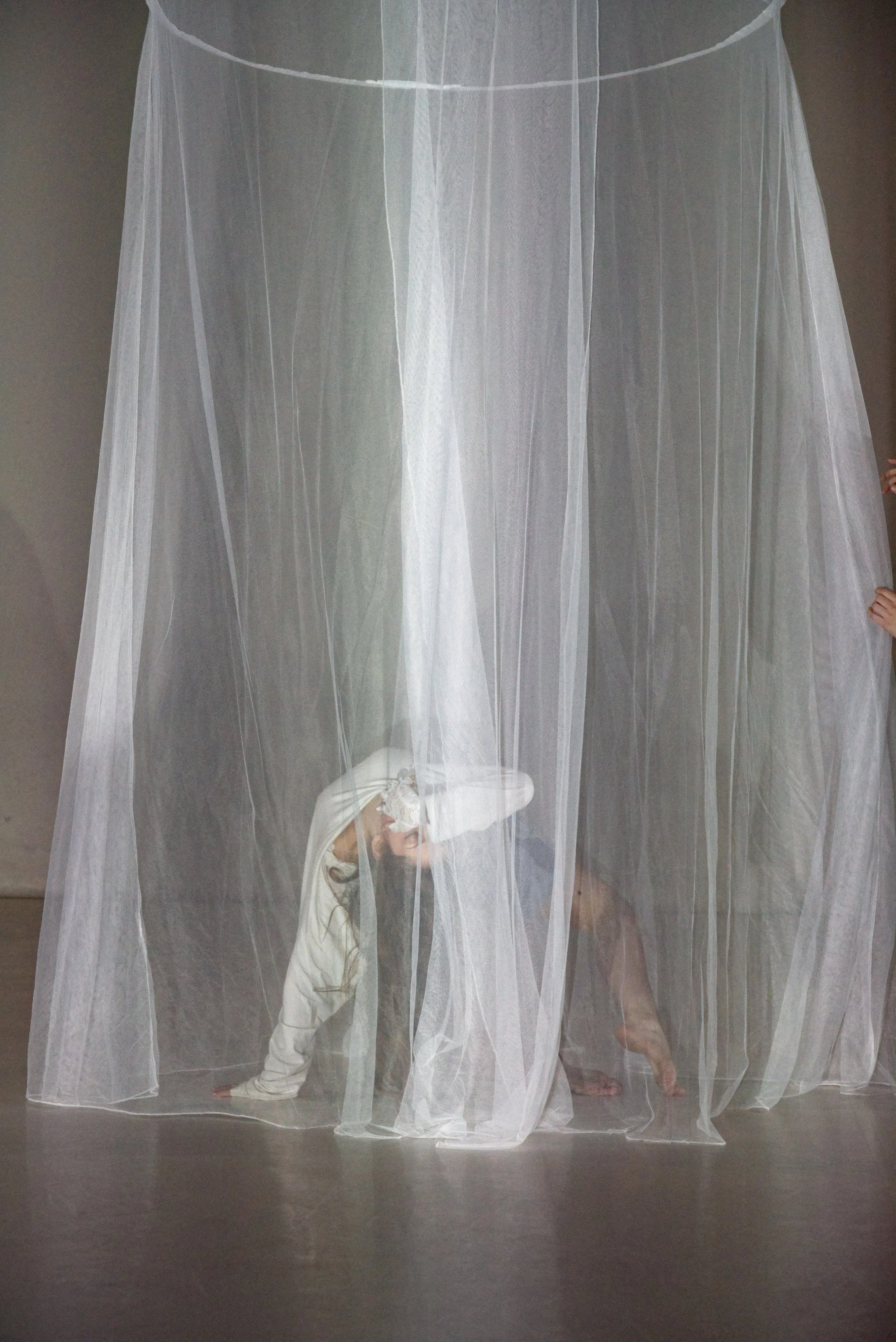
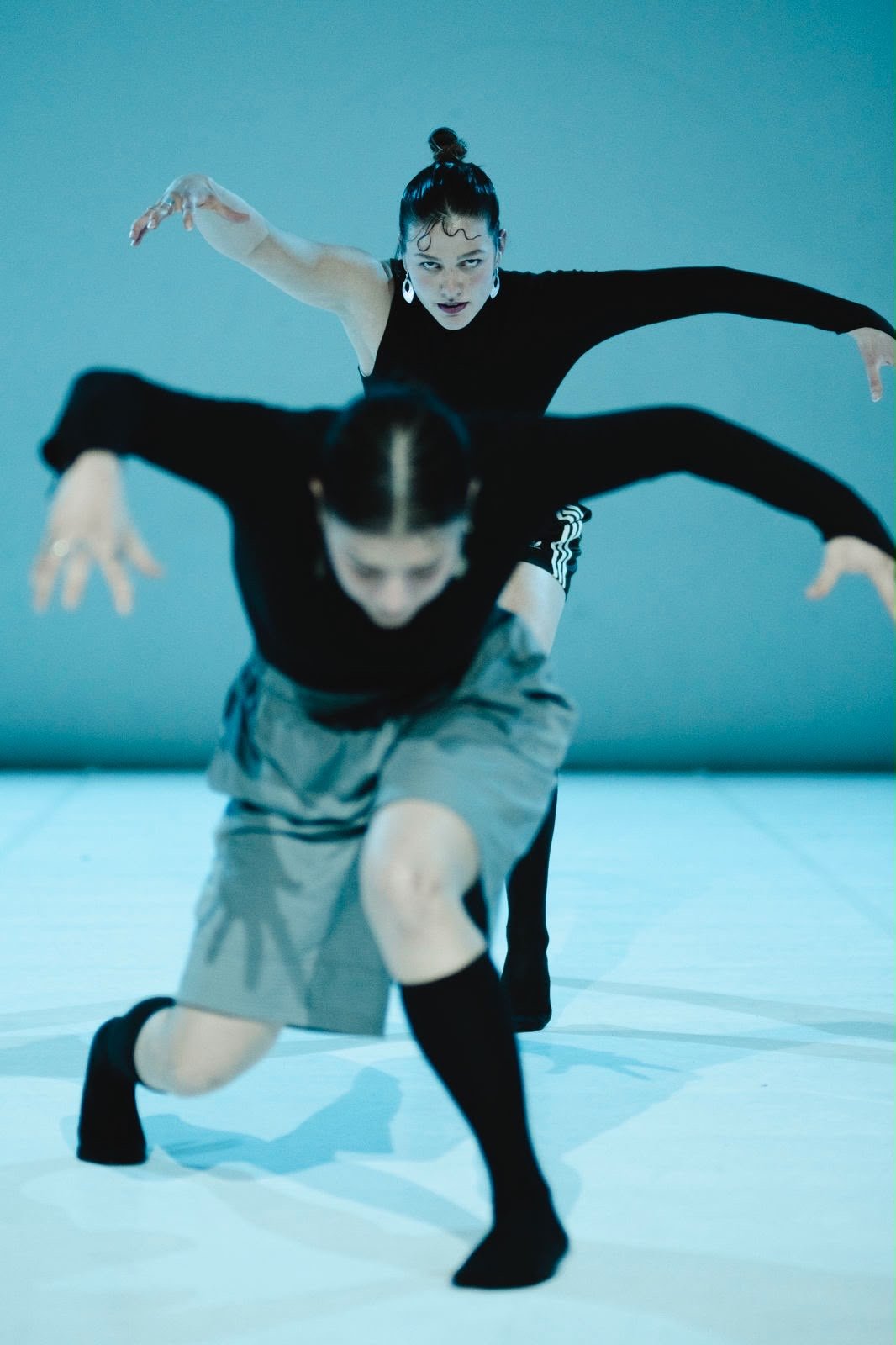
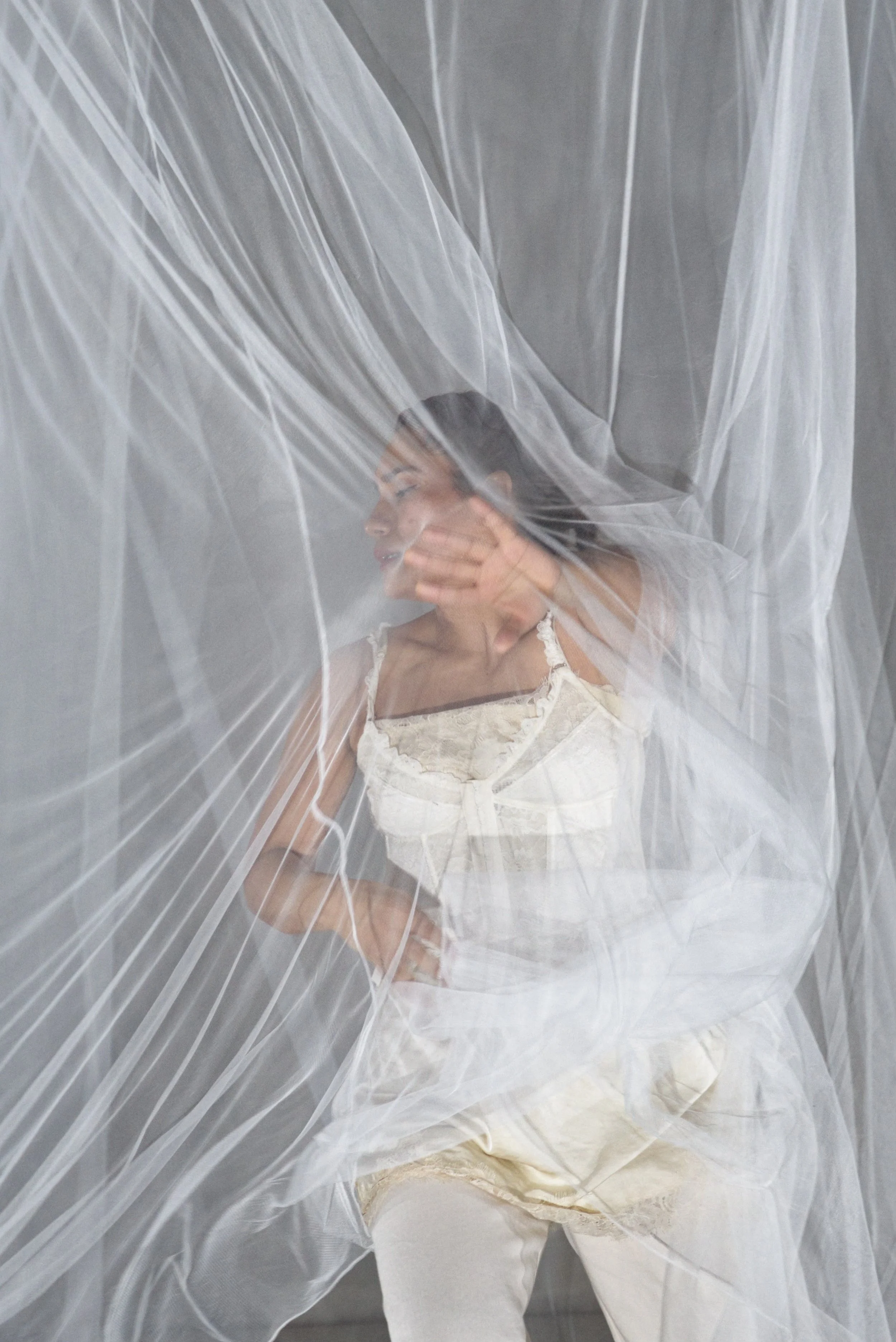
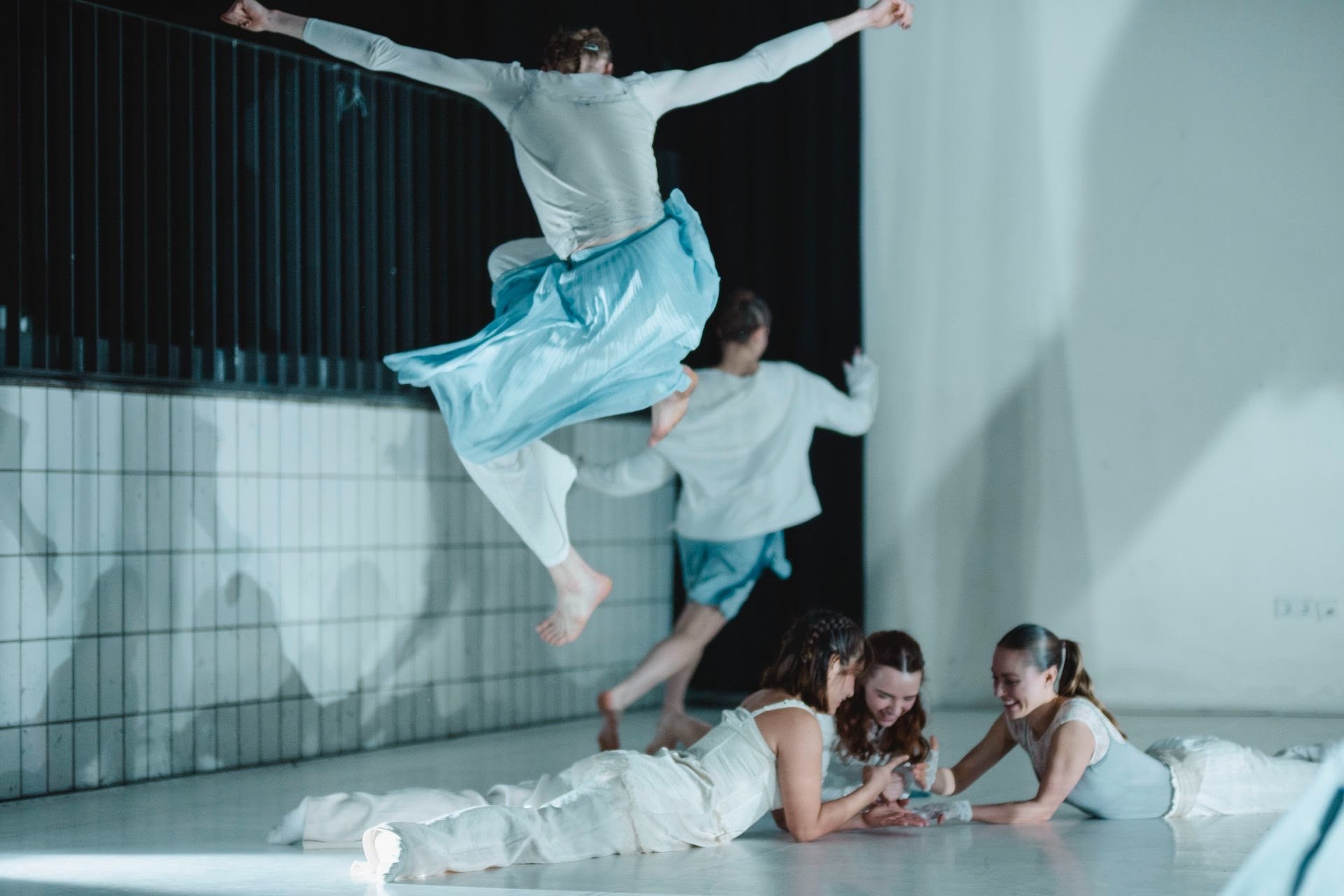
Ada and I first met through a mutual friend she was visiting, while spending a summer evening in a park in Amsterdam West. What began as a casual conversation soon led us into the world of lucid dreams, shifting realities and the graduation choreography she had created around them. I was fascinated by the way she used movement to explore what happens beyond the boundaries of our waking mind. Having recently completed her dance education at Danceworks Berlin, Ada is now preparing to continue her training in Rome.
What is your earliest memory of dance?
I was around six years old when my parents wanted me to choose a hobby. I actually wanted to play football, but there was only a boys’ team in the village where I grew up. I could have joined, but the thought of being the only girl held me back.
I still have this very vivid memory of walking with my mother on a summer day. We passed an open window and I heard classical music coming from inside. There were leaves moving in front of it, and when I asked what was happening, my mother said it was probably a ballet class. I immediately thought, “That is what I want to do.”
It almost sounds too much like a scene from a film, but I can still remember the image and the feeling of that day so clearly. Soon afterwards, my mother signed me up for ballet.
How did your relationship with dance develop after those first ballet classes?
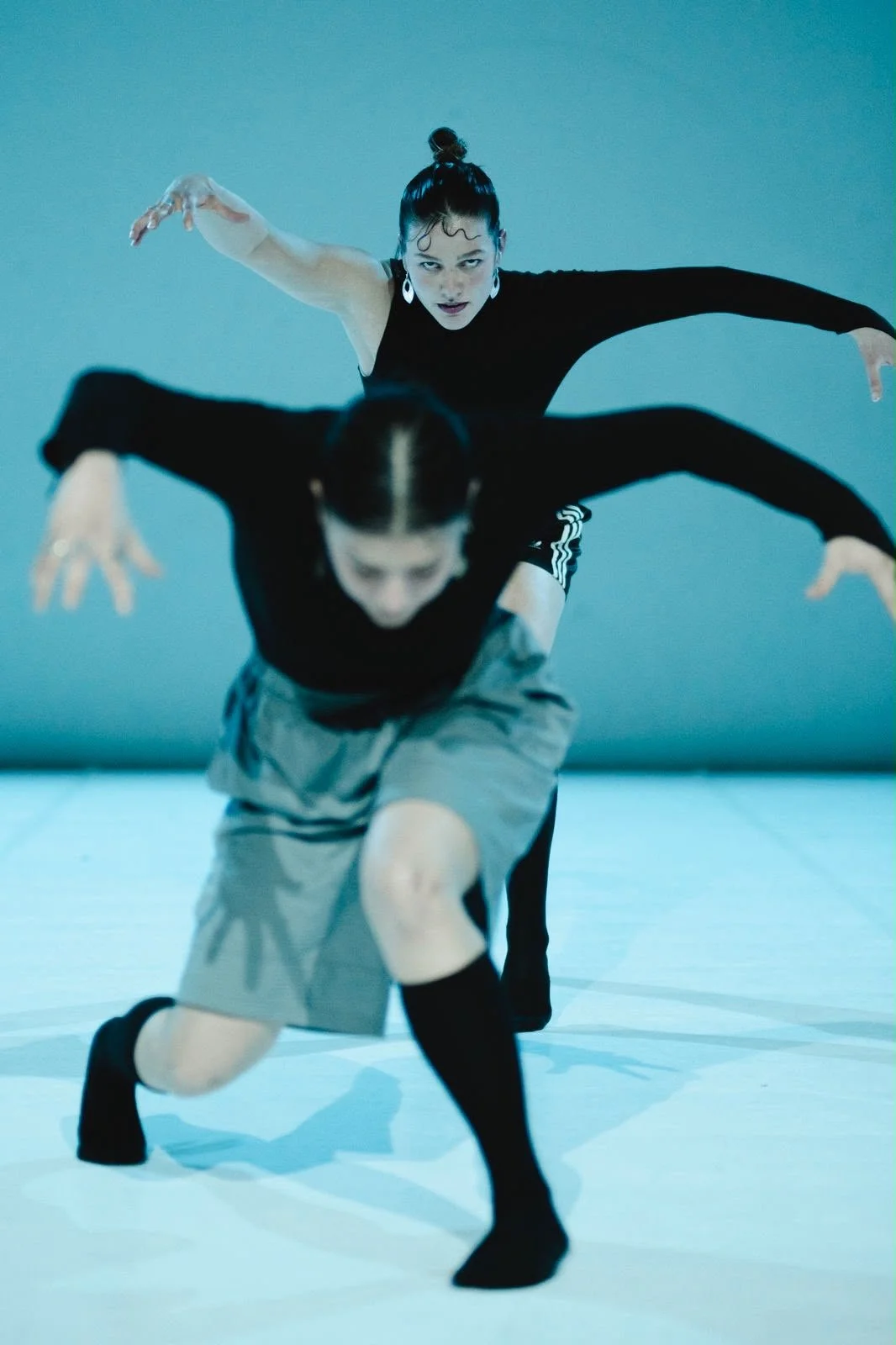
I danced ballet until I was around eleven or twelve, when I tore the ligaments in my ankle during school sports. Shortly afterwards, I still performed in a ballet production because I really did not want to miss it. We had only recently started dancing en pointe, and I twisted the same ankle again while performing.
After that, I stopped dancing for several years. It began with the injury, but I also had so many other interests and hobbies that ballet gradually moved into the background.
Later, some friends I had danced with started taking ballet classes again and convinced me to join them. I eventually also tried contemporary dance, floorwork and modern jazz. Contemporary dance felt completely new to me. At the time, I remember thinking, “Why didn’t I do this from the beginning? This feels so much more like me.”
Now I am very drawn to ballet again. I think it is reassuring to realise that these interests do not have to remain fixed. Something can feel like everything for a while, and another part of dance can return later.
When did dance begin to feel like more than a hobby?
After finishing school, I wanted to use my gap year to finally focus on one thing. Until then, I had always been interested in many creative fields. I sang in a choir, played the flute in an orchestra and was interested in photography, painting and film. I wanted to do all of it, but that also meant I never had enough time to explore one thing deeply.
I decided to leave Zurich and take a five-month preparatory dance course in Berlin. We trained for around three hours a day, Monday to Friday. The focus was mainly on contemporary dance, but we also had ballet, improvisation and Pilates.
It was my first intensive encounter with contemporary dance, and I learned an incredible amount in a short period of time. Experiencing that everyday rhythm made it clear to me very quickly that this was what I wanted. Being able to concentrate on dance and make it the centre of my life felt surreal, but also incredibly exciting.
Before the course, I had never really allowed myself to imagine dance as a profession. I thought I was not good enough and would never have a real chance. But the teachers and the people around me gave me confidence and showed me that there were possibilities. After only a few weeks, I knew I wanted to apply for professional training.
What was your dance education like for you?
I feel like I learned an incredible amount, not only about dance but about life in general. I feel like I learned an incredible amount, not only about dance but about life in general. The days were often chaotic or even dramatic, so I became more adaptable and resilient.
More than anything, I loved working with my body every day. I loved the intensity of spending so much time in the studio and being able to focus completely on movement. After training for hours, I did not simply feel as though I had completed a working day. I felt exhausted, but also very alive.
I also learned to love the stage. I would not necessarily describe myself as someone who naturally wants to be the centre of attention. Sometimes, when attention is suddenly on me, I do not really know what to do with it. But dancing on stage feels entirely different.
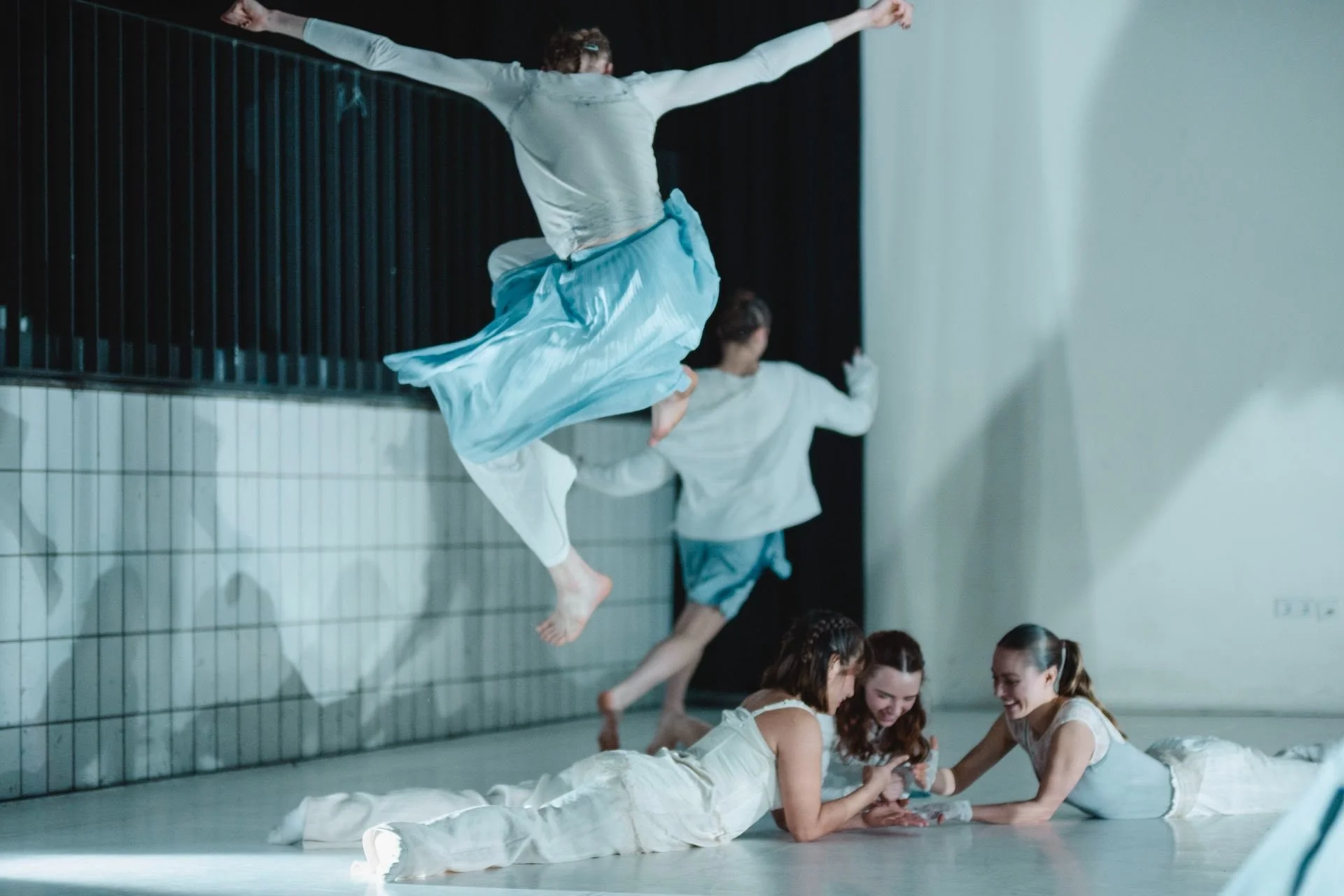
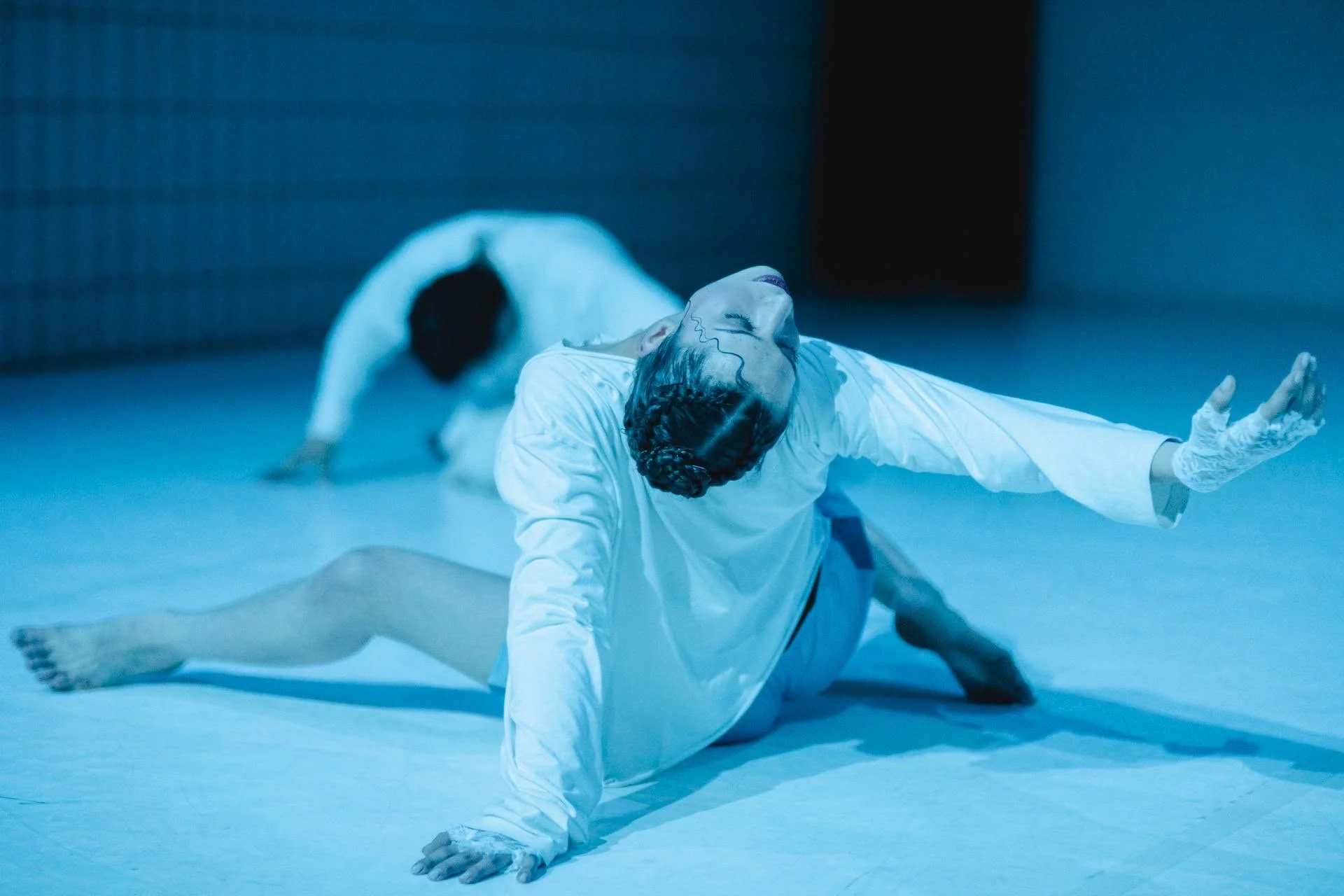
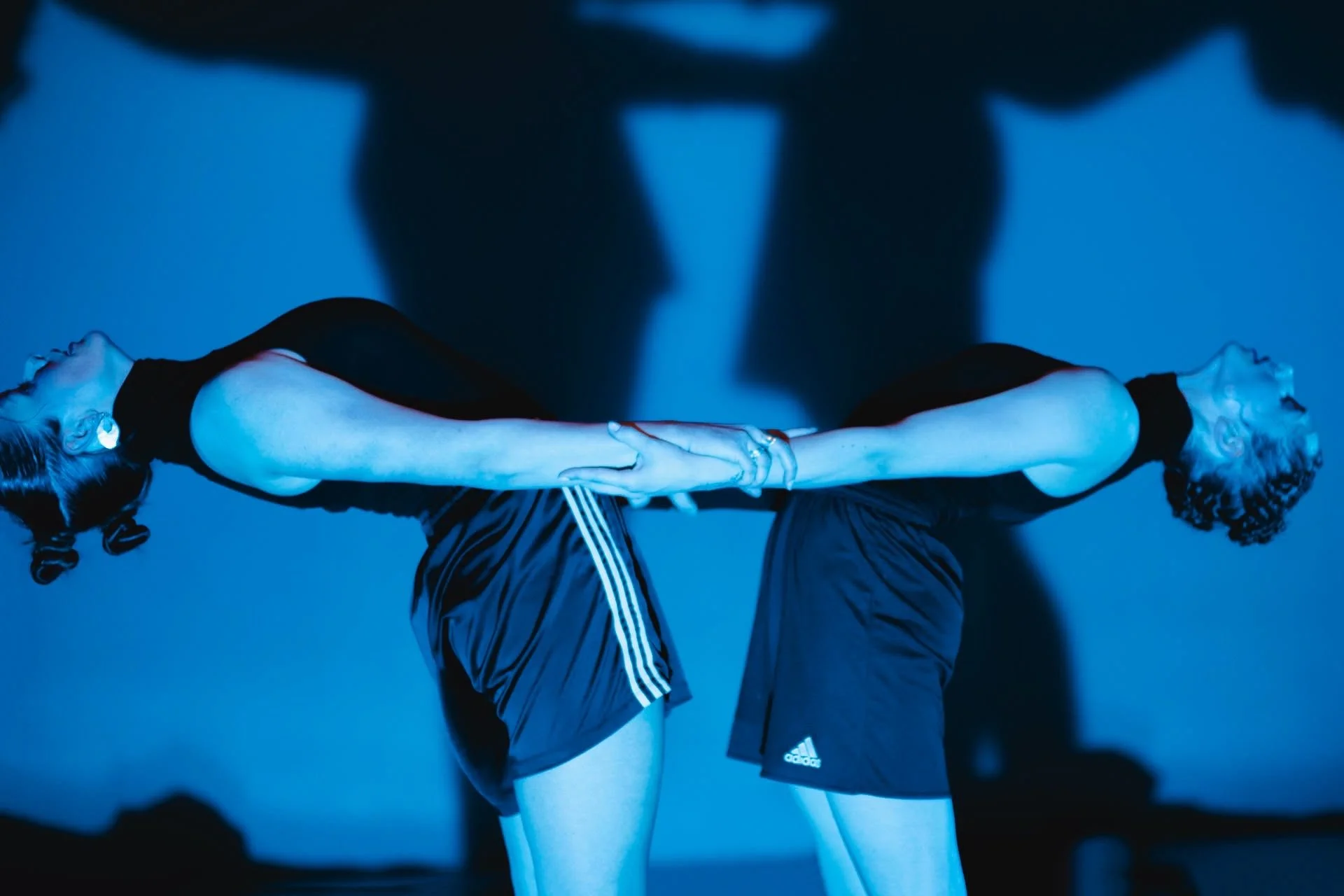
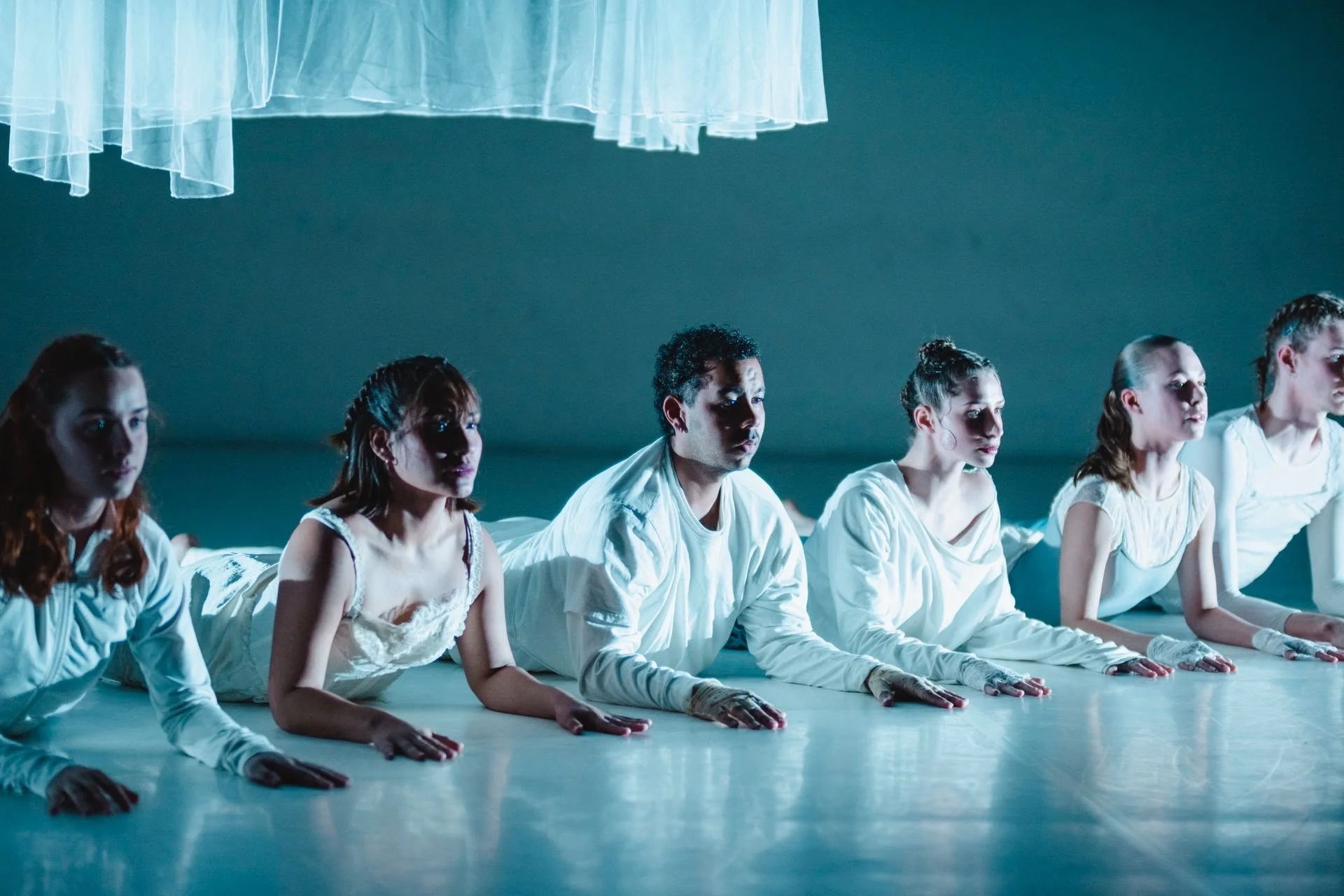
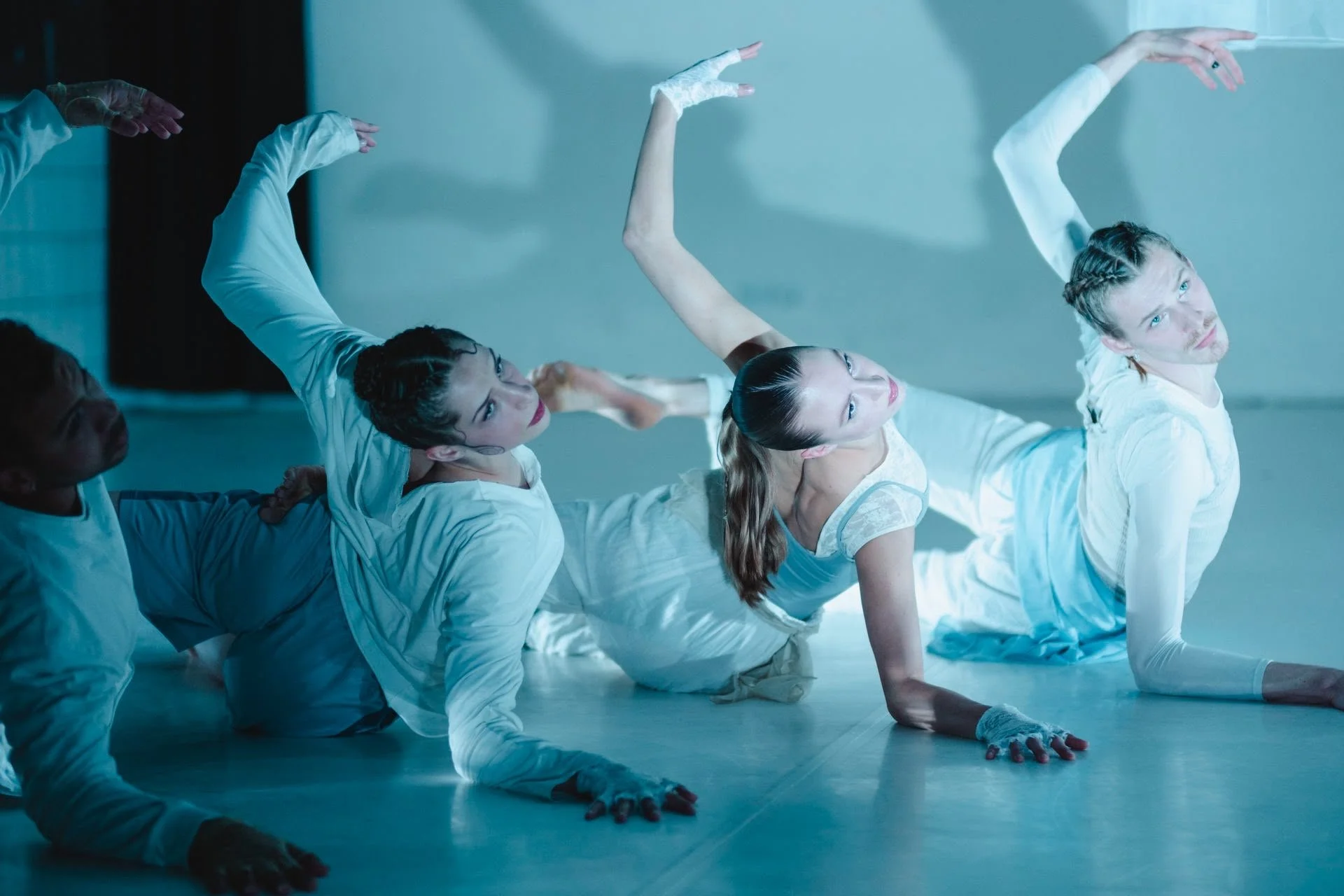
The biggest highlight of my education was creating my own graduation piece. Choreography brought together so many things that had always interested me: movement, music, imagery and the shaping of a space. A friend of mine who studied composition created original music for the piece, and I was able to work with lighting, costumes and the stage design. It felt like finally being able to bring all of my interests together to create one complete world.
What inspired the concept behind your graduation choreography?
The assignment itself was very open. We had to conceptualise and choreograph a piece, but there were very few restrictions. We could decide whether we wanted to perform in someone else’s work or create something ourselves. I knew that I wanted to choreograph my own piece.
The idea came partly from my own experiences with sleep. I struggled with sleep problems for a long time and also experienced sleep paralysis and lucid dreams. Those experiences were often very uncomfortable, but I found the different states between being awake and asleep fascinating. There is something interesting about that in-between space, where you are not fully conscious but not completely disconnected either.
I had previously created a short piece around lucid dreaming and wanted to return to that slightly absurd and surreal world. In my creative work, including photography, I am often drawn to things that feel playful, strange or slightly unsettling.
The other part of the piece explored how people live together and how something negative can develop between them. I was interested in how people can enter a situation with good intentions, but misunderstandings and different perceptions can still cause it to shift into something darker.
Combining those ideas made sense to me. If people are existing in different states of consciousness, they might not fully understand or even notice one another. I wanted the dancers to meet within that unstable world and explore what could emerge between them.
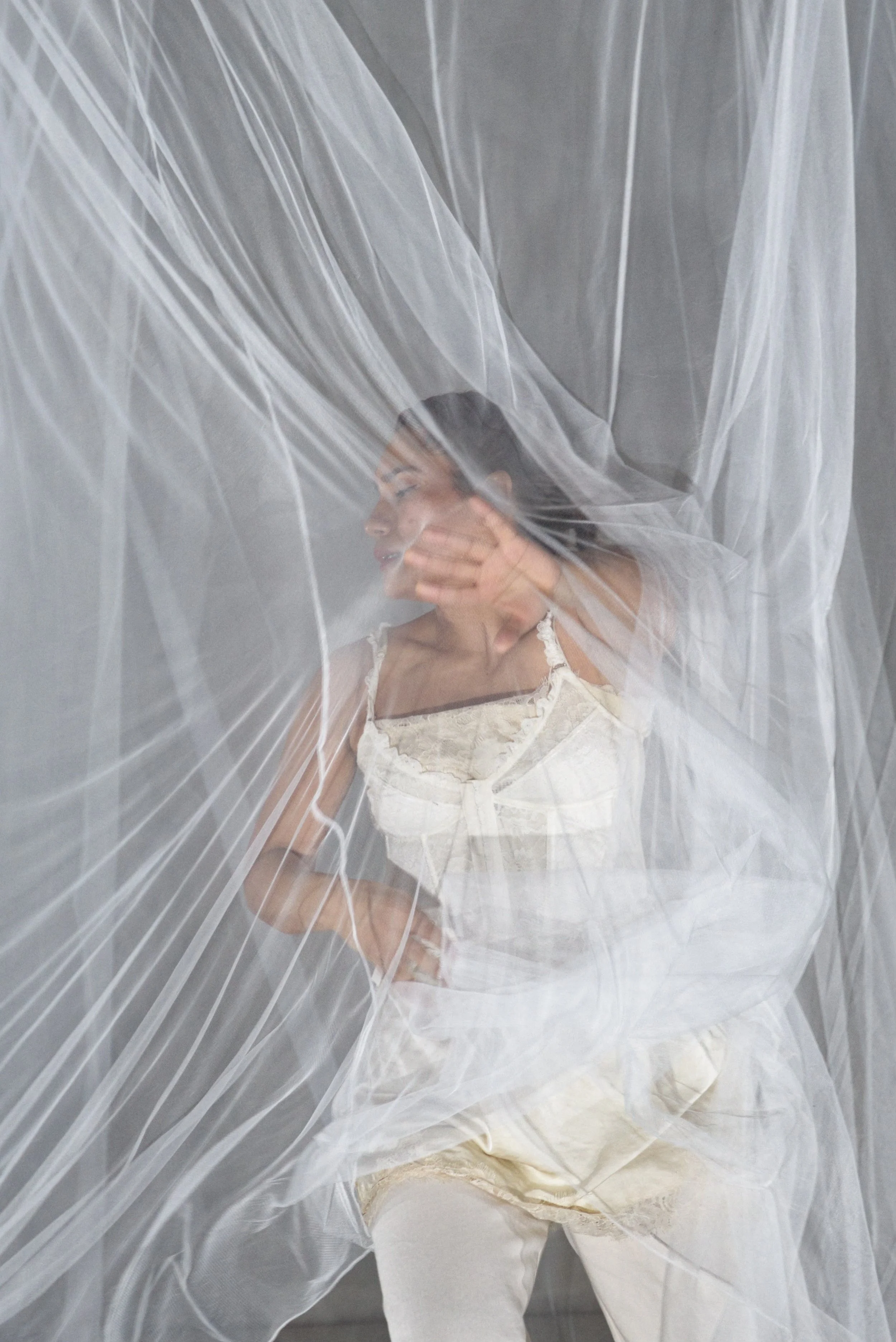
How did you translate something as intangible as a dream into movement?
I did not want to recreate a particular dream. I was more interested in creating an atmosphere that felt slightly strange and unfamiliar, as though the normal rules had shifted.
A lot of the movement developed from the dancers interacting with one another. I wanted to explore what happens when people connect, misunderstand each other or experience the same situation differently. There was a scene that began almost like children playing together, but gradually reached a point where it became too much for someone and the atmosphere started to feel uncomfortable.
The dancers themselves were very important to that process. Their personalities and the way they related to one another changed what was possible within the choreography. Movement alone could not create the entire world. The music, costumes, lighting and stage also shaped how the audience experienced it.
How important is the connection between dancers when you are creating something together?
It can change everything. With some people, you begin working and immediately understand one another. You can build on each other’s ideas, and suddenly you have created much more in a short amount of time than you thought possible.
I once created a duo with a friend from my training, and we unexpectedly worked incredibly well together. We developed a piece of around ten minutes in only a few rehearsals. It was co-choreographed, and the material emerged very naturally because we were able to respond to and support each other.
With other people, that connection may simply not be there. Then you can become frustrated and begin questioning your own creativity. You think you have no ideas or cannot dance, when sometimes it is simply about not being the right match.
I experienced that while working on my graduation piece as well. At one point, the dynamic within the cast was not supporting the kind of interaction the scene needed. After making some changes, the group became much more harmonious. Interestingly, it almost became too harmonious, as that particular scene was meant to capture the moment when playful interaction begins to shift into discomfort.
That experience showed me how much casting and group dynamics can influence a piece. Dance may be expressed through individual bodies, but the work is always shaped by what happens between people.
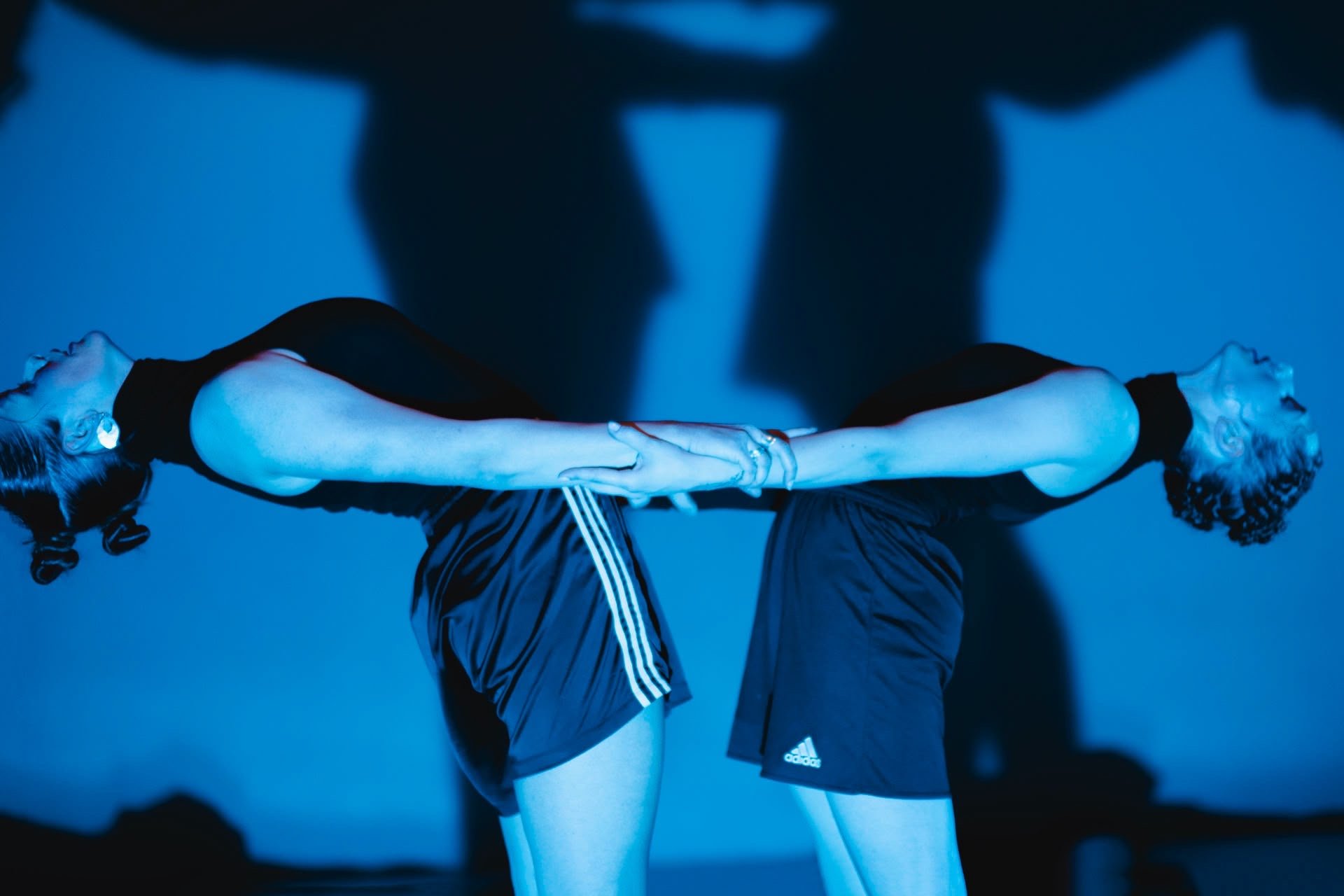
What was it like to finally see your finished piece on stage?
For a long time, it felt like my baby. I was constantly looking at it critically and thinking about what still needed to change. Where does something need more work? What is missing? What could be clearer?
The moment the costumes and lighting were added changed everything. There is this idea that, at some point, a choreographer has to let the piece go and give it to the dancers. That is exactly what happened. I could finally watch it without feeling as though I was still in the middle of working on it.
It no longer felt entirely mine. It belonged to the dancers and to the stage.
I often find it difficult to finish creative work because there is always something you could change. Even now, when I watch the piece, I see moments I would like to develop differently. But during the performance, I reached a point where I could say, “This is finished, and I am happy with what I created in the time I had.” I was able to let it go.
What do you love most about being on stage?
I love everything surrounding a performance. I love having a full theatre day, preparing backstage and packing everything I might need in the morning: make-up, tape, costumes and all the small things that become part of the routine.
Those days can be incredibly long and exhausting. Sometimes you spend twelve hours inside a black-box theatre and reach a point where your mind feels completely empty. But there is also something romantic about it for me. I love the atmosphere, the anticipation and everything that happens before the performance begins.
The stage itself transforms everything. You can rehearse a piece countless times, but it becomes something else once an audience is present. There is an exchange of energy between the performers and the people watching. A theatre can be full, but if the audience feels distant, the performance may not fully come alive. When you sense that people are present and reacting to what is happening, it changes the entire experience.
I am nervous before performing, but I have learned that something switches inside me when the lights come on. It feels as though nothing can happen to me, even though, of course, anything could happen at any moment. It is an ambivalent feeling, but I have developed a kind of trust that anything is allowed to happen.
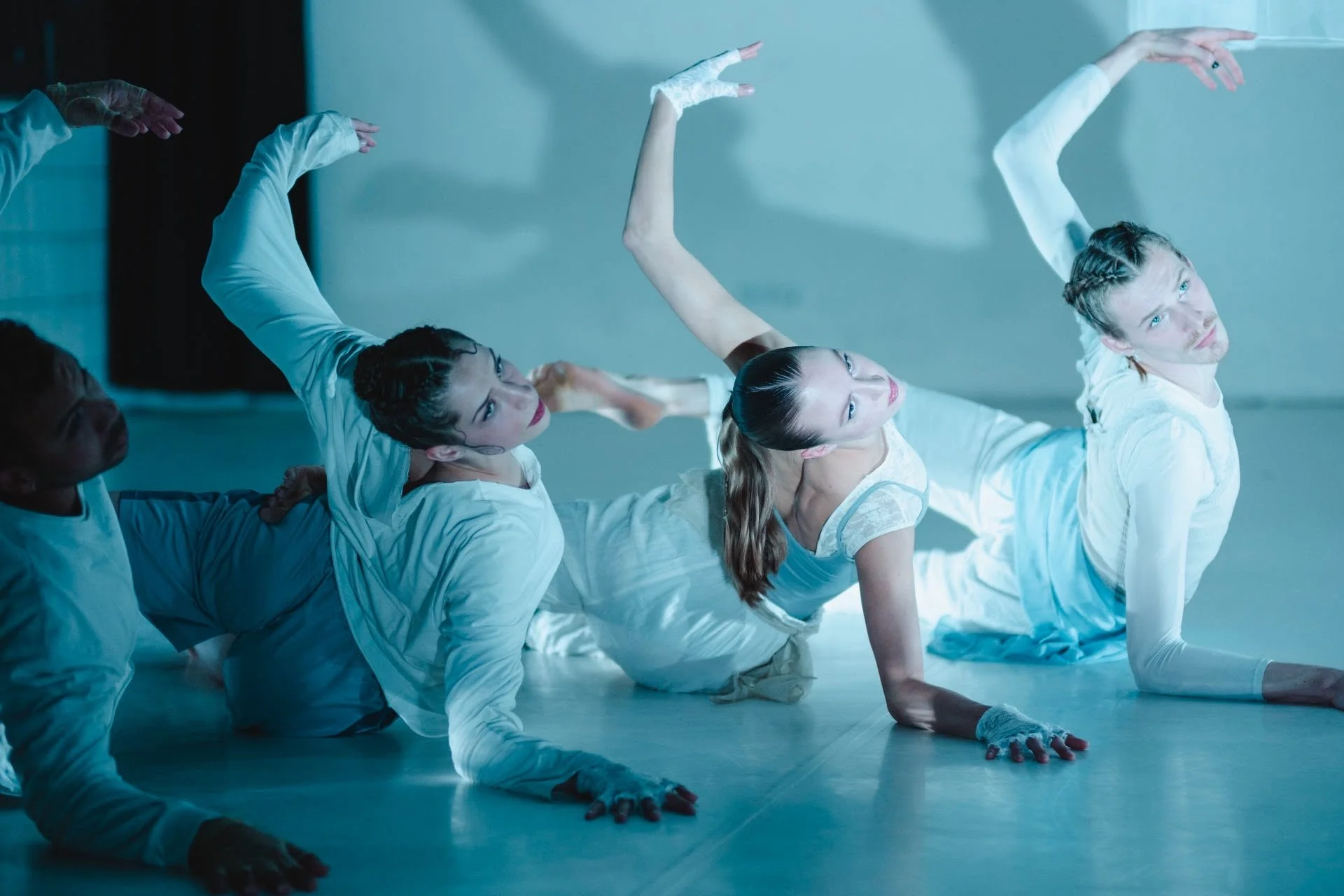
What role does music play in your work?
It plays almost the entire role. Both of my parents are orchestral musicians, so I grew up around music and spent a lot of time backstage at concerts. The rhythm of preparing for performances and being inside that world has always felt familiar to me.
I also made music myself for most of my life. For me, dance and music are directly connected. Music is often what makes me want to move and create in the first place.
That was also why having original music for my graduation piece felt so special. It allowed the movement and sound to develop as parts of the same world rather than treating the music as something added afterwards.
How has dancing shaped your relationship with your body?
As a dancer, you are completely dependent on your body while constantly being evaluated for what it can do. There is always pressure to improve, and you spend every day surrounded by strong dancers and looking at yourself in a mirror.
I do not think I have one clear answer for how I deal with that pressure. Some days I can be constructive with myself, and on others, I cannot. Sometimes I listen to my body well, and sometimes I ask more from it than it can give.
Injuries have been a recurring issue for me, and I think that is partly connected to performance pressure. You are often expected to give one hundred per cent, even when your body might need something different.
At the same time, dance has given me an incredibly deep understanding of my body. The work is always about physical awareness and the connection between the body and mind. You learn how your body functions, how to control it and how to use it as a form of expression.
It is also deeply emotional work. Whatever is happening in your life enters the studio with you. You cannot simply sit quietly and complete your tasks. You are constantly moving, being seen and seeing yourself. The work can be incredibly demanding, but it can also be very beautiful for exactly that reason.
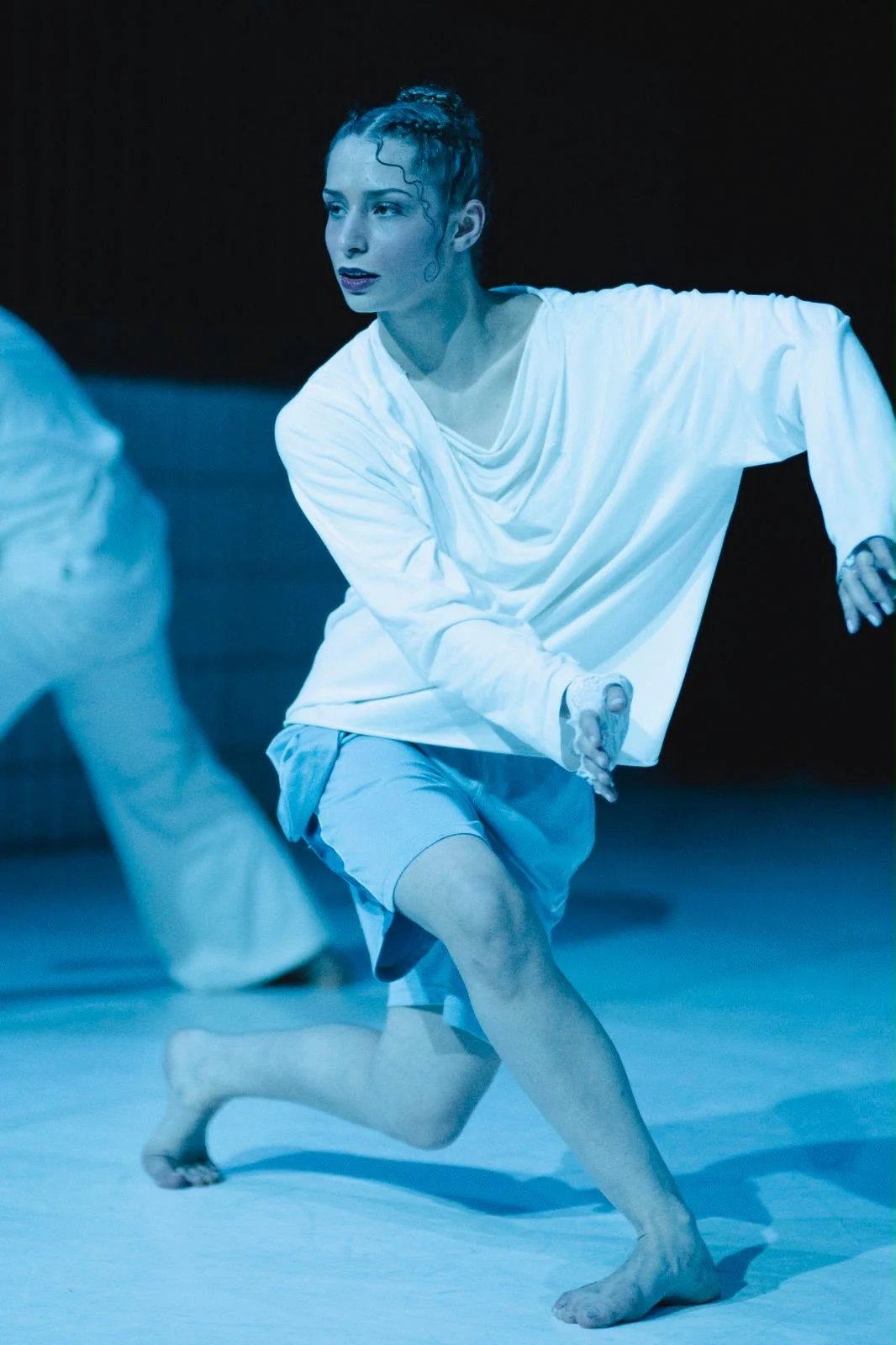
What would you like to explore next?
Creating my graduation piece made me want to develop more productions and continue choreographing. I love the idea of using movement to create another reality for a moment. It does not necessarily have to tell a clear story, but I want to create worlds that people can enter and experience.
After completing my dance education at Danceworks Berlin, I am now moving to Rome to continue my training at Dance Arts Faculty (DAF). Being accepted into the programme has opened up new possibilities and made the idea of eventually working in a company feel much more tangible.
Working in a company for a few years would be a dream, while continuing to create and choreograph my own work. For now, I am excited to see how far I can develop, how much more I can discover through my body and where this next stage of my training will take me.
How has your approach to auditions changed over time?
In the beginning, I tried to do everything perfectly. I planned exactly when to wake up, what to eat and how to prepare. Those things are still important, but I approach auditions much more calmly now.
I also try to see auditions as training and as an opportunity to understand the place itself. It is not only about whether they choose me. I am also observing how the training feels, how people treat each other and whether I can imagine myself in that environment.
Even when you feel as though you cannot afford to be selective, I think it is important to ask whether the opportunity is actually right for you. Being accepted somewhere can shape the direction of your entire path.
Technique is also only one part of an audition. The way you enter the room and interact with the other dancers matters too. I try not to behave as though everyone is fighting alone for a place. The atmosphere is created by everyone in the room, and dance is rarely something you do entirely by yourself.
What would you tell someone who wants to explore dance but is afraid to begin?
I would tell them to allow themselves to invest in it and simply try. What is possible often becomes clear much sooner than you expect, and taking the first step can open many more possibilities.
I used to feel as though I did not belong in the dance world. Sometimes I still feel that way, but somehow, I am part of it now.
Deciding to try does not mean it has to work out or that you have to continue forever. Someone can be an incredibly talented dancer and enter professional training, only to realise that the environment, the pressure or the work itself is not right for them. People are different, and changing your mind does not mean that trying was a mistake.
Dance can be enriching in many different forms. The walls we imagine often disappear as soon as we begin. Before starting, you may have no idea how to reach your goal. But once you take one step, the next one usually reveals itself.
What does Women in Motion mean to you?
I feel as though I am always in motion, not only physically, but also in my mind. My thoughts move constantly, and my ideas often emerge from that chaos.
When I choreograph, I do not begin from stillness and decide intellectually what should happen. I begin by moving, and the ideas appear from within that movement. I can then take certain moments, shape them and make them more specific.
Dance itself is also a fleeting art form. Unlike a painting or a sculpture, it does not remain in one place after it has been created. It is already disappearing while it happens. You can film it, but watching a recording will never be the same as witnessing a body moving in front of you.
Even when you watch the same choreography several times, it will never be exactly the same. For me, dance is always changing, passing and becoming something new.
Want to keep up with Ada? You can find links to her social media below.
VOL VIII: JEWELLER LAURA LICHT
Women in Motion, Volume 8
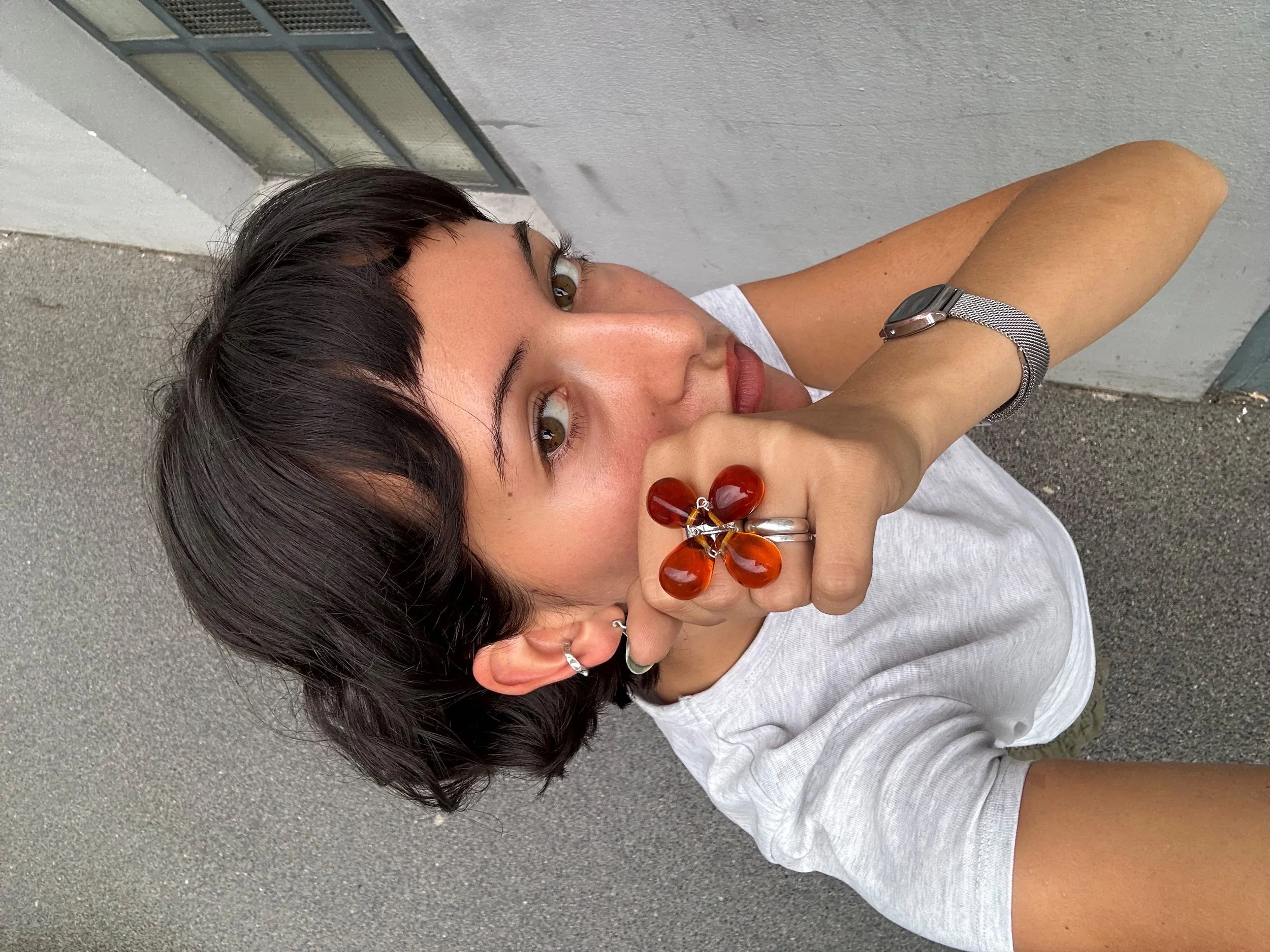
Showcasing Laura Licht
Before I ever saw Laura Licht’s jewellery, I met the person behind it. We crossed paths during a DJ set by one of her friends in Vienna, and although jewellery never came up that evening, her warmth and openness stayed with me. Learning about her work later felt like discovering another layer of someone whose creative energy had already been quietly present.
Laura began making jewellery in 2020, when a few colourful beaded necklaces slowly grew into Pearlsberlin, her first jewellery label. What started in her childhood bedroom developed into an independent business, took her to Valencia and eventually led her to study goldsmithing in Vienna. Her work now continues under the name einLicht, a rebranding inspired by her last name, Licht. Having completed her training, her next step is to move to Berlin and begin an internship.
When Laura speaks about jewellery, her eyes light up. In our conversation, we spoke about teaching herself a craft, building a business at eighteen, finding her own techniques and allowing a creative practice to change as you do.
How did you first find your way into jewellery?
My journey with jewellery began in 2020, during the pandemic. I had always loved painting and drawing, but I never felt completely at home in either medium. Somehow, possibly through Instagram, the idea of making jewellery came to me.
I ordered colourful plastic beads, thread and a few basic tools, then began making simple necklaces and small floral patterns. I showed them to my friends, and they started asking whether I could make pieces for them too.
From the beginning, I was determined to teach myself everything. I watched tutorials, experimented with different techniques and created an Instagram account to share my work. More people began following the account, which motivated me to continue. Everything I made then looked completely different from my work today, but it became the beginning of Pearlsberlin.
When did it begin to feel like more than a hobby?
One important moment was when I developed a collection inspired by zodiac signs and birthstones. Both were incredibly popular at the time, and I created a necklace for every zodiac sign using different gemstones.
The response was far bigger than I expected. I was still completing my Abitur and suddenly found myself making necklaces day and night in my childhood bedroom. I was only eighteen, but I was already learning how to create a product, communicate with customers and manage a growing number of orders.
Another important step was renting my first studio in Potsdam with my best friend, who is a painter. Having a shared space made everything feel more serious. Jewellery had already become my passion and taken over most of my free time, but the studio made me realise that it could grow into something bigger.
What brought you to Valencia, and how did it shape your path?
After finishing school, I worked for a year to save money. I originally wanted to go to Canada or New Zealand, but those plans did not work out. When a friend told me that a room in his apartment in Valencia would soon become available, I decided to take the opportunity.
I wanted to experience living somewhere else, but I also hoped to understand whether jewellery was only a hobby or something I genuinely wanted to pursue. It took me about a month to realise that I wanted to continue.
By then, I was creating unique pieces and primarily working with freshwater pearls. In Valencia, I found my first goldsmithing studio and made my first silver ring. I also continued receiving online orders and registered my small business in early 2022.
Managing everything from another country was not always easy. My Spanish was limited and shipping was expensive, but I found ways to make it work. The experience showed me that I was willing to continue even when the practical side became complicated.
Why did you decide to pursue formal training in Vienna?
I could have studied jewellery in Valencia, but the language was important to me. I wanted to understand the technical details properly and communicate confidently throughout my training.
While researching other possibilities, I found the jewellery programme at Herbststraße in Vienna shortly before the application deadline. Because the school only admitted a new class every two years at the time, it felt like a rare opportunity.
The programme was very structured, with classes every evening from six until ten. At times, it felt like completing a second Abitur, and I did not always feel supported by the teachers. The people in the workshops were different. They encouraged me, took my ideas seriously and helped me develop technically.
Although I would not necessarily choose the same school again, completing the programme was important to me. It gave me a qualification and introduced me to techniques, materials and possibilities I might never have discovered on my own.
What made jewellery feel like the right medium for you?
At first, I did not understand jewellery as a complete artistic medium. I associated it with traditional jewellers or inexpensive pieces from small shops. I had no idea how broad the world behind it was.
After finishing school, I took my first goldsmithing course in Berlin. That was when I realised how many different ways there are to approach jewellery. There seemed to be an endless number of tools and techniques. I still have photographs on my phone of individual pliers with notes explaining what each one was used for.
At the time, I knew many people who painted, produced music or made clothes, but nobody who created jewellery. Perhaps that made it feel like a space in which I could find my own way of working.
How does a piece develop from the first idea to the finished object?
My process is quite messy. I am not someone who begins with detailed sketches. Sometimes I start with an idea for a shape, and sometimes I simply know which technique I want to explore. From there, the piece develops through experimentation. I need to see and touch something before I can fully understand where it is going.
For a long time, I worked mainly with the lost wax technique. I created a model from wax, which was later cast in silver. I also work directly with wire or metal sheets by cutting, shaping and connecting them.
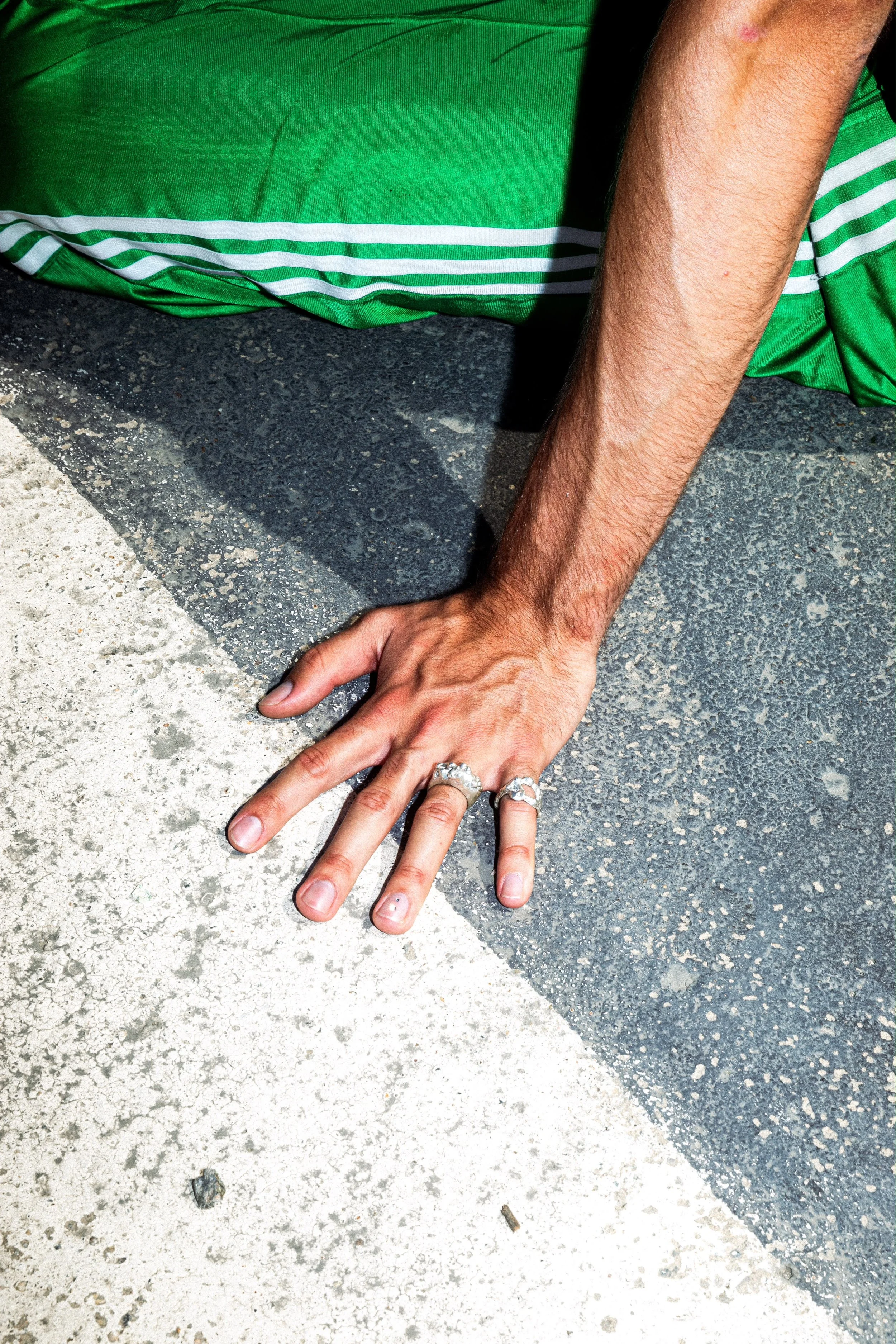
I am drawn to pieces with volume. I like jewellery that is large, bold and noticeable. One technique I particularly enjoy is press forming, where metal is pressed into a mould to create volume.
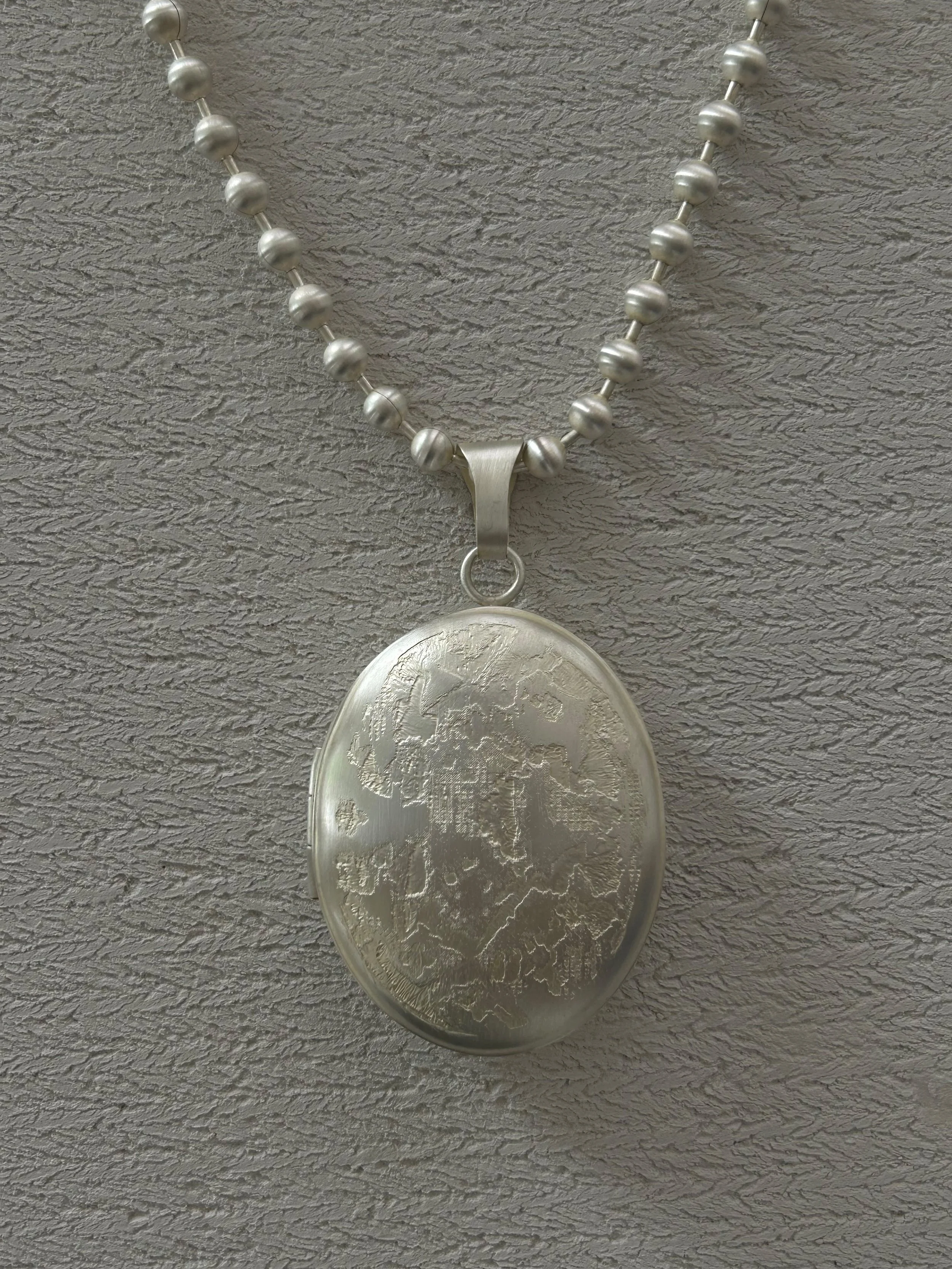
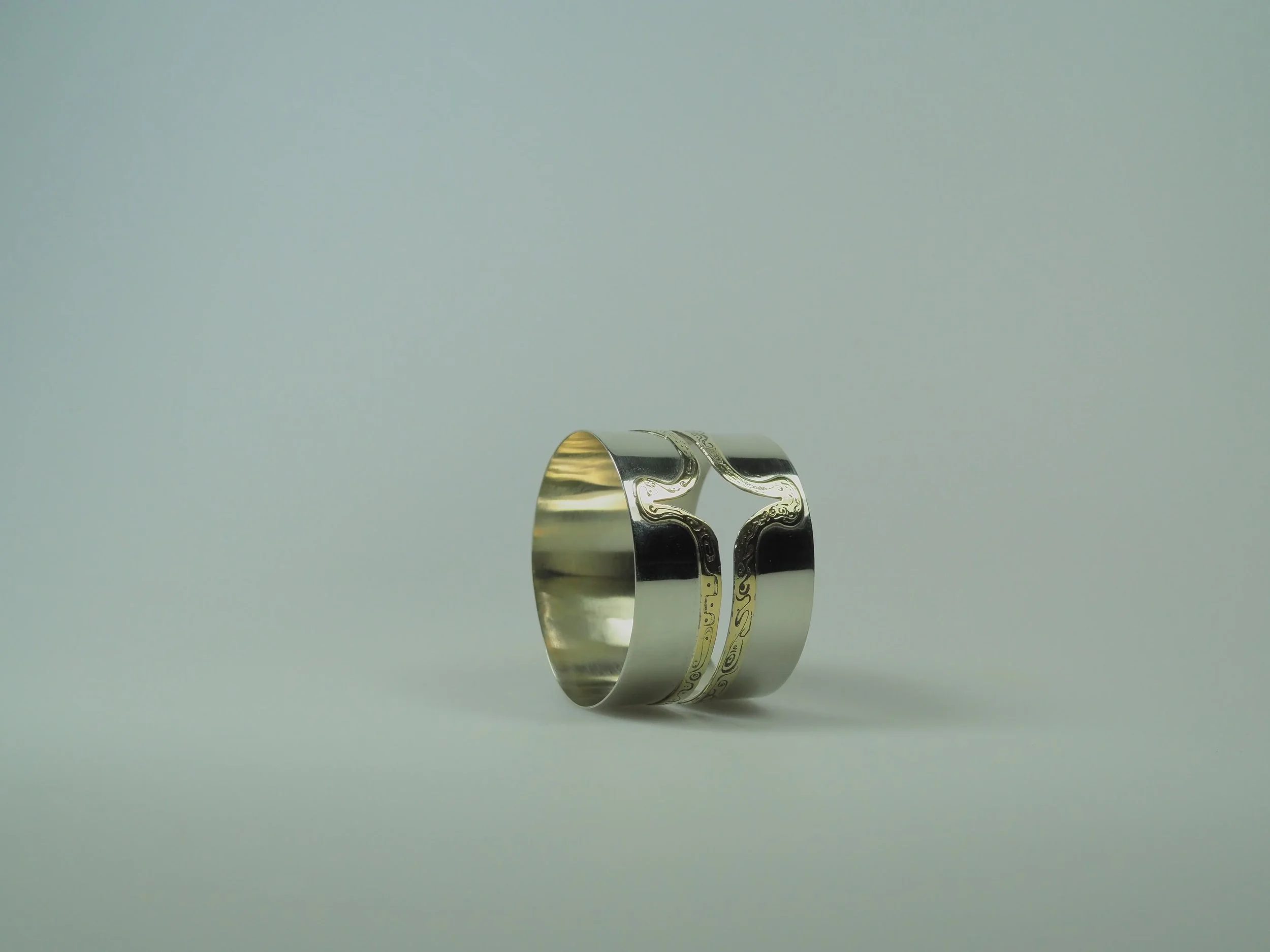
For my diploma piece, I developed a way of transferring my own pattern onto metal using a laser cutter and then etching it into the surface. I spent weeks experimenting because I hadn’t used that technique before. When it finally worked, it was incredibly rewarding. It showed me how much I enjoy pushing a technique further and finding solutions through experimentation.
Has comparing your work to other designers ever affected you?
Definitely. There was a period when I followed many jewellery designers on Instagram because I wanted to find inspiration. Eventually, I unfollowed almost all of them because I realised that it was affecting me negatively.
I began wondering why I should continue when other people were already successful or creating work that appeared similar to mine. Instead of inspiring me, it made me feel insecure.
My best friend, who is a painter, experienced something similar. She reminded me that this way of thinking often comes from the creative bubble around us. Outside of it, many people have no idea how a piece of jewellery is made and can be fascinated by something that feels completely ordinary to me.
I think perseverance is one of the most important parts of working creatively. My work and audience have changed several times since I began at eighteen. I lost followers along the way, but those changes were necessary. As my taste, skills and interests develop, my work has to be able to grow with me.
Your next step is moving to Berlin for an internship. What do you hope to learn?
After completing my training, I sent around twenty five applications to people and studios whose work I admired. More than half never replied, not even with a rejection. That was difficult because every application required time and thought.
The internship I eventually found felt right from the beginning. We first spoke on the phone and later met in Berlin. We spent two hours talking about jewellery, business and our expectations. I felt that my previous work was genuinely seen and appreciated, even though I am still at the beginning of my career.
After organising every part of my own business for the past five years, I am curious to experience someone else’s process. I want to understand how another person develops ideas and manages a creative practice. I also want to learn how to give up some control. I have always preferred doing everything myself, but collaboration can create possibilities I would not find alone.
What inspires your work?
A lot of my inspiration comes from what surrounds me. Sometimes I notice a small detail, photograph it and return to it later through my work.
During a trip to Morocco, I saw rocks covered in small shells. I later created a large ring inspired by their structure and surface. More recently, I turned a hand painted check pattern into a brooch.
The sources can seem random, but many of them come from places I have visited and details I notice in everyday life. I like the idea that something you observe only briefly can become an object that someone carries with them.
My friends are another important source of creative energy. Jewellery is my main medium, but my ideas often extend into photography, video and styling. Whenever an idea begins to form, I immediately think of the women around me and how their perspectives could become part of it.
What has been the greatest challenge in building your own creative practice?
For a long time, I wanted to manage everything alone. I was responsible for the idea, production, sales and social media. Part of me liked having control over the entire process, but it also became one of my greatest challenges.
Another difficulty was balancing the business with my training. I often felt that I should continue producing, posting and selling at the same pace. Eventually, I realised that keeping the business active could not always be the most important thing. I needed space to learn and consider where I actually wanted to go.
Now that I have completed my diploma, I can look at the business with fresh eyes. I know that I do not want to be tied to a physical shop, and I am no longer sure whether I want to continue creating custom jewellery.
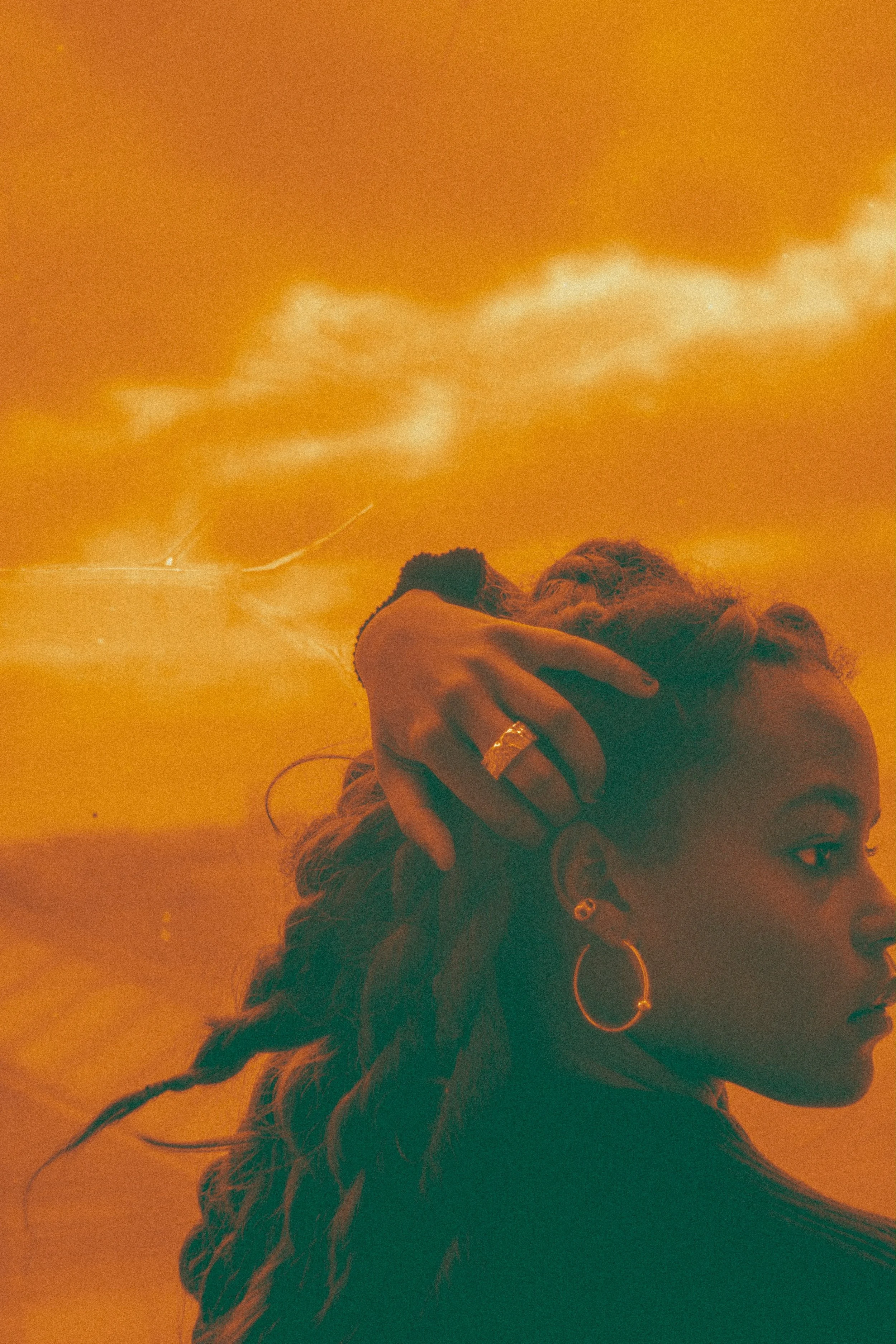
I would rather take more time and focus on pieces I genuinely find interesting. I am drawn to bold jewellery that might not be intended for everyday wear. I could imagine creating pieces for stylings, editorials or photoshoots, where they can become part of a larger visual world.
What advice would you give to another woman who wants to begin making jewellery?
I would tell her to understand that jewellery can be many different things. It is not limited to metal or to a traditional object worn on the body. Entering this world means being open to different materials, techniques and ideas.
Depending on the direction someone wants to pursue, I would recommend some form of foundational training. My education helped me understand the range of possibilities within jewellery and showed me that it can be much more than a decorative object.
Most importantly, stay curious and open. At first, unconventional materials or forms might not fit your existing idea of jewellery. But if you allow yourself to explore them, an entirely new creative world can open up.
What would you like people to feel when they wear one of your pieces?
Fast fashion also exists in jewellery. It is easy to buy several inexpensive pieces, wear them briefly and replace them when they begin to discolour.
I would like people to look at my work and recognise that a person created it with her own hands. I want them to understand the time, thought and craft held within the object.
A handmade piece can stay with someone for many years and gradually become part of their identity. Rather than owning many pieces that quickly lose their value, I like the idea of choosing one small work of art that can accompany you through life.
What does motion mean to you, in your life and in your work?
I have noticed that motion seems to enter my work in a rhythm of around two years. Every few years, new thoughts appear and bring fresh energy into what I am doing.
Sometimes I was no longer satisfied with the quality, material or technique I had been using. At those points, changing the concept became more important to me than protecting the profit or keeping the same audience.
That movement has always begun within me. As I change, my work has to change too. The people I meet also create motion in me by introducing new perspectives and possibilities.
For now, I see motion as the willingness to respond when something no longer feels right and to allow the work to move in a new direction.
Want to keep up with Laura?
Follow her Instagram under https://www.instagram.com/lauraalight?igsi=aTJjMTYyZjZuMmIx
VOL VII: CARPENTER CARLA
ANIMA SESSIONS VOLUME 7
I first met Carla several years ago on a night out in Vienna. We happened to start talking while waiting in line for the bathroom, and what could easily have remained a brief encounter became the beginning of a close and lasting friendship.
Looking back, the spontaneity of that first meeting feels fitting for someone whose own path has been shaped by a willingness to follow an interest without knowing exactly where it might lead.
After completing a degree in Theatre, Film and Media Studies, Carla decided to move away from purely theoretical work and begin an apprenticeship as a carpenter. Today, she is completing her training in Vienna, learning the foundations of a traditional craft while exploring the many directions it may open up for her in the future.
In our conversation, we spoke about beginning again without previous experience, entering a male-dominated profession, the value of vocational education, working with your hands and discovering how a craft can completely change the way you see the world around you.
What made you decide to become a carpenter after studying Theatre, Film and Media Studies?
I enjoyed my degree, and the subjects were incredibly interesting, but in the end, it was almost entirely theoretical. After completing my bachelor’s degree, I began longing for something more tangible.
I kept thinking: I need to do something with my hands. I want to be able to touch what I create and see a physical result at the end.
I started researching different possibilities and considered goldsmithing as well. But carpentry immediately felt especially interesting because it is such an old and varied profession.
Being a carpenter doesn’t mean doing only one specific thing. You can restore furniture, build new pieces, work in a workshop, become self-employed or, as I do now, build stage sets. The field is incredibly broad.
I had also always been interested in furniture and interior design. I loved the thought that I could eventually build my own furniture.
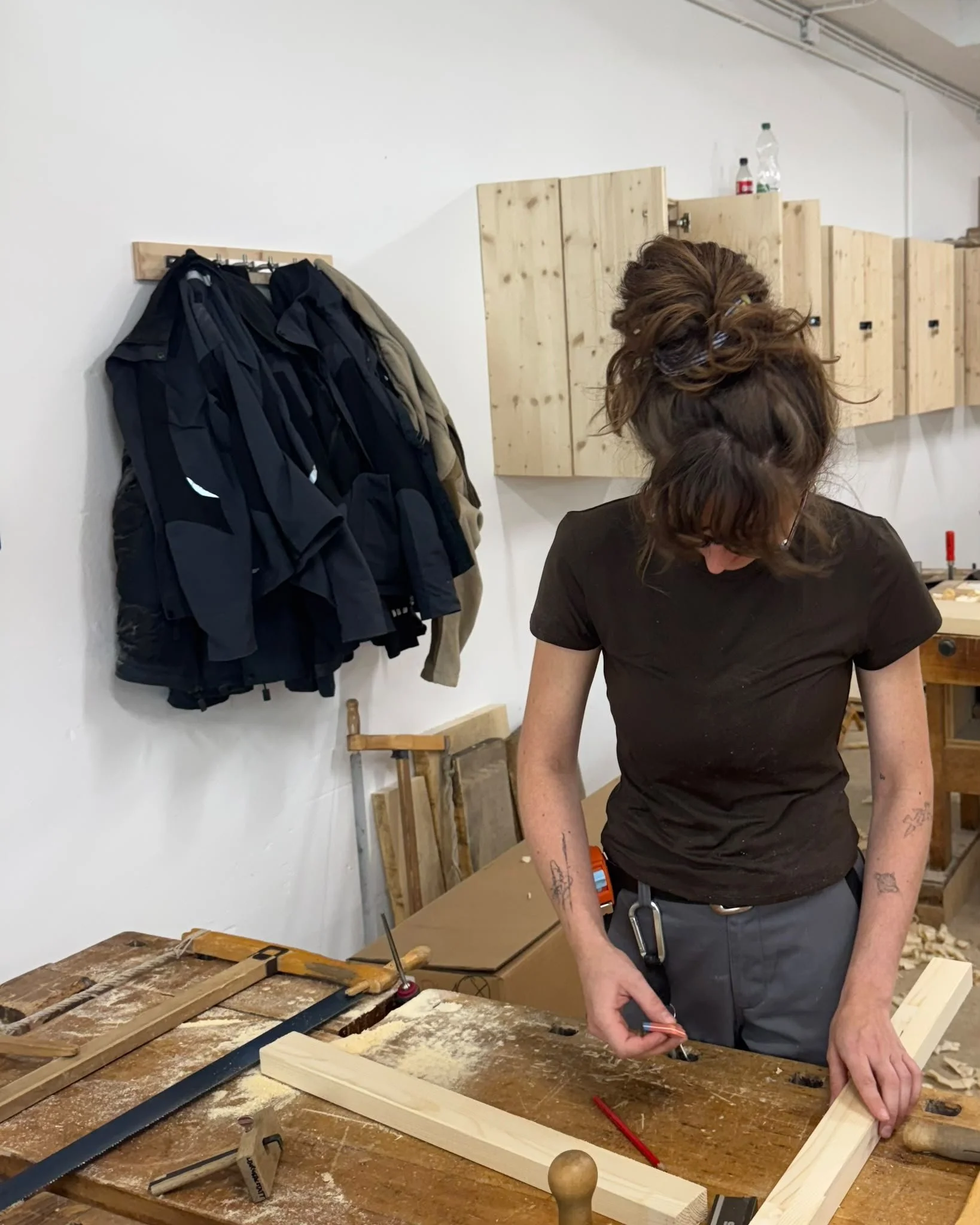
Had you ever built anything before beginning the apprenticeship?
No, not at all. I started with absolutely no previous experience, and there was nobody in my family who worked in a similar field.
I was looking for a challenge. I found an apprenticeship where stage sets are built for Vienna’s theatres, and the connection to my previous degree made it feel like a particularly exciting opportunity.
How did it feel to enter such a male-dominated environment?
Before starting, I hadn’t spent too much time thinking about it. I was simply excited about the work, and by the time I began considering the gender aspect more seriously, I was already doing it.
I feel very comfortable at my workplace, and everyone has been kind to me. Another woman began her apprenticeship at the same time, which has definitely helped. Among the fully trained carpenters, there is only one woman and otherwise only men, so having another female apprentice means that I don’t feel completely alone.
I haven’t personally experienced a moment at my current workplace when I felt I was being treated differently because I am a woman. But I am still aware that I am entering a field in which people don’t necessarily expect to see me.
You recently won a carpentry competition in Vienna. What did that experience mean to you?
Everyone in my year took part. We had to read a technical drawing, identify different types of wood, complete a theory test and build an object according to a specific plan.
I won the competition for first-year apprentices in Vienna which felt incredibly affirming. I was standing there in my little dress, surrounded by all these men, and I had won.
It confirmed that choosing this path had been the right decision.
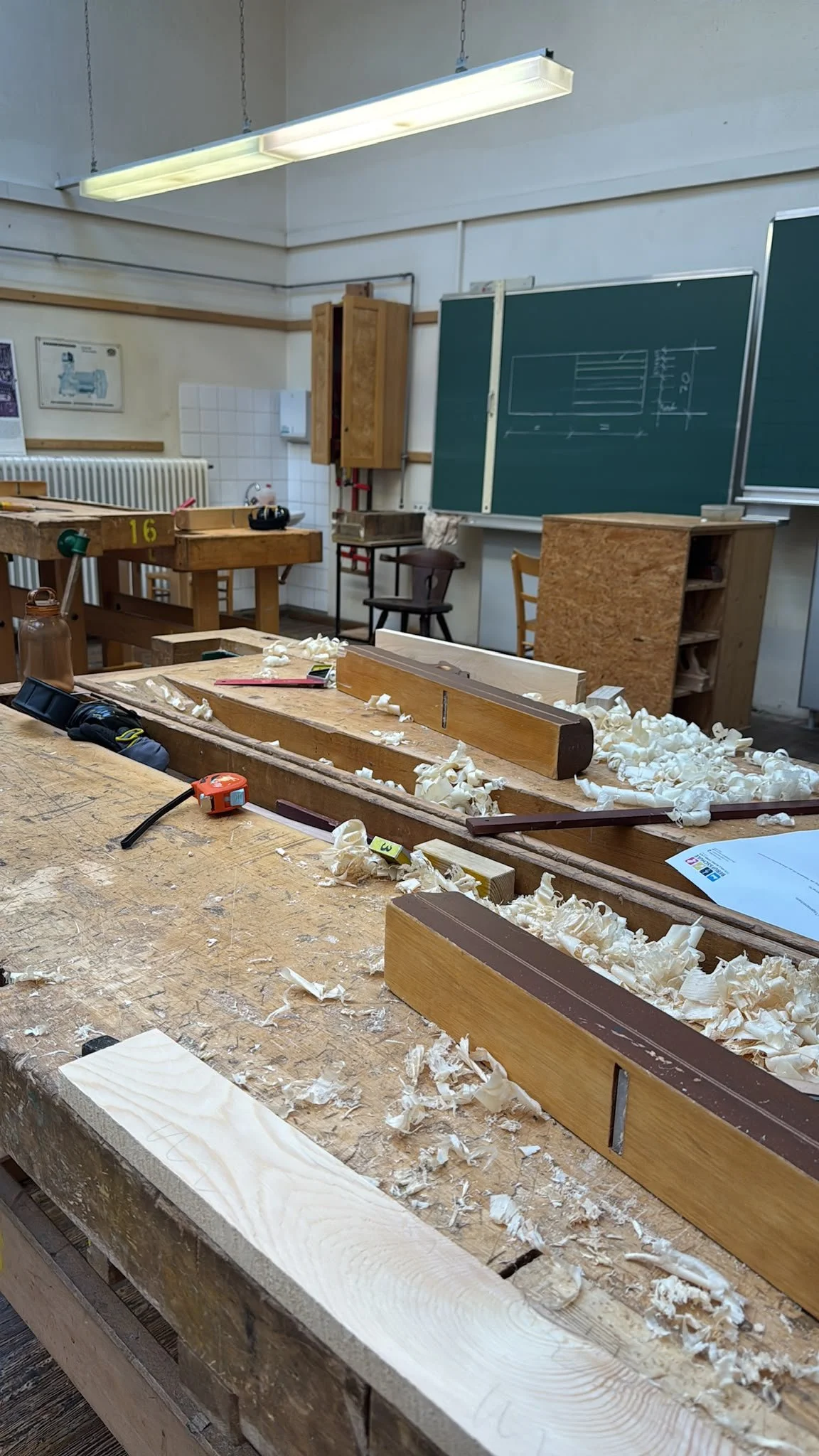
Do you think vocational education is valued enough?
No. There is still this idea that if you have the qualifications to attend university, you should study. An apprenticeship is often treated as though it were somehow less valuable.
But now that I can compare both experiences, I see how demanding an apprenticeship can be. You work full-time, attend vocational school and have to apply what you learn directly. You cannot remain entirely within theory because you need to deliver a physical result.
For me, one year of the apprenticeship has sometimes felt more intense than studying. Of course, you cannot generalise across every degree or every profession, but vocational education deserves a very different standing in society.
It can also give you a clearer understanding of what you will actually do afterwards. At university, you often learn a great deal of theory and only later ask yourself: What do I do with this now?
I do feel that attitudes are slowly beginning to change and that more people are recognising an apprenticeship as a valuable option rather than a second choice.
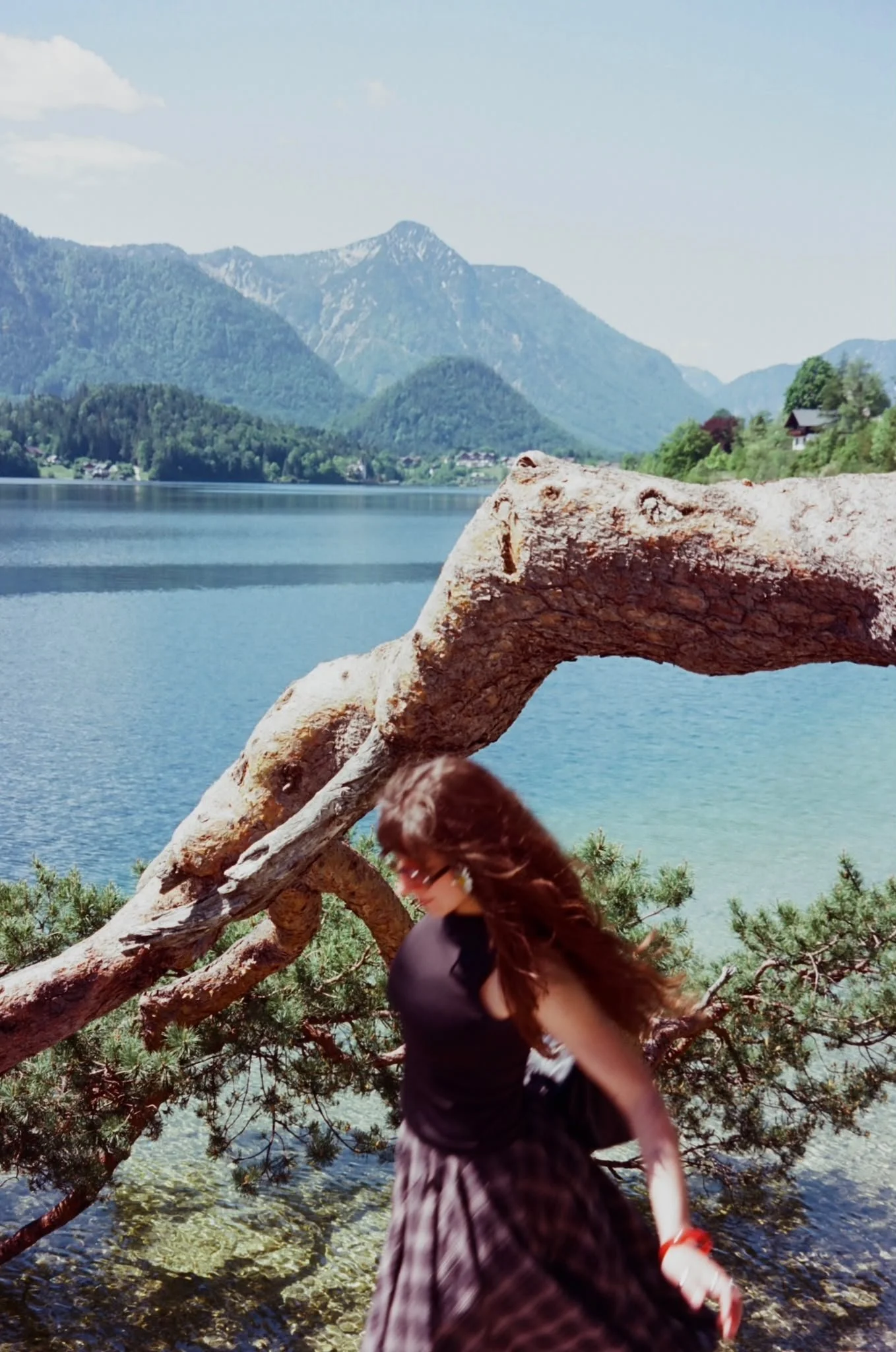
Does your background in Theatre and Cultural Studies still influence the path you are on now?
My degree was very broad and included elements of cultural, media and theatre studies. We worked mainly with theoretical texts and explored different ways of understanding theatre and culture.
The apprenticeship is a very different experience because it is practical and centred on learning a craft. But I like that these two parts of my background can exist alongside each other. I already have the theoretical perspective from my studies, and now I’m developing the practical skills to create something tangible with my hands.
Even if I don’t yet know exactly how I will combine them in the future, having both opens up many different possibilities.
How creative is carpentry when you are following an existing design?
In my daily work, I don’t create the stage design myself. Someone gives us a plan, and we build it.
But the work still requires a lot of creative thinking because you are constantly solving problems. You have to ask yourself: How can I construct this so that it works and still looks the way it is supposed to?
That solution-oriented way of thinking also transfers into other areas of life. You begin approaching problems differently because you are used to finding practical ways to make something possible.
The apprenticeship also gives me the skills to plan and build my own pieces. During the first year, we practised traditional wood joints and created smaller objects. At the end, we were allowed to develop something ourselves, and I built a small bookshelf.
Later, I will also create my final apprenticeship piece. There are certain requirements it has to fulfil, but within those boundaries, I can design and build something of my own.
What has been the most challenging part of the apprenticeship?
At the beginning, almost everything was new. I was lucky that my employer gave us enough time to practise. Sometimes, I spent an entire day repeating the same process until I understood it.
The frustration can be difficult. You might work on something for hours, and it still doesn’t function the way you want it to. You have to learn to continue even when the result isn’t immediately visible.
The physical side is also demanding. You are standing for most of the day, working with your body and completing full working weeks. Moving from university, where I could organise much of my own time, into that rhythm was a significant adjustment.
But you get used to it, especially when you know that this is something you genuinely want.
Did beginning the apprenticeship at an older age help you?
Yes, definitely. Normally, you can begin an apprenticeship at around fifteen, and I honestly don’t know whether I would have managed it at that age.
It helped that I was older and had consciously decided that this was what I wanted. Many people in my class are also in their twenties, and one person is around forty and previously worked in insurance.
That shows that it is never necessarily too late to begin again or train in something completely different, as long as it fits your circumstances.
At the same time, the financial side can be challenging. You work full-time but receive an apprentice’s salary. That system is often designed for someone who still lives at home, which can make it much more difficult when you begin later.
Are there forms of support available to women entering craft or technical professions?
Yes. There are programmes that specifically support women entering craft and technical fields.
I initially learned about them when I wanted to complete an internship. Through that process, I found out that funding may be available, particularly for women beginning these professions later in life.
There are also organisations that work directly with companies and examine how women can be better supported within traditionally male-dominated workplaces.
It is worth researching these possibilities because financial or practical support can make the decision feel much less intimidating.
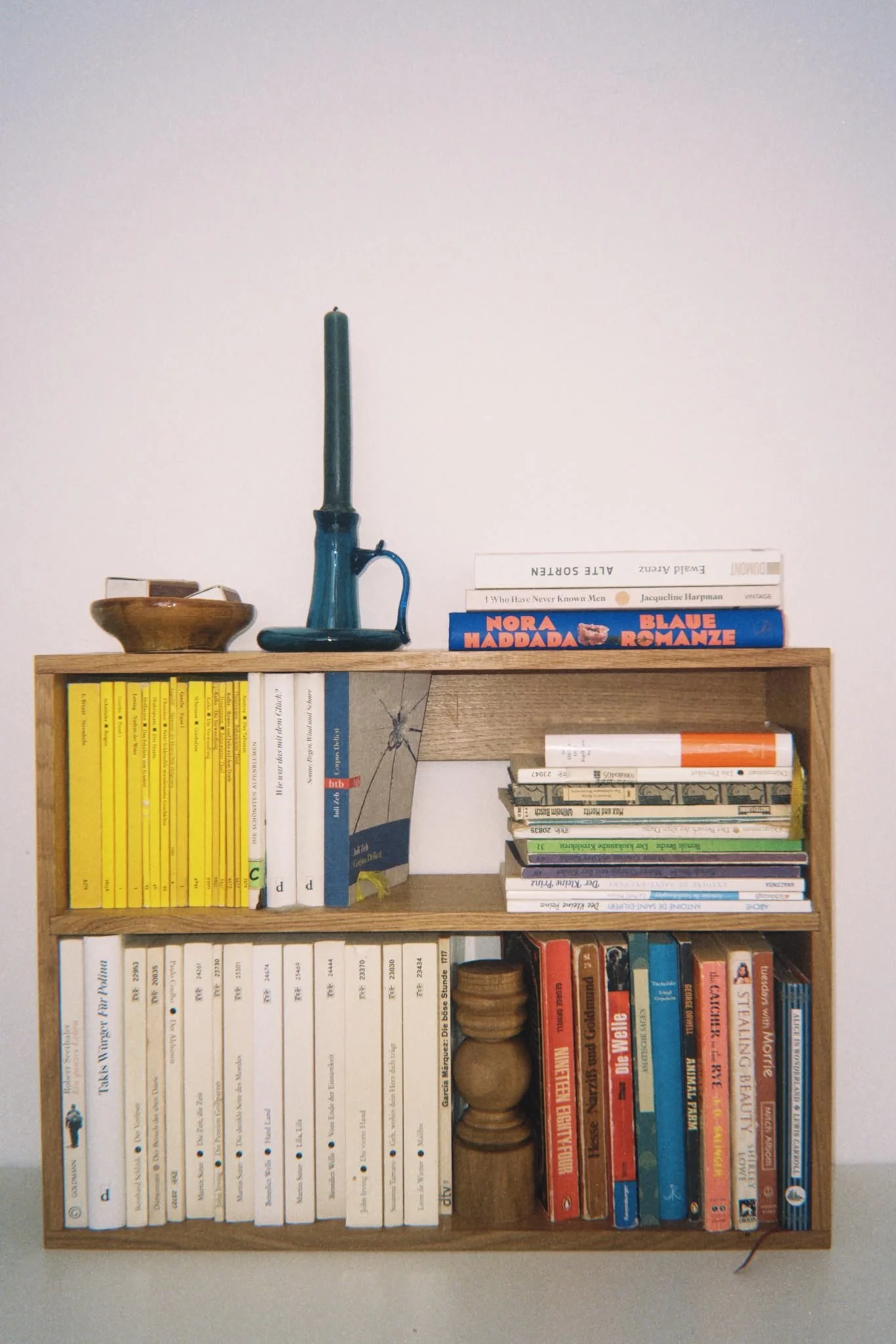
What has learning carpentry changed about the way you see your surroundings?
I look at furniture completely differently now. When I enter an apartment and see a chest of drawers or a table, I no longer only see the finished object.
I immediately begin wondering: How was that constructed? How are the individual parts connected? Could I build this myself?
Learning the craft has given me a new way of looking at everyday objects. I now see the decisions, techniques and work behind them.
What makes carpentry the right craft for you?
I have always been creatively interested, but I never had one single thing I wanted to focus on. I enjoyed drawing and trying many different forms of creativity.
That is probably why carpentry suits me. It is incredibly varied, and even after completing the apprenticeship, you are never finished learning.
One person might become highly skilled in restoration, while someone else specialises in furniture, stage sets or a completely different area. There is always another technique or material to understand.
It allows me to work creatively without being limited to one narrow direction.
What would you like to do once you complete the apprenticeship?
First, I want to build a strong foundation and find a position where I can continue learning while also expressing myself creatively.
Eventually, I could imagine becoming self-employed and having my own place, perhaps shared with other people. I would love to develop and build my own furniture alongside other projects.
I don’t have one fixed plan yet, but that is also what I like about the profession. The apprenticeship gives me many different directions to choose from.
What advice would you give to someone considering a similar path?
Keep your perspective open and look at professions you may not have previously considered; especially those that are not usually presented as obvious choices for women.
Try the work before committing to a full apprenticeship. Even a short internship can help you understand whether you can imagine doing it every day.
You don’t need to arrive with years of experience or come from a family of craftspeople. If something interests you, find a way to experience it.
And if you realise that it isn’t right for you, that is also okay. Life can be a large playground. You are allowed to try something, change direction and discover what suits you through experience.
The series is called Women in Motion. What does motion mean to you, in your life and in your work?
For me, motion means that there is always more to learn. Even after completing the apprenticeship, I will never reach a point where I know everything about carpentry.
The profession requires you to continue developing, discovering new techniques and pushing your own boundaries.
Motion is also reflected in the path that brought me here. I studied something theoretical and then decided to begin again in a completely different field without any previous experience.
For me, being in motion means allowing yourself to change direction and continuing to move forward, even when the next step challenges you.
Want to keep up with Carla?
You can find links to her social media below.
VOL VI: PHOTOGRAPHER PAULETTE
ANIMA SESSIONS VOL 6
I first met Paula one summer in Vienna while I was sitting outside a café with my friend Lara. Paula was inside when she heard Lara’s familiar laugh, recognised it immediately and came outside to join us.
Looking back, this first encounter already revealed something that became even clearer during our conversation: Paula has a natural attentiveness towards people. She notices their energy, their presence and the small details that make them distinctly themselves. This sensitivity also shapes her photography and the connections she creates with the women in front of her camera.
Today, Paula works across portrait, fashion, brand and wedding photography. After studying photography in Vienna, her path took her to Lisbon, where she built a creative network by reaching out to models, artists and brands. More recently, she has also begun expanding her work into film.
In our conversation, we spoke about finding her way to photography, creating an environment in which women feel seen and at ease, building a creative career through initiative, and learning to trust yourself before you feel entirely ready.
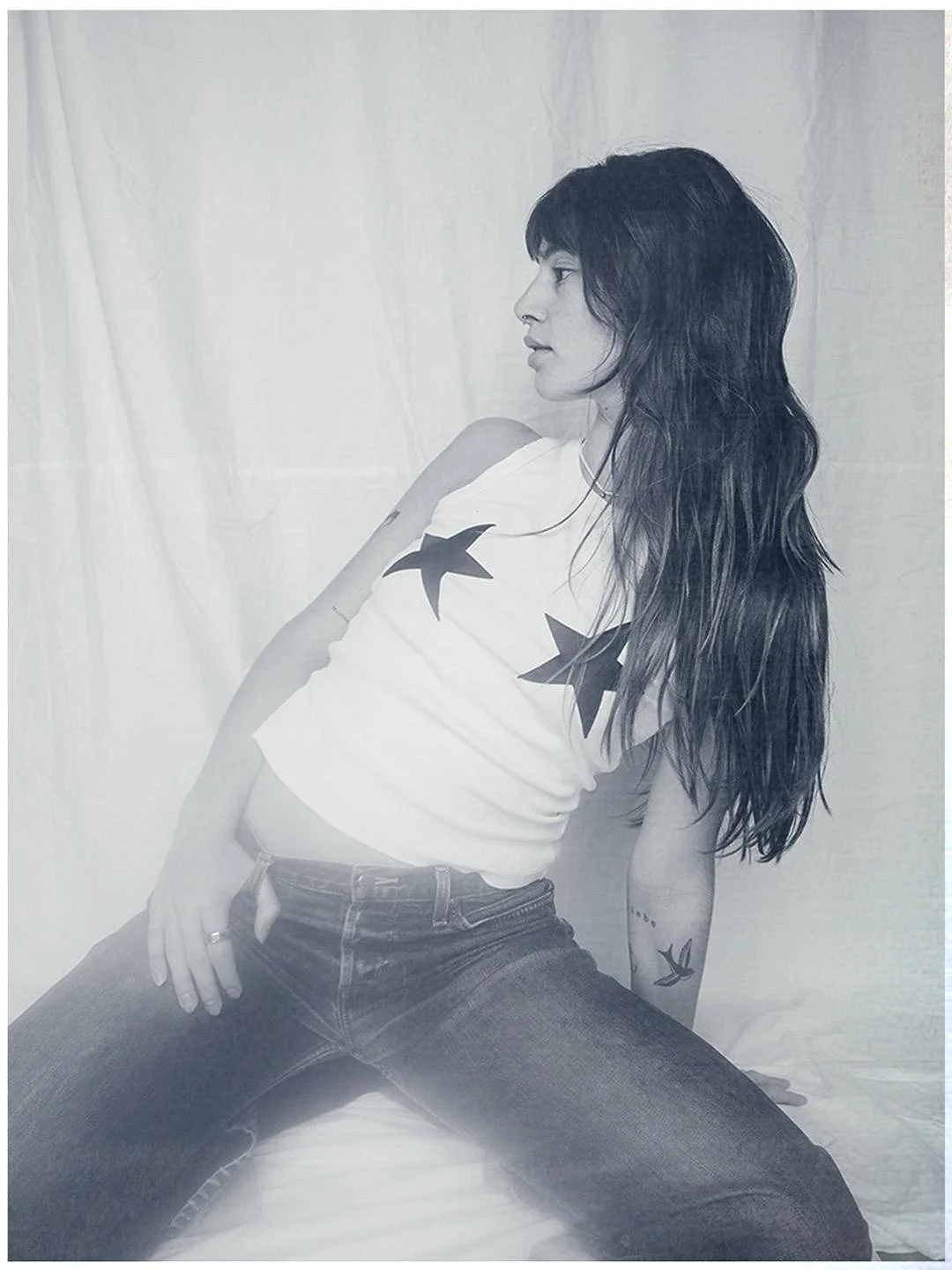
How did you first find your way into photography?
It sounds cheesy, but photography was somehow always there. Even as a child, I was interested in it. When I was around ten, I would style and photograph my friends, and I even had shirts with cameras and “I love photography” printed on them.
Then puberty happened, and photography itself faded into the background for a while. But my interest in visual language never really left me, I continued to see and understand the world through images. After finishing school, I moved to Vienna and began exploring where photography could take me.
I was only eighteen and didn’t know any self-employed people or artists, so I had no idea how to turn something creative into a profession.
Where did you begin learning photography professionally?
I studied photography at Die Graphische in Vienna for two years. I didn’t enjoy everything about the programme, and some parts felt outdated, but it taught me a lot; especially about what I wanted to do differently.
What helped you believe that a creative career was actually possible?
Surrounding myself with people who were doing the same thing or were already further along really helped. I needed to see that this kind of life was possible.
When you watch other people build the career you want, you begin to think: Why shouldn’t I be able to do that too? They are not inherently better than me; they may simply have more experience.
Of course, I still compare myself to photographers who have been working for ten years. But I have to remind myself that I cannot compare my income or position to theirs yet. At the same time, I don’t believe it necessarily has to take me ten years to reach my own goals.
I have already found some shortcuts simply by approaching people, asking questions and creating connections. You have to allow yourself to skip certain imaginary steps. Sometimes, you simply have to say: I’m going to do this now.
What makes photographing women particularly meaningful to you?
There is such a beautiful and different kind of energy when a woman photographs another woman. A few days ago, I had my first pregnancy shoot with this incredibly cool mother.
When I moved to Portugal, I didn’t know anyone, so I started contacting women through agencies and Instagram. Through those shoots, I not only created new work but also found a handful of incredible female friends.
What surprised me was how many women told me that they had previously only worked with male photographers. Afterwards, some of them said that the experience with me had felt completely different.
How do you want women to feel in front of your camera?
I believe that the way you make someone feel during a shoot has a huge influence on the final images.
When I work with a woman, I want her to feel as comfortable as possible. I don’t want it to feel like a formal job; I want it to feel more like a girls’ day. That energy and genuine excitement are also visible in the photographs.
Especially when someone is doing a shoot for the first time, there is often a lot of insecurity. People almost always tell me: “By the way, I’m really bad in front of the camera.” And I’m always like: “Don’t worry.” At some point, it simply starts to flow.
Was working primarily with women an active decision?
Yes, but it also developed naturally because my work seems to speak primarily to women.
Most of the people I photograph meet me for the first time at the shoot. By now, I can almost blindly trust that the energy between us will match.
Every request still makes me incredibly happy. The version of me from four years ago would never have believed that someone would discover my work and actively choose me to photograph them.
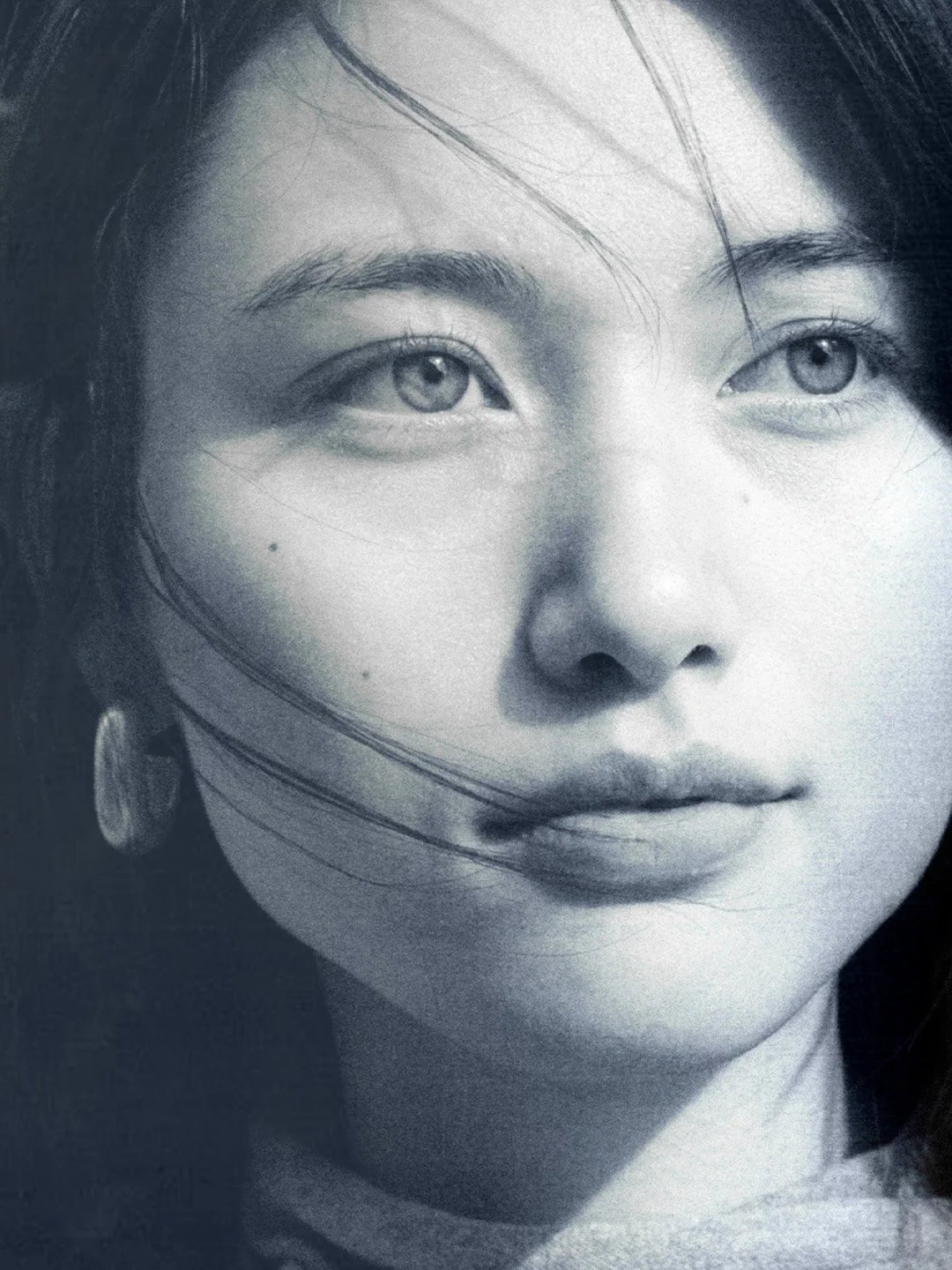
Who or what has inspired the direction of your work?
For years, one of my biggest inspirations has been Kate Bell, a photographer based in Spain. It isn’t only about her photographs but the entire feeling surrounding her work: island life, nature, the sea and something slightly rock ’n’ roll. Her work feels cool, sensual and wild while remaining deeply connected to the natural world.
But I’m equally inspired by the women around me who have their own thing and decide to create something from it, regardless of the field they work in.
Being around people who say, “I really want to do this, so I’m simply going to do it,” gives me an incredible amount of energy. I have become much more intentional about surrounding myself with people who carry that drive within them.
What made you decide to move from Vienna to Lisbon?
I’m a very impulsive person. I found an apartment, and less than two months later, I was living there. I did not know anyone, so I was alone in a new city.
But I also saw it as an opportunity. When you move somewhere new, it almost feels as though you can become a new version of yourself.
I thought: Okay, here I am a photographer. I’m going to make things happen.
How did you begin building a creative network in a city where you hardly knew anyone?
For weeks, I researched models, agencies, photographers and brands. I contacted women whose style interested me and sent email after email.
Often, it felt like sending things into the void. There were days when I thought the world was at my feet, followed by days when I doubted everything. But eventually, one person says yes, and that connection leads to the next.
Lisbon’s creative scene is relatively small, so once you meet one person, you often become connected to many others. Many of the women I photographed there are now my friends.
That is one of the most beautiful parts of photography for me: you spend a few intense hours creating something together and can leave feeling as though you have known each other for much longer.
How did your first jobs and brand collaborations in Lisbon come about?
My first job came through a model I had contacted. We took some simple Polaroids, her agency published them, and that helped introduce my work to more people.
I also began contacting brands I genuinely liked. That is how collaborations with brands such as Gandaia happened: I simply wrote to them. Sometimes, I even walked into shops in Lisbon, introduced myself and asked whether they wanted to create something together.
How much of the creative process do you manage yourself?
Some of those shoots were very DIY. I found the model, chose the clothes and location, did the styling and developed the concept myself.
It creates more pressure, but it also allows my personality to come through in every part of the result.
In the future, I would love to build a small team of women in Lisbon; a group that regularly creates together, shares opportunities and supports one another.
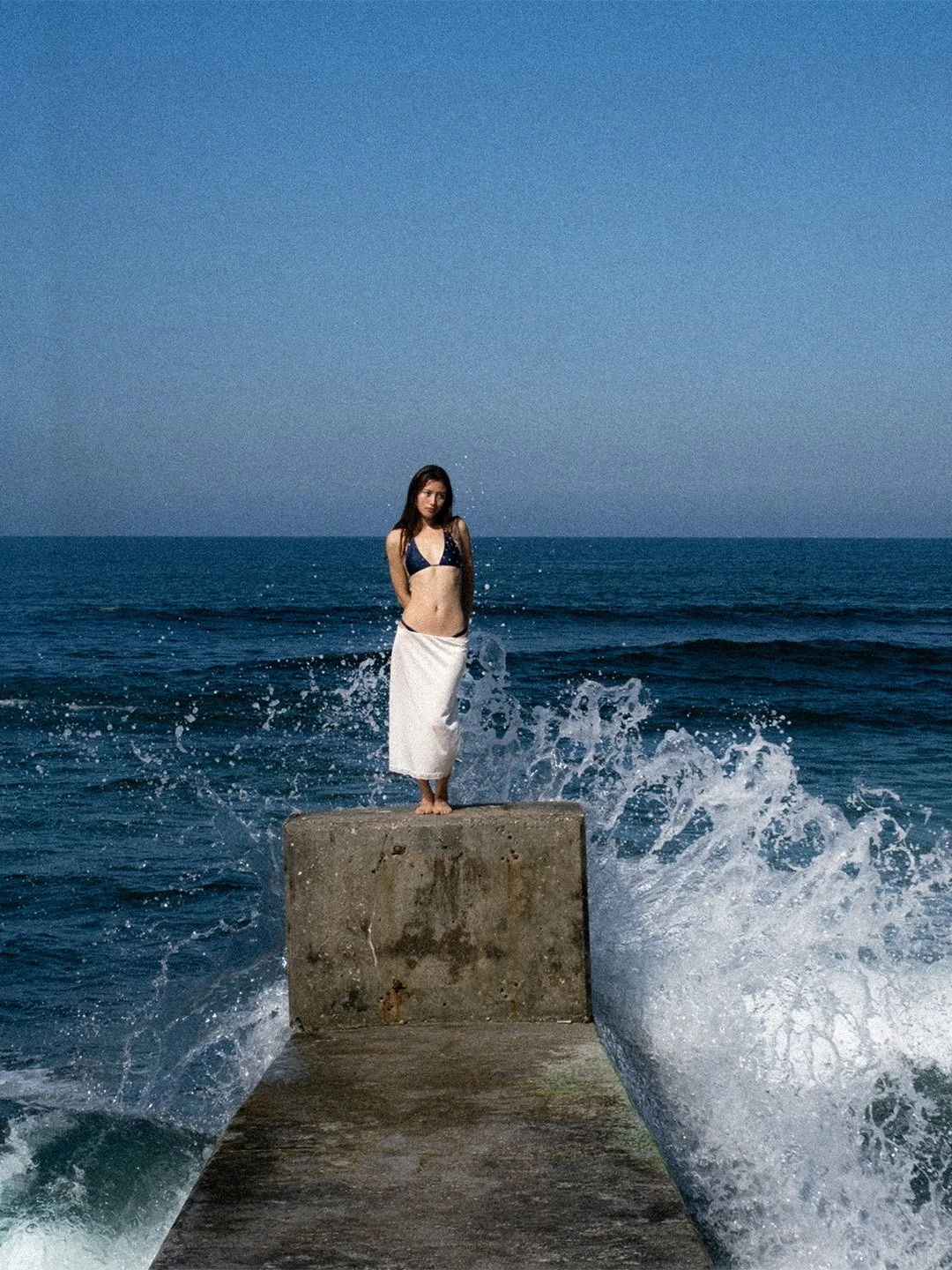
How has your visual language developed over time?
In my head, I still feel as though I need to make my branding stronger and more obvious. But looking back, the feminine and powerful element has always been present in my work.
Earlier, I experimented much more with dramatic make-up, elaborate styling and unusual concepts. Over time, my work became more natural.
Now, I’m drawn to little or no make-up, simple clothing and a stronger focus on the person, the movement, the gaze and the surroundings. I want to bring out someone’s essence rather than cover it with too many additional elements.
I can now tell someone: “Put on jeans and a tank top, and we’ll create something incredible.”
Is there one shoot that particularly represents what you want your work to feel like?
One of my favourite shoots took place in Mallorca two years ago. I was there with friends but wanted to use the opportunity to create something for my portfolio.
Early in the morning, we drove along the coast in an old cabriolet until we reached a quiet location by the sea. We spent around two hours taking photographs in the water and among the trees.
Everything I love came together in that shoot: nature, a strong woman and this special energy between us. The experience itself felt just as important as the photographs.
I understood that it was a building block for the kind of work I wanted to attract. I was creating an example of what I wanted my future jobs to look and feel like.
Now, many of my paid shoots carry exactly that energy.
How did you first become interested in wedding photography?
A close friend of mine has been photographing weddings for years. He repeatedly told me: “Paula, just try weddings. You have everything you need for it: the spark, the excitement and the right energy.”
For a long time, I resisted the idea. I associated wedding photography with something very conventional and not particularly creative.
That changed in Lisbon when my friend introduced me to several other wedding photographers. Through them, I realised how varied that world can be.
There are weddings that feel almost like fashion productions: intimate, editorial and unconventional. You can bring your own visual language into them.
Everything I already loved about fashion, brands and portraiture could become part of the way I documented a wedding. I also realised how well it suited the lifestyle I wanted, with travelling and working in different places.
What helped you take your first steps into the wedding industry?
The photographers I met in Lisbon encouraged me to attend a large wedding photography conference in Munich. I hesitated at first because attending involved a significant investment, and I had no idea what would come from it.
Being surrounded by hundreds of experienced photographers initially felt overwhelming. But once I started talking to people, I realised that I didn’t need to arrive with years of experience behind me. I simply needed to be open, introduce myself and show a genuine interest in their work.
Looking back, attending the conference became an important turning point. All of my second-shooter opportunities this year grew from the connections I made there. It showed me that putting yourself in the right environment and starting conversations can open doors you could never have planned for.
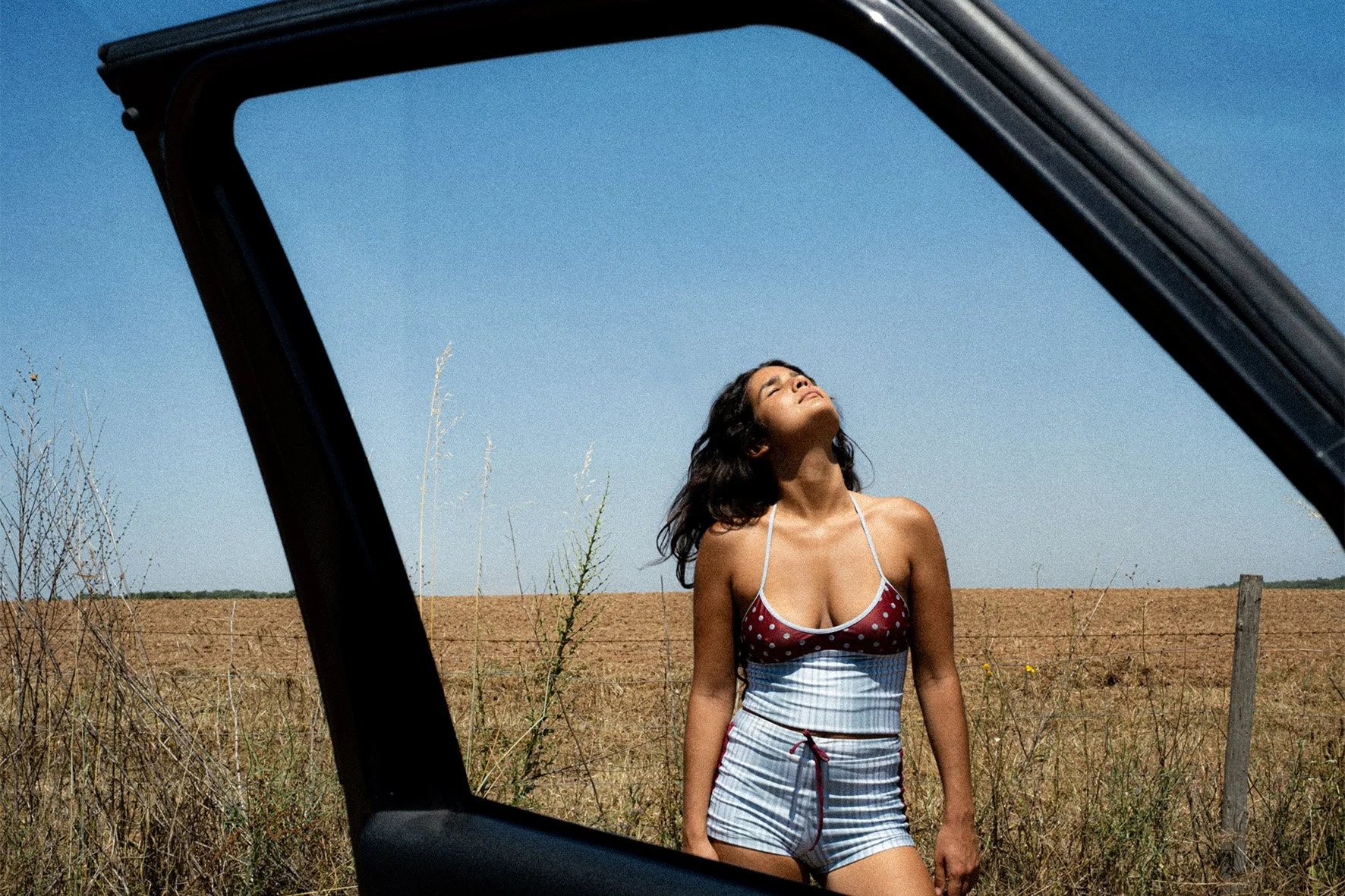
.
What does working as a second shooter allow you to do?
This year, I’m working on around ten weddings, primarily in Italy and Portugal.
Many of them are destination weddings, so within one season, I can build a portfolio featuring places such as Tuscany and Lisbon. That gives me the experience I need to hopefully begin booking my own weddings as the main photographer next year.
How have you experienced the community within wedding photography?
I was surprised by how supportive it can be. Photographers recommend one another when they are already booked and bring each other along as second shooters.
Do you want to focus more on weddings in the future?
Brand and portrait photography remain at the core of my work.
Ideally, I would photograph a few special weddings each year that feel close to my dream projects and leave space for everything else.
You are also expanding into film. What are you currently working towards?
Until now, video has mainly been an addition to my photography. I often brought my camcorder to shoots, but it wasn’t something people explicitly booked.
That is beginning to change. In October, I’m shooting my first full music video in Lisbon.
How did you feel about accepting a project you had never done before?
I was honest and told her: “This is my first proper music video.”
For her, the vision and the person behind the camera mattered more than whether I had already completed that exact kind of project. She trusted that my visual approach suited her.
I think you don’t become ready before doing something, you become ready by doing it.
The reason I trust myself with this opportunity is also that somebody else trusted me first. People like that are incredibly important: people who see something in you and simply say, “Do it.”
What are you most looking forward to right now?
Alongside the music video, I have several weddings coming up as a second shooter. Beyond weddings, I would also love to work on more creative projects and fashion editorials. I’m excited to gain more experience, learn from different photographers and continue developing my own approach along the way.
This year has already developed in ways I never expected. Suddenly, I’m photographing ten weddings and preparing to shoot my first music video. I’m very happy and curious to see where all of it will lead.
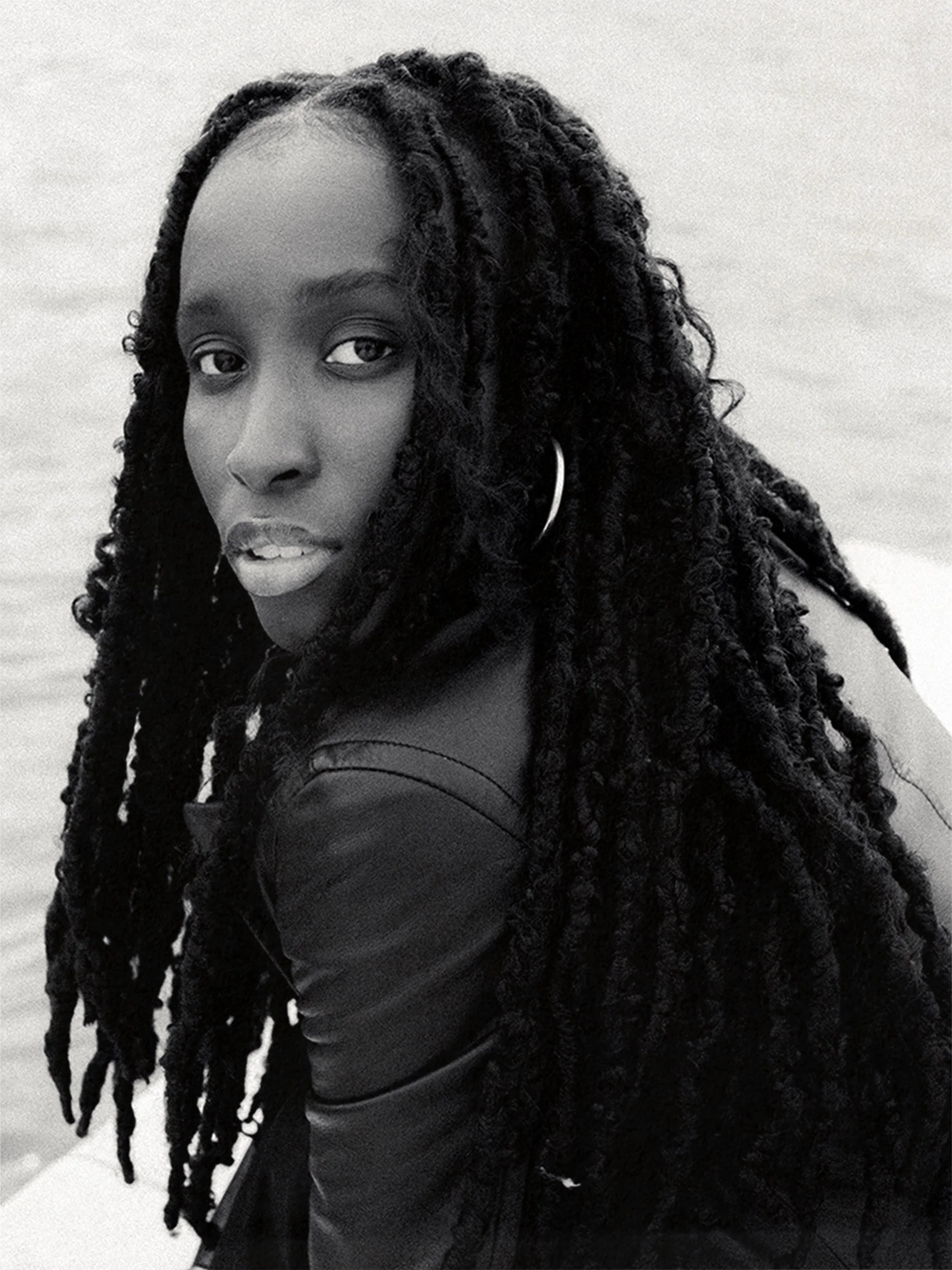
What advice would you give to a woman who wants to enter photography or film?
Just go for it. Don’t spend too much time believing that you first need to do something more sensible.
Find people who are already doing what you want to do and contact them. Ask whether you can join them, what their most important advice is or whether they can give you feedback on your work.
I spent far too long worrying about things such as building the perfect website when I could simply have been creating. The most important thing is to do the work and begin seeing yourself as the person you want to become.
If you want to be a photographer, start saying that you are a photographer.
How important is persistence when you are just starting out?
You won’t always receive an answer. Sometimes, you have to write twice or three times and show that you genuinely want to learn.
You shouldn’t feel embarrassed because you are only at the beginning. Everyone started somewhere.
Knowing people is essential in this industry. It creates opportunities, but it also saves you a lot of uncertainty. When you are surrounded by people who are already building the kind of life you want, you begin to understand that it is possible.
You can look at them and think: If they can do it, I can do it too.
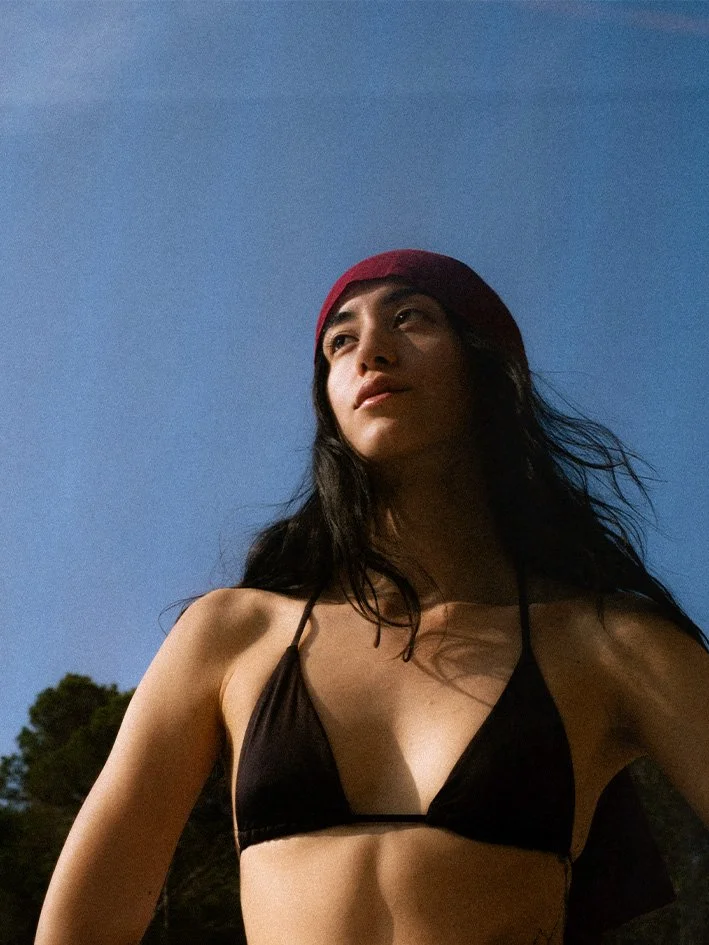
The series is called Women in Motion. What does motion mean to you, in your life and in your work?
For me, motion is the interpersonal movement between the photographer and the person in front of the camera. There is so much energy being exchanged between them.
After a shoot, I want the person to feel that something has happened. I want her to feel beautiful, seen and confident, to leave thinking: I want to experience that again.
Photography may appear to be something I do for another person, but it is always mutual. The energy she gives back to me makes me want to continue creating, to begin the next project and do even more.
A photoshoot is very intimate. Standing in front of a camera can feel vulnerable, especially when the photographer is someone you have only just met. I always feel honoured when somebody places that trust in me.
At the beginning, it usually takes a little time for both of us to adjust. Then there is always a particular moment when the uncertainty disappears and we understand one another.
Later, when I look through the photographs, I can often see the exact point at which it happened.
You can begin a shoot as strangers and leave feeling as though you have known each other for much longer. That connection, the energy exchanged between two people and the feeling of being genuinely seen: that is where I find motion in my work.
Want to keep up with Paula?
You can find links to her social media, current work and upcoming projects below.
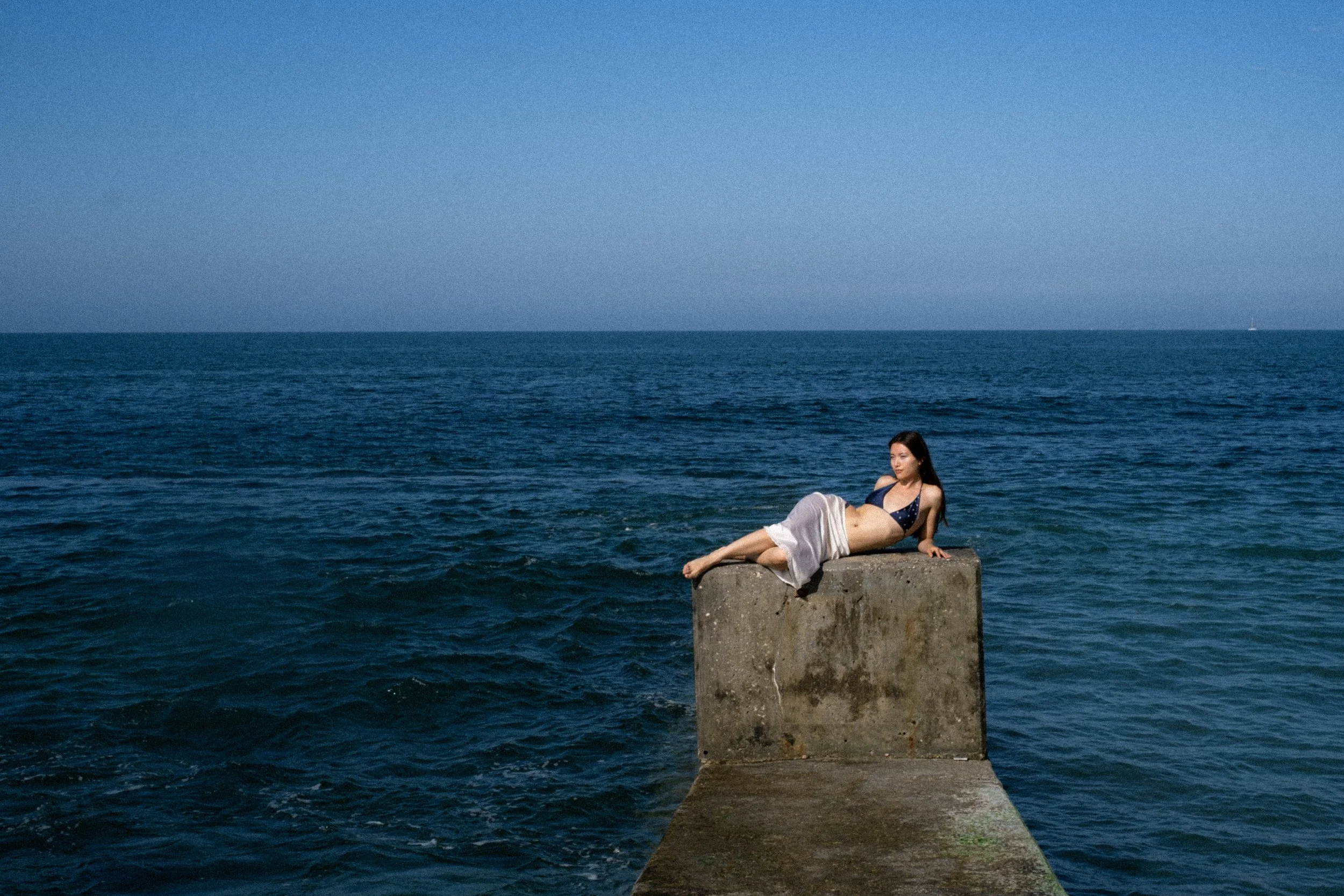
vol v: JEWELLER EMMA
ANIMA SESSIONS VOLUME 5
Long before this conversation, Emma and I met through mutual friends at a small pub in our home province of South Tyrol in northern Italy that now exists only in memory. Growing up, it was an important place for us, a place where people came together and found a sense of energy within the otherwise quiet rhythm of life in the mountains.
That evening, there was something distinctly creative about Emma’s presence: a quiet individuality that suggested she would always find her own way of expressing herself rather than follow a path already laid out for her.
Today, Emma works as a jeweller, creating bold pieces that she sees not simply as accessories, but as extensions of the body. Her path has taken her from studying goldsmithing in Rome to an internship in Georgia, shared creative studios in Vienna, and now towards a new chapter in Antwerp.
In our conversation, we spoke about choosing a creative path without a clear roadmap, the tension between craftsmanship and artistic freedom, jewellery as a way of feeling more like yourself, and the constant movement involved in finding your own direction.
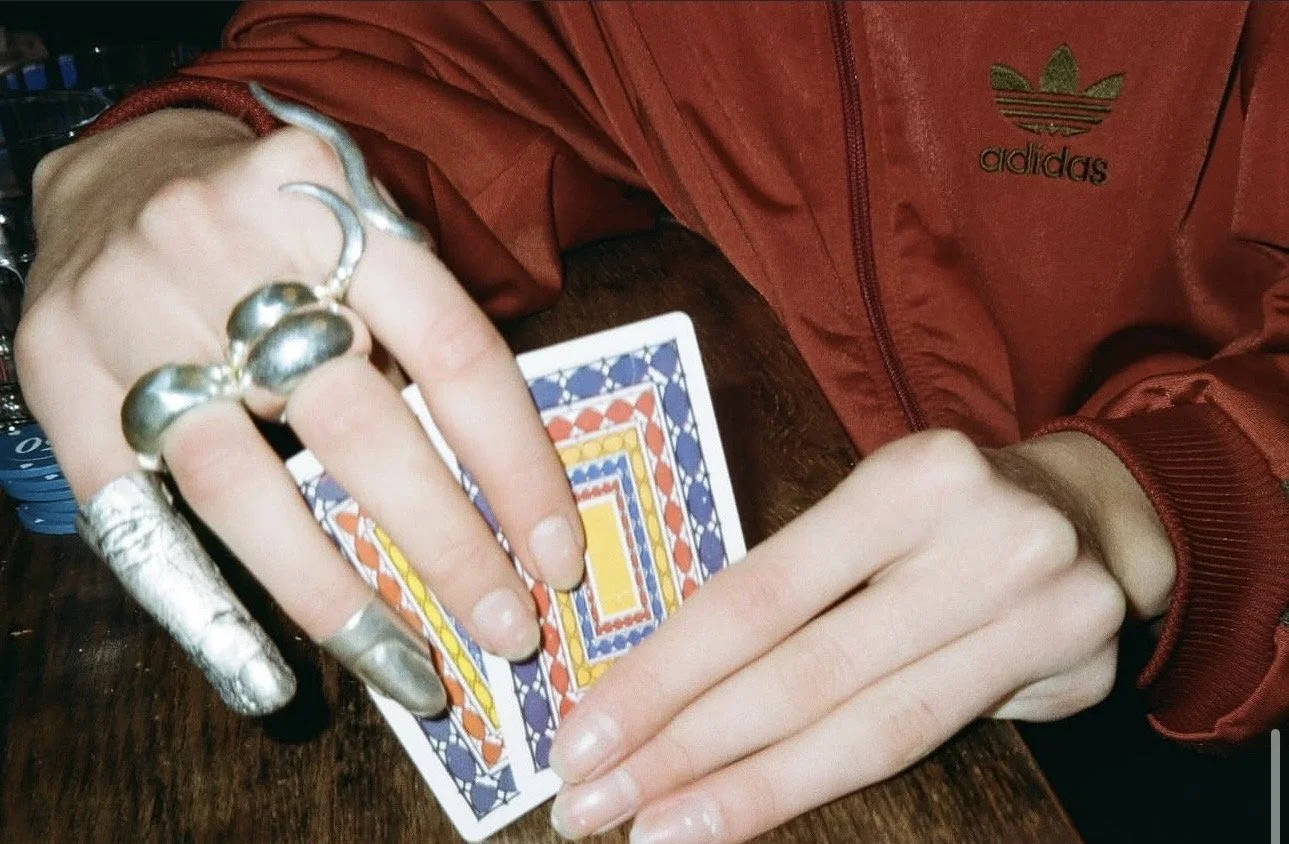
How did you first get into jewellery design, and what made you feel that it could become more than an interest?
For me, it happened relatively randomly. After spending time in Mexico and seeing how people worked there, I reached a point where I thought: Okay, I don’t really want to study right now. I was very focused on finding something that genuinely interested me and that I would actually enjoy doing.
At some point, I realised that I needed to find something for myself. That was when I started researching jewellery design and goldsmithing. I mainly wanted to find something that allowed me to work with my hands and hold a physical result at the end, something I had created myself.
Had you already considered learning a craft while you were still at school?
During school, I had already been very tempted to attend a vocational school and train in a craft. What held me back was how conservatively vocational education was viewed where we grew up. If you were a woman and said you wanted to train as a metalworker, people immediately looked at you differently.
I think that if I had grown up in a different environment, where this attitude was less present, I would have seriously considered it. But where we came from, vocational school still carried a very negative stigma, even though these professions are incredibly important and often highly demanding.
How important was it for you to find work that you genuinely enjoyed?
It was also essential for me to find work that I genuinely enjoyed. Many of my friends say: “I don’t need a job that I’m completely passionate about. I want to enjoy my free time and the time I spend with my friends.” I actually find that attitude impressive, but it doesn’t work for me. I need to feel that I genuinely like what I do. Of course, you have holidays and free time to enjoy, but you still spend a huge part of your life working.
For all those reasons, I eventually thought: Okay, I’m simply going to try.
That decision led you to a goldsmithing course in Rome. How did you find it, and what did the experience give you?
I found the programme online. I had always been drawn to the idea of continuing my education in Italy, and discovering a course in Rome immediately felt exciting. It gave me the opportunity to explore goldsmithing while building a life in a city I genuinely wanted to experience.
What did you learn there, and how prepared did you feel once the course was over?
The course was called, I think, Goldsmithing and High Jewelry. I learned a lot. It opened up a whole new world of techniques and possibilities for me.
But once the course was over, there was no clear path ahead. I had gained all these new skills, yet I was still asking myself: Okay, what do I actually do with them now? I knew how to begin making jewellery, but I still had to find my own way forward.
How did a spontaneous message lead you´ll the way to Georgia?
I had been following Maria Khas, a goldsmith whose work I really admired for a long time. At some point, I decided to simply write to her, even though I didn’t expect her to answer.
But she did. We started talking, and eventually she invited me to come and work with her in Georgia. It happened very spontaneously—I saw the opportunity and immediately knew I wanted to take it.
What was it like to actually work with her in Georgia?
I spent three weeks with her in Georgia and completed an internship. I later discovered that she didn’t usually accept interns. She worked alone in her studio and sold her pieces online.
She told me that people often wrote to her asking: “What do I need to become a goldsmith? Which tools should I buy?” Apparently, my message felt different because I already knew something about the craft and had genuinely engaged with it. At some point, she simply invited me to come to Georgia and learn from her.
I immediately agreed, without needing much time to think about it. She was surprised by how spontaneously I accepted the invitation and decided to travel to Georgia. Looking back, I think that willingness to simply try something, even without knowing where it might lead, it has shaped many parts of my journey.
When you returned, how did you begin building a working life of your own?
When we moved into our new apartment, we had a storage room. We completely transformed it so that I could use it as a small workshop. It took forever, probably around six months, until I could properly work there, because all the tools required to work efficiently are expensive.
For a while, it worked well. But eventually, we needed the room as a guest room again, which meant I had to find somewhere else to work.
What changed when you moved into a shared studio?
Eventually, I found a place in a shared studio. It was initially supposed to be a temporary solution, but being around the people there made me realise: Okay, I need this. I need to be surrounded by other people who are creative and make things. I also need a neutral space where I can genuinely focus on my work.
Finding that studio was a matter of very lucky timing. I happened to see my friend Mathilda. She told me that some friends of hers were looking for someone to join their new studio. I went there that same day, met one of the people working there, and after we talked, they simply said: “Yes, that works. Come and join us.”
The studio brought together people from different creative fields. There were photographers, a seamstress and, eventually, another person who also began making jewellery. Being part of that environment showed me how much I value working alongside people who are developing their own ideas, even when we are not all working in the same medium.
What made jewellery the right medium for you?
I think it is because jewellery is an art form that is also deeply rooted in craftsmanship.
Traditional goldsmithing might not always be described purely as an art form. If you work as a classical goldsmith, you are often more of a craftsperson than an artist. But there is also another side to it: creating unique pieces that may be less practical for everyday life and function more as pieces of art, special works that someone might wear only for a particular occasion.
I loved the fact that jewellery could be both.
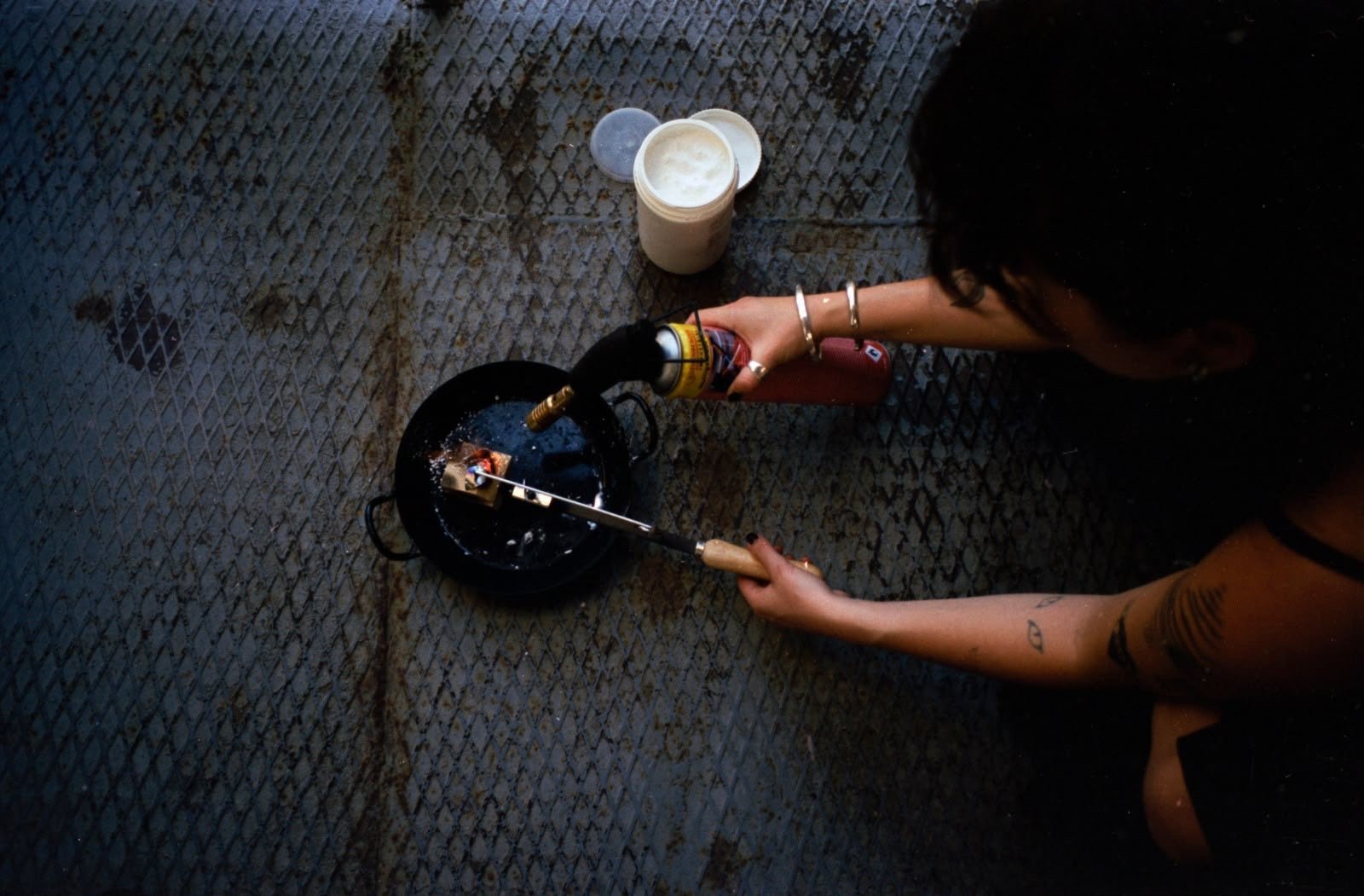
How has your own visual language developed?
Looking back at everything I have created, I’ve realised that I don’t see jewellery as something separate from the person wearing it, but as an extension of the body.
I draw a lot of inspiration from the body and from the way jewellery interacts with, follows and transforms it. I love creating bold, unconventional pieces, the bigger and more striking, the better. At the same time, I don’t want them to feel overloaded. Even at their most expressive, there is still a certain simplicity to them.
Image Credit: Luca Wollenzohn
Image Credit: Luca Wollenzohn
What do you mean when you describe jewellery as an extension of the body?
When I call jewellery an extension of the body, I mean something that becomes part of me. Jewellery gives me a lot of confidence. Like clothing, it is a way for me to feel more comfortable within myself.
I don’t wear these things for anyone else. It isn’t about impressing other people or changing the way they look at me. I simply feel better in them, more like myself and more comfortable. Jewellery helps me carry what I feel inside to the outside.
On the rare occasion that I take off my jewellery or realise I have forgotten my rings, I usually go back to get them. Without them, I genuinely feel naked. I recently discussed this with my mother. She wasn’t wearing her earrings and said that she felt less dressed, even though jewellery obviously isn’t clothing. It is simply another form of it. For me, it is genuinely about how I feel in it.
What are you looking forward to most about beginning this new chapter in Antwerp?
I’m excited to live in a new city, meet people who approach jewellery and creativity differently, and be surrounded by new influences. I want to see how Antwerp changes the way I work, what I create and how I think about my own practice.
Right now, Antwerp feels like much more than a single project. It is a chance to step outside what I already know, develop my craft and discover a new direction for my work. I don’t know exactly where it will lead yet, but that is also what makes it exciting.
The series is called Women in Motion. What does motion mean to you, in your life and in your work?
In relation to my life, motion is everything we have spoken about: continuously discovering which direction to take, trying new paths and allowing yourself to change your mind during the process.
In my work as a jewellery designer, motion is about creating something for another person that they may then carry with them through life.
I find it crazy to create a new piece for someone and imagine that, ideally, they might wear it for the rest of their life. That feels special because very few things we make remain with someone and continue moving through the world for that long. I can create pieces that become part of people’s lives and part of the way they move through the world. That is where I find motion.
Want to keep up with Emma?
You can find links to her social media below
vol iv: Baker & chef giovanna
ANIMA SESSIONS VOLUME 4
Giovanna and I first crossed paths through shared curiosity about the meaning food can carry. When we met at a bakery in Amsterdam, my first impression of her was shaped by the genuine excitement with which she spoke about food – and by the insane cookies she made .
Our conversations about our favourite foods quickly became conversations about much more: where we come from, what we remember, and why certain tastes make us feel comforted or connected.
A favourite food is rarely just something we enjoy eating. It can hold traces of our childhood, our culture, the people close to us, and the experiences that have shaped us. This connection between food and the mind became the starting point for our conversation.
Today, Giovanna describes herself as a baker first and, more broadly, as someone who works with food. Her relationship with baking is shaped by curiosity, creativity, and a desire to create experiences that people remember.
In our conversation, we spoke about her journey into baking, the memories carried through taste, finding confidence without formal culinary training, and her dream of creating a space where food, creativity, and people can come together.
How did your journey into cooking and baking begin?
I’ve always been somebody who loves food. And when I say I love food, I think there’s something everybody lives for. I genuinely think I live to eat and to witness food come to life. It’s something that gives me a lot of energy.
I love walking through a supermarket. I love seeing how people interact around a table. I love observing the atmosphere in a restaurant, from how the service is given and how the staff interact with one another to how people interact at the table.
I’ve always had this excitement around food and everything it encompasses. From a very young age, I had an affinity for bread and pastry. My step-mother is a big pastry fanatic, so she would always bring something home, like tarts and other pastries.
Then one day, I walked into Chez Rosie, which became my first job in a bakery. It used to be a bakery in Amsterdam. I had this intuitive thought that I needed to speak to the owner. So I spoke to her, sent her my CV, got the job, and fell in love with it.
So you simply walked in and decided to go for it?
I wanted to do work that felt meaningful to me. When I entered Chez Rosie, I felt something genuine. I could tell that the people there truly loved what they were doing, and I wanted that infectious energy. I wanted to love what I did, too. So I just went for it.
What do you love most about food, bread, and creativity?
I think what I love is how food connects to memory. Taste is a very delicate and powerful sense. It can transport you back to places. I love when people eat something and say, “Wow, this reminds me of this dish,” or, “This reminds me of this time,” or, “This reminds me of when I was a kid.”
It gives us this power of imagination that I think we’re lacking. It creates this childlike energy and a very childlike happiness. I love that about food.
I also love that it can be shared. Food requires this communal interaction around a table, where somebody brings something from a different story or a different place, along with the story of bringing it. Then it all comes together. I really love that.
And I love that food is colourful. It’s something vibrant in its essence. Food isn’t just about a piece of bread. It’s about the softness of the bread, the crunchiness of the exterior, the colours you put on top, and the different textures. They all come together and create a form of art.
The difference between a piece of bread and a great piece of bread is about the layers. I love that food is colourful and creative, and that you can create all these different sensations.
When you talk about food being connected to memory, is there a particular dish or taste that comes to mind for you?
Bread has always been a very meaningful taste for me because I grew up Indian and Chinese. I would eat roti every day at home, which is a form of bread made from flour and water.
In Chinese culture, there are also many Chinese pastries that I would eat after school. You would go somewhere after school, get some bread, and eat it with your friends. Or you would get a piece of bread in the morning before school.
For me, it really comes back to the foundations and the basics. It’s my foundation. It feels like coming home. Roti is served with your side dishes, and I have a very strong connection to these elements that made me who I was as a child. Bread was probably 70 percent of my diet.
These simple foods are often the most fulfilling. They don’t need anything more.
Is there something you’ve made that holds a special place in your heart?
A very special thing for me is always the cookies. They opened the world for me. They opened up the possibility of creativity.
The brown-butter chocolate-chip cookie, as simple as it is, is something I’m really proud of. I’m proud of how we adjusted the recipe and where that has brought me now. When I think about it, last summer I was making them for a private dinner, and now I’ve reached the point where I’m making cookies for a wedding. That feels huge.
One of the women who attended both my cookie class and my bread-making class is getting married, and I’m creating a special cookie for her wedding. I remember thinking, “Wait a minute, what? This is crazy.” Somebody trusts me enough to make something for such an important occasion.
I’m really excited about this project. I think it’s going to be a very big milestone for me, so the cookies are especially memorable.
What would you love people to feel when they eat something you’ve made?
I want people to feel a sense of comfort. In Ratatouille, there’s a moment when he eats a piece of cheese and a strawberry. These beautiful lines appear, and it becomes this sensation of dance. That’s what I want people to feel.
I don’t want eating something I’ve made to be a flat experience. I want it to have layers.
Was there something that was particularly challenging in this process, or something that taught you more about yourself?
It created a huge reconnection with myself, but it also made me face my imposter syndrome. I didn’t get a degree in food. I didn’t formally learn or study it; I have a master’s degree in psychology. So I kept thinking, “Why me? Why me? I’m not even in food. This was just something I decided to do to pay my student bills.”
I’m so glad and honoured that my friends supported me throughout this entire process. It really made me confront this feeling of not being good enough, and I’m still confronting it.
As I said, I know there’s a lot left for me to learn. There’s a part of me that feels the need to be the best at everything, this perfectionistic part. I’m trying to tame that part and be graceful with it. I’m trying to remind myself: You’re a learner. Explore. Be creative. This is about the process, and there is no end goal. The end goal is simply meeting yourself and accepting yourself.
I think this process has been more about coming back to myself than anything else. It really has been. I don’t know what could make me feel closer to myself than working with food. It involves creation and creativity, but it’s also a form of care for yourself and for other people. It’s kind of everything.
What advice would you give to somebody who also wants to enter that world?
If you don’t ask, the answer is always no. Just do it. Go and ask, “Can I work here? Can I start?”
People are going to say, “No, you don’t have experience,” or, “No, you don’t have this.” But somebody is going to believe in you, and somebody is going to give you an open door. Chez Rosie was my open door, and I’m so grateful to her.
One day, when I have my own place or feel that I’ve achieved some kind of monumental success, I will always thank her. So, for me, it’s about being afraid, going out and asking, and doing it anyway.
It’s so easy and so difficult at the same time. Don’t think too much. Go and do it with the fear, with feeling afraid, with feeling like you’re going to be rejected, and with feeling like you don’t have enough experience. Just go and ask. Somebody is going to believe in you, and eventually you’ll know: “I’ve got it.”
You mentioned that you’re more afraid of mediocrity than of not becoming successful. What does that mean to you?
I think that’s also my Achilles’ heel. I’m not afraid of not making money or not becoming successful. I’m more afraid of mediocrity. I’m afraid of creating something that is just fine.
Food, for me, is this whole experience, like the moment in Ratatouille when he eats the cheese. I want food to be able to evoke that feeling in people. I want it to be outstanding.
I recently ate something that made me say “wow” over and over again. I couldn’t stop saying it. That’s what I want to give people: a memorable Ratatouille experience.
Is there a dream project you would love to create one day?
I would love to open my own place one day, but it wouldn’t be as simple as opening a bakery. I want to open a social hub. I would love it to be a space that people can make their own.
Nowadays, “community centred” is a trend, but when I say community-centred, I really mean it. I would ask people from the community how they want the space to be, what their favourite thing of the month is, which flavours they’re looking forward to, and how they would like it to change.
I want it to sell pastries and work with seasonal produce. In the evening, I would like to make it available for events. I want people to make it their own space.
I want it to be a breathing space, a place where creativity lives, not just for me. I’m not telling myself that I need to achieve it by a particular time. I’m thinking, “You know what? Let’s see when I feel ready for it.” It will happen when the time is right.
The series is called Women in Motion. What does motion mean to you, and how do you create motion through your food and culinary work?
Motion, for me, really connects to intuition and to the image of a flowing river. Water doesn’t get stuck when it hits a rock; it flows around it. You flow with it.
Motion is about surrender, intuition, letting go, and presence. That’s how I think about motion.
Want to keep up with Giovanna?
Below, you can find links to her social media. Stay tuned for what Giovanna is up to next.
vol iii: dj and event producer Jasmin
ANIMA SESSIONS VOLUME 3
I first met Yasmin in December at a Spazio AMA event in Bolzano, where she was DJing that evening.
What first caught my attention was the music, but what stayed with me was the person behind it. There was something quietly inspiring about the way she moved through the space. I left that evening feeling inspired - not only by her set, but by the curiosity and initiative that seemed to shape everything she did. I wanted to know more about the person behind the decks, and a few months later, that curiosity became this conversation.
Today, Yasmin works as both a DJ and event producer and is one of the co founders of Spazio AMA, a cultural collective based in South Tyrol that organises exhibitions, concerts, club nights and interdisciplinary cultural projects. Alongside her work there, she collaborates with festivals including Transart and the Vienna Festival (Wiener Festwochen), dividing her time between Bolzano and Vienna.
In our conversation, we spoke about music, taking initiative, building cultural spaces, and how many of the opportunities in her life began simply by deciding to give something a try.
How did you first get into DJing?
I've always been interested in electronic music. I started going to house and techno parties when I was around fifteen, so I've been part of that scene for quite a long time. Looking back, I think it was never only about the music itself. It was also the people around it and the sense of community that came with it.
After spending some time abroad, I came back thinking that I'd actually really like to learn how to DJ myself. At the time I already knew a few DJs, so I kept asking friends if they could teach me. Nobody ever said no. It was always, "Yeah, of course, we'll do it," but somehow it just never happened. At some point I realised that if I kept waiting, I'd probably still be waiting, so I bought DJ Mattia Lorenzi's old setup and decided to start on my own.
Gabriel from ALPI showed me the basics in the beginning, and later I also joined a workshop organised by David Piras. But after that, most of it was just practising on my own. I played at friends' parties, spent a lot of time digging for music and slowly started figuring out what kind of sets I wanted to play.
For me, playing a DJ set is a bit like telling a story. Every track is part of a bigger narrative, and I love thinking about how one song leads into the next and how that journey unfolds over time. More than anything, DJing is a way of introducing people to music that I love. There’s something really special about seeing someone connect with a track they've never heard before or creating a moment that people experience together. That's what motivates me much more than the idea of performing.
I still don't think I've completely found my musical identity. House and techno will always be a big part of it, but recently I've also become really interested in ambient music, and I'd love to experiment more with live sets in the future. I think that's something that's always evolving.
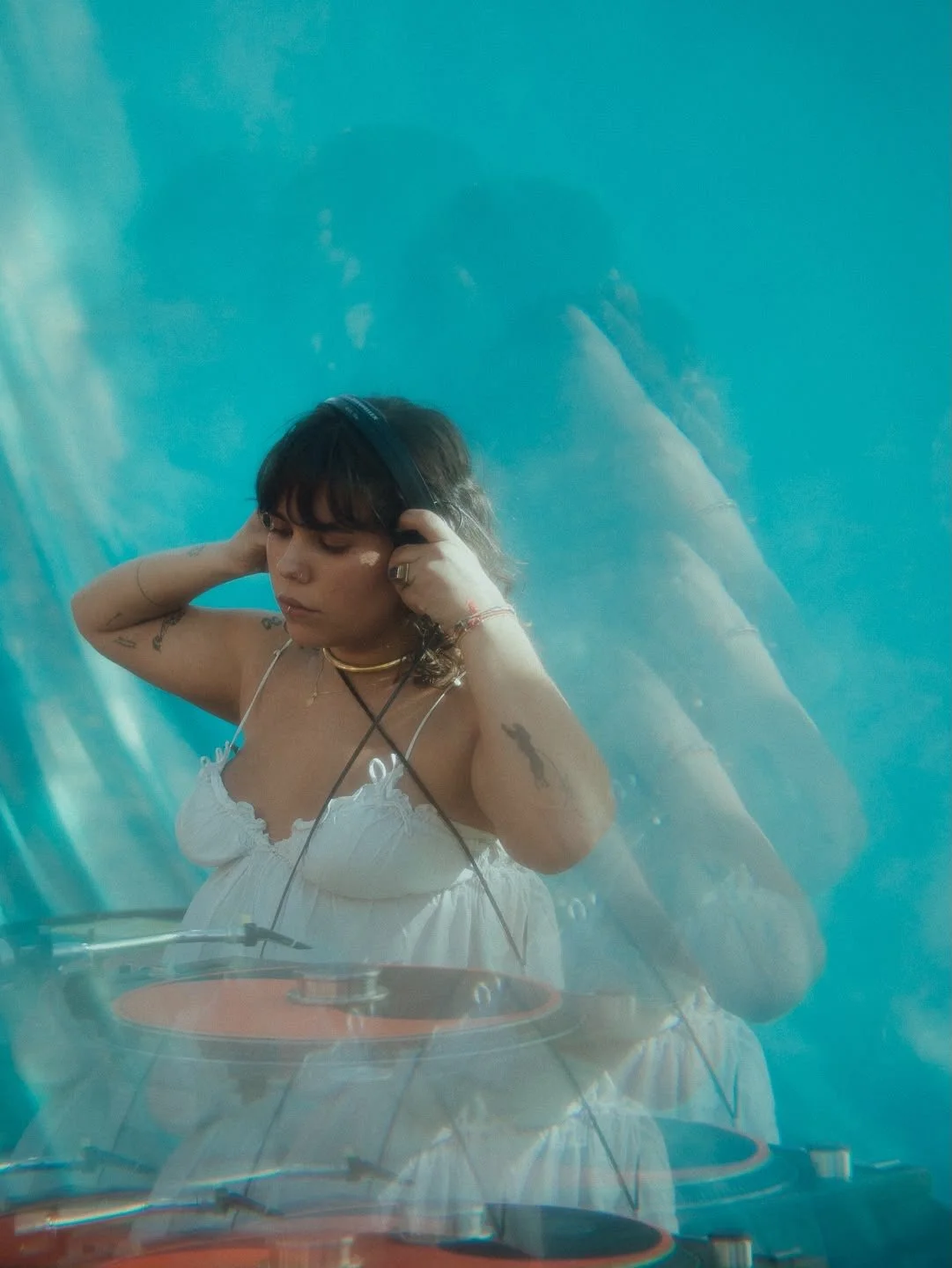
What was the electronic music scene like growing up in South Tyrol?
I actually feel quite lucky because there were a lot more collectives around Bolzano when I was growing up than there are today. There was Feierabend, Mik and a few others, and those were the places where I first really became part of the scene.
One of the memories that has always stayed with me is from when I was around thirteen or fourteen. There was a carnival party around Bolzano where someone was playing house music, and I remember standing there thinking there was something about it that felt completely different. Looking back now, I think that was probably the first moment I really fell in love with electronic music.
Today there are still great events like House Beats, but there aren't as many collectives organising things regularly anymore. It's funny because I've gone from attending those events to helping organise them myself. I love creating those experiences, but it also changes the way you experience nightlife. Sometimes I miss simply going out and dancing without thinking about anything else. Now I'm always talking to people, checking whether everything is running smoothly or thinking about what still needs to be done. It's a different experience, but one that I really enjoy.
Has being a woman influenced your experience in music?
Not in the beginning.
When I first wanted to learn how to DJ, I honestly didn't think about gender at all. I wasn't doing it because I wanted to prove a point or because I was a woman. I simply loved electronic music and wanted to learn how to play it. Even today, I hope I'm booked because of what I do, not because of my gender.
At the same time, being a woman in the scene has definitely shaped my experience. Especially in the beginning, I sometimes felt like I had to prove myself more. It wasn't necessarily something other people said to me, it was more an insecurity I put on myself. I felt like I had to show that I really knew what I was doing because people might assume otherwise.
What I didn't expect was how much of a sense of community would come with it. Over time, I've noticed that when women are behind the decks, more women seem to come to the front of the crowd. It creates a different atmosphere. I've had women tell me they felt more comfortable or represented, and I think that's really special. There's almost a sense of sisterhood that comes with it.
So while I don't want gender to define my work or be the reason people book me, I do appreciate the community that's grown around women supporting other women in the scene. That's something I didn't expect when I started, but it's become one of the most meaningful parts of the experience.
How did you become involved in event production and Spazio AMA?
It actually started with my graduation. Instead of organising a traditional graduation ball, a few friends and I decided that we'd rather organise a party ourselves. At the time, I was president of the student committee, so I ended up taking care of most of the organisation. I was contacting sponsors, dealing with permits, coordinating everything, it was a lot of responsibility, especially looking back now. I was only eighteen.
One of the organisations we contacted wasn't able to support us financially, but they introduced us to one of their curator Ali Paloma instead. Through her I met the people at Spazio AMA, and after the event they asked if I'd like to become involved in some of their projects. It wasn't something I had planned. It all happened very naturally, and I just kept saying yes to new opportunities.
You seem to take on a lot of different projects. Where does that drive come from?
I've always enjoyed creating things. If I have an idea that I believe in, I usually just want to try it. I don't spend too much time wondering whether I'm ready or whether it will work out. Of course there are moments where things become stressful or difficult, but I think having a clear vision of what you want to create makes it easier to keep going.
At the same time, I don't think I would have done any of this completely on my own. The people around me have always been really important. Being part of collectives and cultural spaces showed me that you don't have to build everything by yourself. You learn from other people, support each other and create things together.
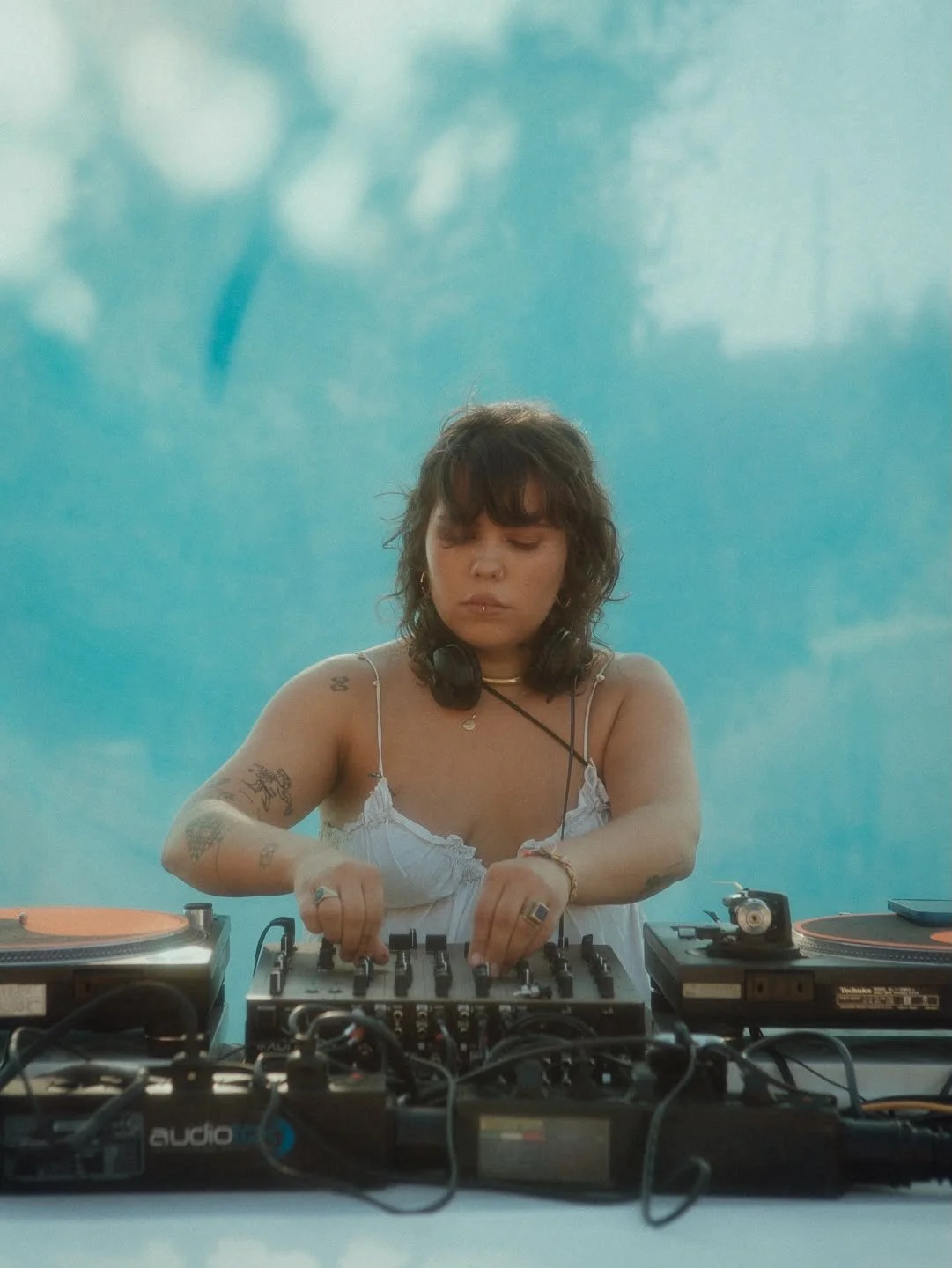
How has working with Spazio AMA changed your life?
It opened so many doors that I never expected. Through Spazio AMA I started meeting people from different festivals and cultural organisations. That's how I became involved with Transart, where I met people from the Vienna Festival, and eventually that led me to Vienna. Now I've worked there for two festival seasons.
Looking back, it's funny how connected everything is. If we hadn't organised that graduation event, I probably wouldn't have met the people from Spazio AMA. If I hadn't met them, I probably wouldn't have worked at Transart, and without Transart I probably wouldn't have ended up in Vienna. None of it was planned, it was really one thing leading to another.
What advice would you give to someone who wants to get into DJing or event production?
I think the most important thing is to be proactive. If you admire someone's work or you're curious about what they do, just reach out. Most people are much more open than you might expect. You can't always wait for opportunities to come to you—you have to take that first step yourself.
For DJing, I'd definitely recommend going to workshops if you have the chance. They give you a space to ask questions, meet people, and build confidence. More importantly, it´s important to remind yourself that DJing isn't about performing or proving yourself, it's about sharing music you love and creating moments with other people. I also think there should be more workshops specifically for women because they can make it much easier to get started and feel comfortable exploring your own musical voice.
The same goes for event production. If you have an idea or simply want to learn, there are already people and organisations doing great work that you can approach. In Bolzano, for example, ZOONA is a really nice place if you're looking for support or want to connect with people in the cultural scene. And of course there are collectives like Spazio AMA. Go to events, introduce yourself, ask if you can help. That's really how I learned, by being present, meeting people and getting involved.
What keeps inspiring you creatively?
I think it's seeing what other people are creating. Every event is different, every DJ plays differently, every exhibition has its own atmosphere. I love experiencing those things because they always give me new ideas.
This year, for example, Chris Imler and Saeko Killy were invited to the Wiener Festwochen. When I heard Saeko Killy's set, I was really inspired by it. Afterwards, I reached out to tell her how much I had loved it. She was incredibly kind and ended up offering to give me lessons, which was so special to me. It reminded me that if someone's work resonates with you, it's always worth making that first move and starting a conversation.
At the same time, I don't want to copy anyone. I think inspiration is more about collecting different influences and then finding your own way of bringing them together. That's true for music, but also for organising events. I'm still discovering what my own style is, and I actually like that it keeps changing.
What does being a "Woman in Motion" mean to you?
For me, it's about staying curious and allowing yourself to keep moving creatively and personally. I don't think you have to know exactly where you're going. Most of the opportunities I've had came from saying yes to something that interested me and seeing where it would lead.
Whether that's DJing, organising or working with different cultural projects, I think it's important to stay open to new experiences and not be afraid to try something you've never done before. That's probably what being in motion means to me.
Want to keep up with Yasmin?
You can find links to her social media, upcoming events and current projects below.
FUTURE EVENTS TO SEE YASMIN
vol II: Photographer stellA
ANIMA SESSIONS VOLUME 2
Some people leave an impression long before you know what they do. I first met Stella during one of my first jobs, when we worked together in a second-hand shop. At the time, I had no idea she was a photographer. What stayed with me instead was her warmth. Stella has a way of making people feel comfortable almost instantly, creating a space where everyone feels welcome.
Looking at her work today, it's hard not to recognize that same feeling in her photographs. Her images are intimate, honest, and quietly beautiful, capturing people in a way that feels natural rather than staged. In this conversation, we talk about finding beauty in everyday moments, trusting the creative process, and why sometimes the most meaningful photographs are the ones you never planned.
How did you first get into photography?
I got my first camera for my birthday when I was around fourteen. It was just a basic Canon, but I immediately started taking pictures of my friends. We would go outside, come up with little ideas and just have fun experimenting together.
Looking back, I think that's where it all started. I realised how much I loved taking the ideas I had in my head and turning them into something real. Ever since then, I've fallen in love with photography, and I've never really stopped.
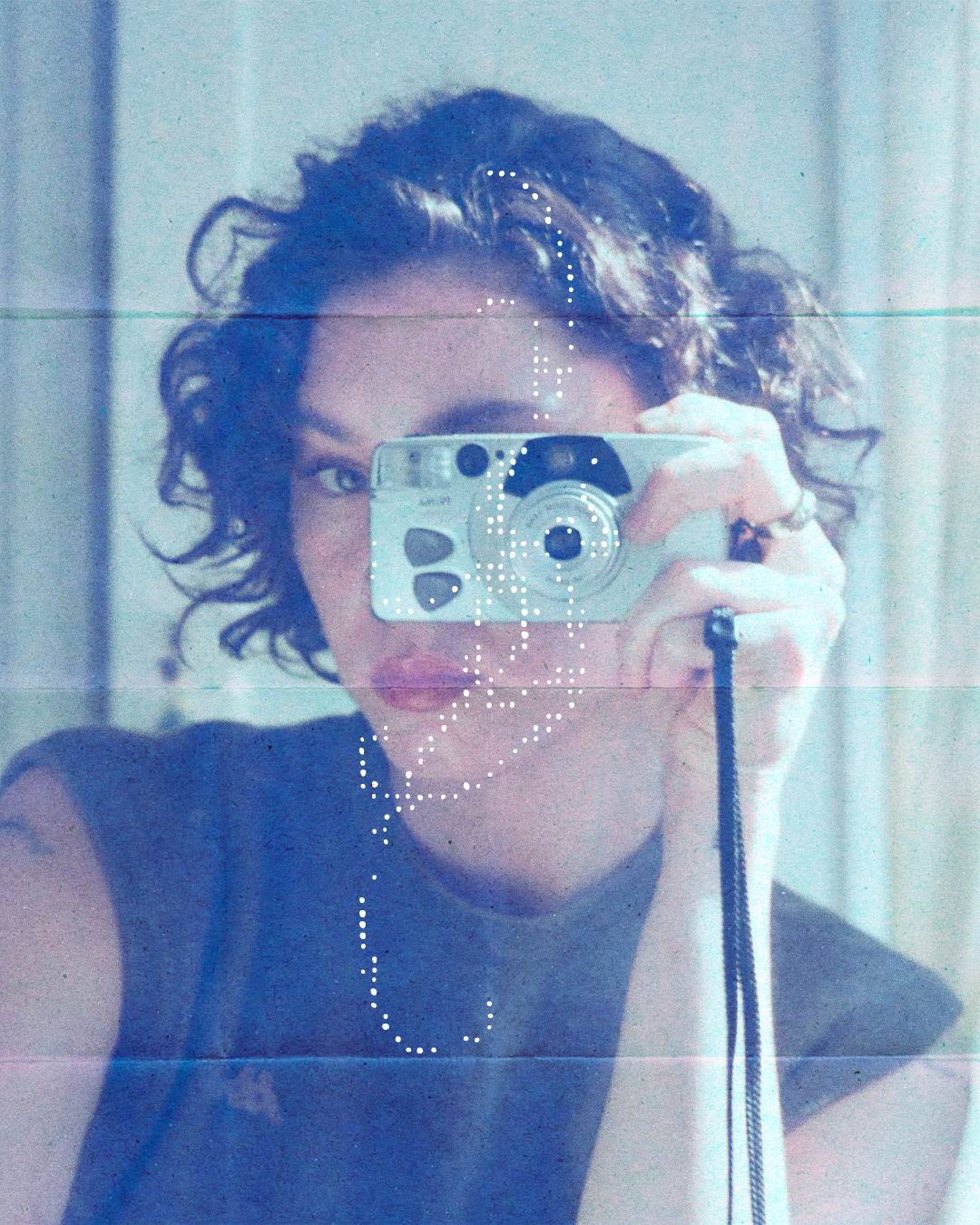
Where do you find inspiration?
I don't think there's one specific place where I find inspiration. It's more the people around me, everyday life, nature, colours, little details, it's really a bit of everything.
I love fashion photography, but even more so, I really enjoy photographing everyday moments. Not everything has to be perfectly planned or styled. Sometimes the simplest moments become my favourite photographs.
My biggest inspiration is probably the people around me. I especially love photographing my friends because I already know them so well, and I feel like I can really capture who they are.
Do you prefer photographing one person or groups?
Definitely one person.
I think there's something really intimate about photographing someone one-on-one. Whether it's someone I've known for years or someone I've only just met, being in front of a camera can make people feel vulnerable.
I really enjoy creating an environment where people slowly become more comfortable. After a while, they almost forget the camera is there, and that's usually when my favourite photographs happen.
Has photography changed the way you look at everyday life?
Definitely.I think I notice much smaller details now than I used to. Sometimes I can look at a whole scene, but at the same time I'll notice this tiny little corner and think, 'That would make such a nice picture.'
Photography has definitely changed the way I look at the world because I pay attention to things I probably wouldn't have noticed before.
Is there a project you dream of doing one day?
One of my biggest dreams is to go on a solo photography trip.
I'd love to travel somewhere that isn't necessarily very well known or touristy and just spend my days exploring with my camera.
I want to photograph the people and the place from my own perspective, without really having a plan. I think it would be really special to experience a place that way.
Hopefully that's something I'll do next year.
What would you tell other women who want to get into photography?
Just start.
Pick up any camera, it can even be your phone. It doesn't have to be the newest or the most expensive one.
Just start experimenting and photograph whatever stands out to you. That's how you'll discover what you actually enjoy photographing.
I realised quite early on that I love taking pictures of people.
Don't put too much pressure on yourself. Just go out, take your camera with you, and allow yourself to photograph whatever catches your attention.
Has photography changed since it also became your job?
There is definitely a difference between photographing something for yourself and photographing for someone else, but I wouldn't say that one is better than the other.
It's honestly such an honour when someone chooses you to photograph them. It makes me feel incredibly grateful because they're trusting me with something that's important to them.
Something I've also learned is that people don't always see photographs the same way I do. Sometimes my favourite image isn't the one they choose, and sometimes they'll absolutely love a photograph that I almost didn't include.
Learning to put my own judgement aside and trust that someone else can connect with a photograph in a different way has been a really interesting part of the process.
What has helped you grow the most as a photographer?
I think it's really just learning by doing. Every gig I do, every shoot I do and every edit I do teaches me something new. I feel like I grow a little with every project and expand my knowledge every time I pick up my camera.
I've never taken a professional photography course, so everything I do is self-taught. There are still camera settings and editing techniques that I know I want to improve. Whenever something doesn't work, it motivates me to keep learning. Every experience pushes me to become a better photographer.
Is there a favourite shoot that stands out to you?
One of my favourite shoots was for the AMFI graduation show a couple of years ago. The students needed photographs of their graduation collections, and it was such a fun experience because there were so many creative people involved.
There were designers, photographers and models, and it really felt like everyone was inspiring each other. We were outside, the sun was shining, there was music playing, and it was just a really nice atmosphere.
I also loved the photographs we created that day. It was one of my first bigger gigs, so it gave me a lot of confidence. Looking back, it's still one of my favourite shoots.
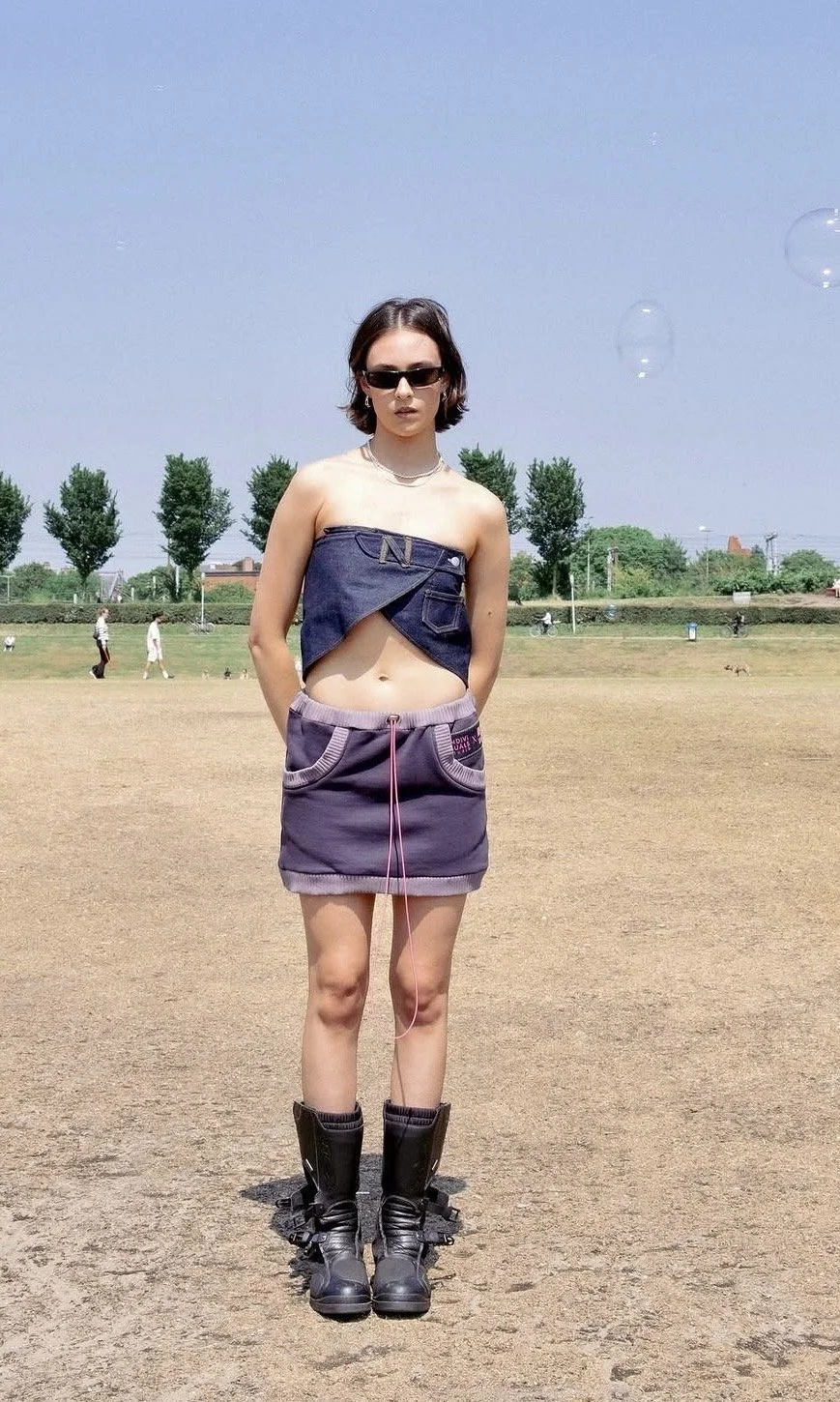
2023, LINA ATTARD FOR AMFI BY STELLA MIA LINDE
What advice would you give to someone who wants to start getting photography jobs?
I think it's really important to surround yourself with people in the industry. Even Instagram can help you connect with people, but I honestly think meeting people in real life is even more valuable. That's how people get to know you.
I also think offering your help is really underrated. Especially in the beginning, there will probably be projects that aren't paid, but they can lead to so many new connections.
And if you have an idea involving a person or a brand, don't wait until someone approaches you. Reach out yourself. If you have a vision and think someone would be a good fit for it, just ask. Sometimes all it takes is sending one message.
Can you tell me about one of your favourite photographs?
One of my favourite photographs I've ever taken is of my dear friend Nina. We went to Oosterpark in Amsterdam just to spend time together and take some pictures.
There were these beautiful flowers, and she was wearing a top that matched the surroundings perfectly. I simply told her to stand there, and she immediately found this pose that looked so beautiful.
I'm really happy that I was able to capture that moment the way I did. I love the colours in the photograph, but what makes it so special to me is the friendship behind it.
Nina and I already share such a close bond, and being able to translate that into a photograph makes me really emotional. I feel like our friendship is really special to both of us, and somehow I was able to capture a little piece of that. Seeing her in that photograph, looking so beautiful and glowing, makes me really happy.
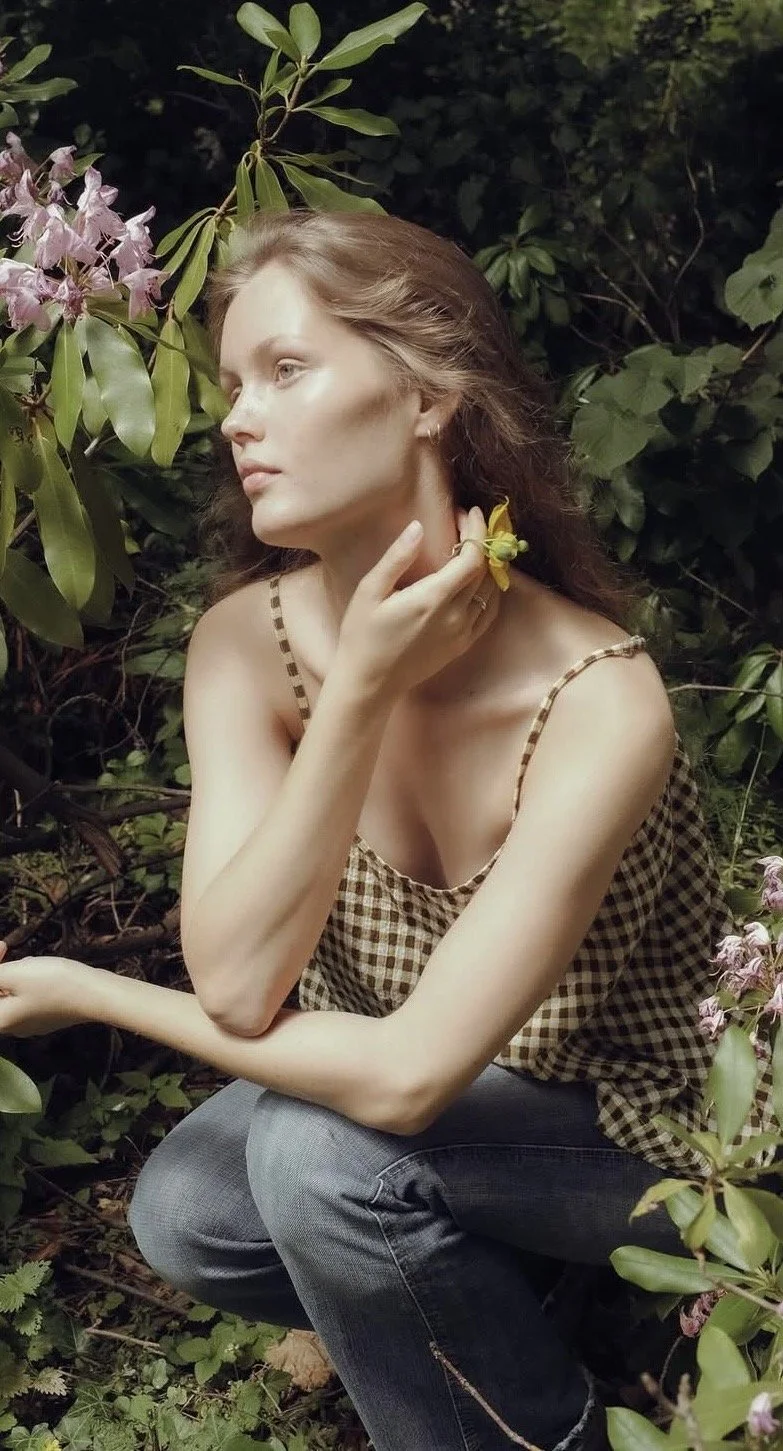
2025, NINA SOMMERFELD BY STELLA MIA LINDE
Another shoot that is really close to my heart was with a recent shoot my friend Magdalena. At first, I was a little hesitant because the weather was really bad. We had hoped for blue skies, but instead we got wind and rain.
In the end, we decided to take a leap of faith anyway and just go to the beach. Looking back, I'm so glad we did because the shoot turned out even better than we had imagined.
There were raindrops on the camera lens that created this beautiful blurry effect. It was something we had wanted anyway, but somehow nature gave it to us. We were freezing the whole time, but the photographs turned out really beautifully.
I think that day reminded me that, instead of waiting for the perfect moment for something to happen, sometimes you just have to do it. It will probably surprise you, and it might even turn out better than you imagined.
What I love most about those photographs is that they really captured everything that was happening that day. The wind, the rain and the waves all became part of the final image. While we were standing there, it almost felt like we were being blown away, but when I look at the photographs now, everything just makes sense.
I also always love photographing my friends because there's already so much trust between us. When a shoot turns out the way I hope, or even better than I expected, and the location surprises you too, that's always the most fulfilling kind of day.
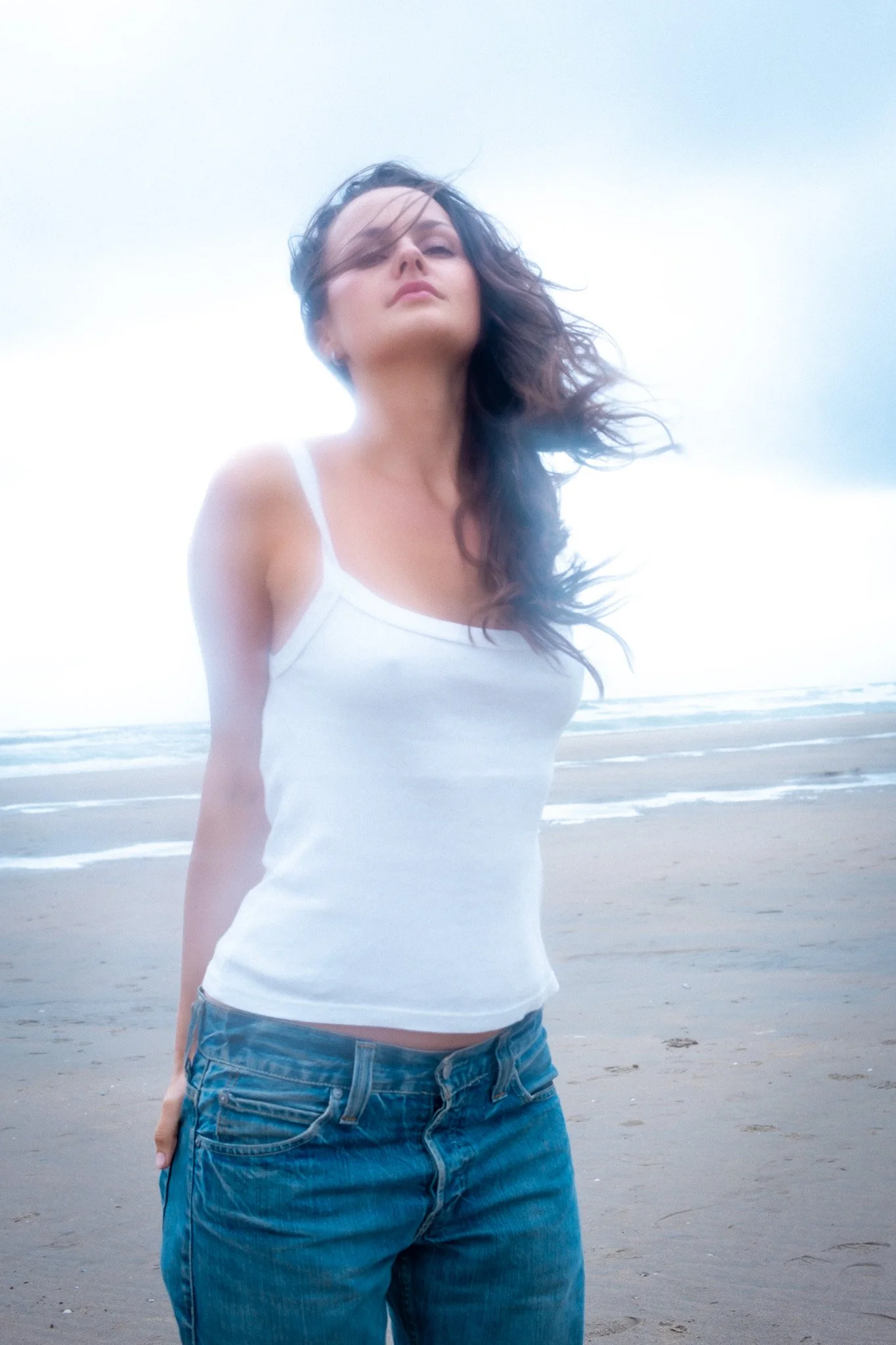
2025, MAGDALENA HOLZER BY STELLA MIA LINDE
How did moving to Amsterdam influence your photography?
Moving to Amsterdam opened up a completely new world for me. Being away from home also meant starting a new chapter, and with that came the chance to rediscover myself.
I suddenly felt much more comfortable trying new things, and I was really lucky to have friends around me who encouraged me to do exactly that. They pushed me to put myself out there and gave me opportunities that allowed me to explore photography from my own perspective.
Through them, I started photographing events, markets and different creative projects. It was also a really nice way to meet people, build connections and slowly find my place in Amsterdam.
Looking back, I'm really grateful for that because photography helped me feel at home in the city very early on.
What does motion mean to you?
I feel like everything about photography is movement. It starts with coming up with an idea or planning a project, then actually going there and taking the photographs, and afterwards there's the editing.
It's not just about what's happening in front of the camera, but also everything that's happening behind it. Every part of the process feels like movement to me, not only physically, but mentally as well.
Every project sets something in motion, both for me and, hopefully, for the people who see the photographs.
Interested in seeing more of Stella's work? You'll find links to her Instagram and contact. Be sure to explore her photography and follow along as she continues to capture people and places with warmth, honesty, and intention.
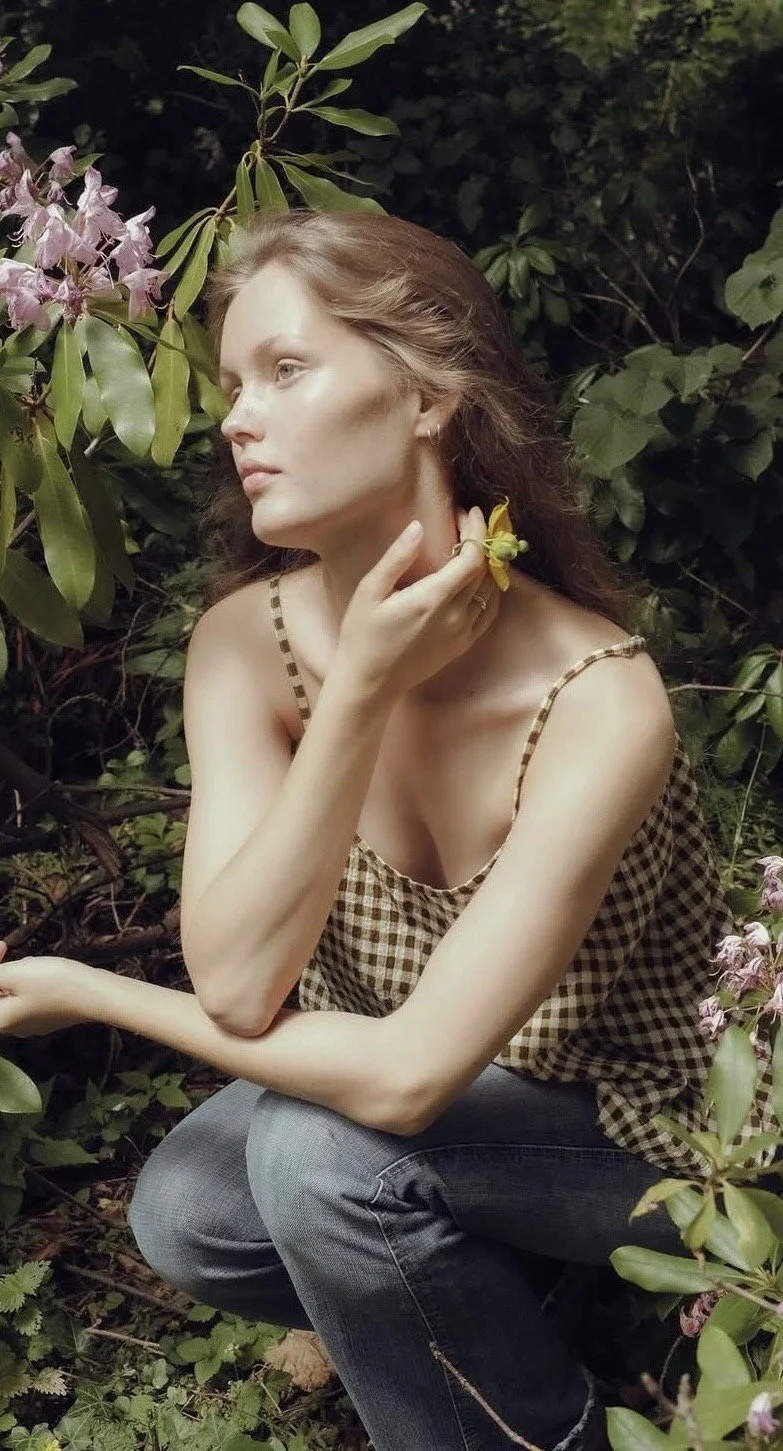
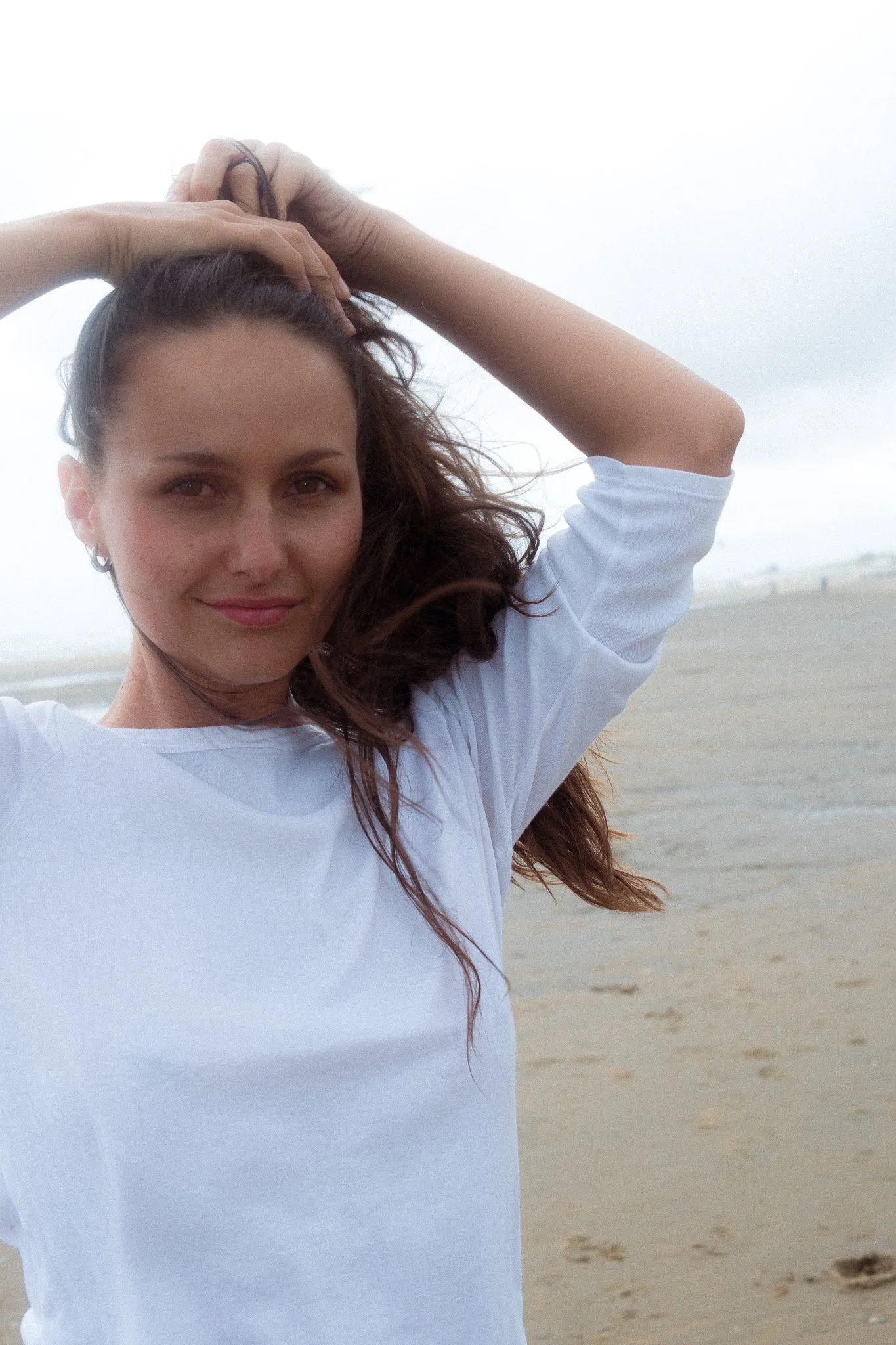
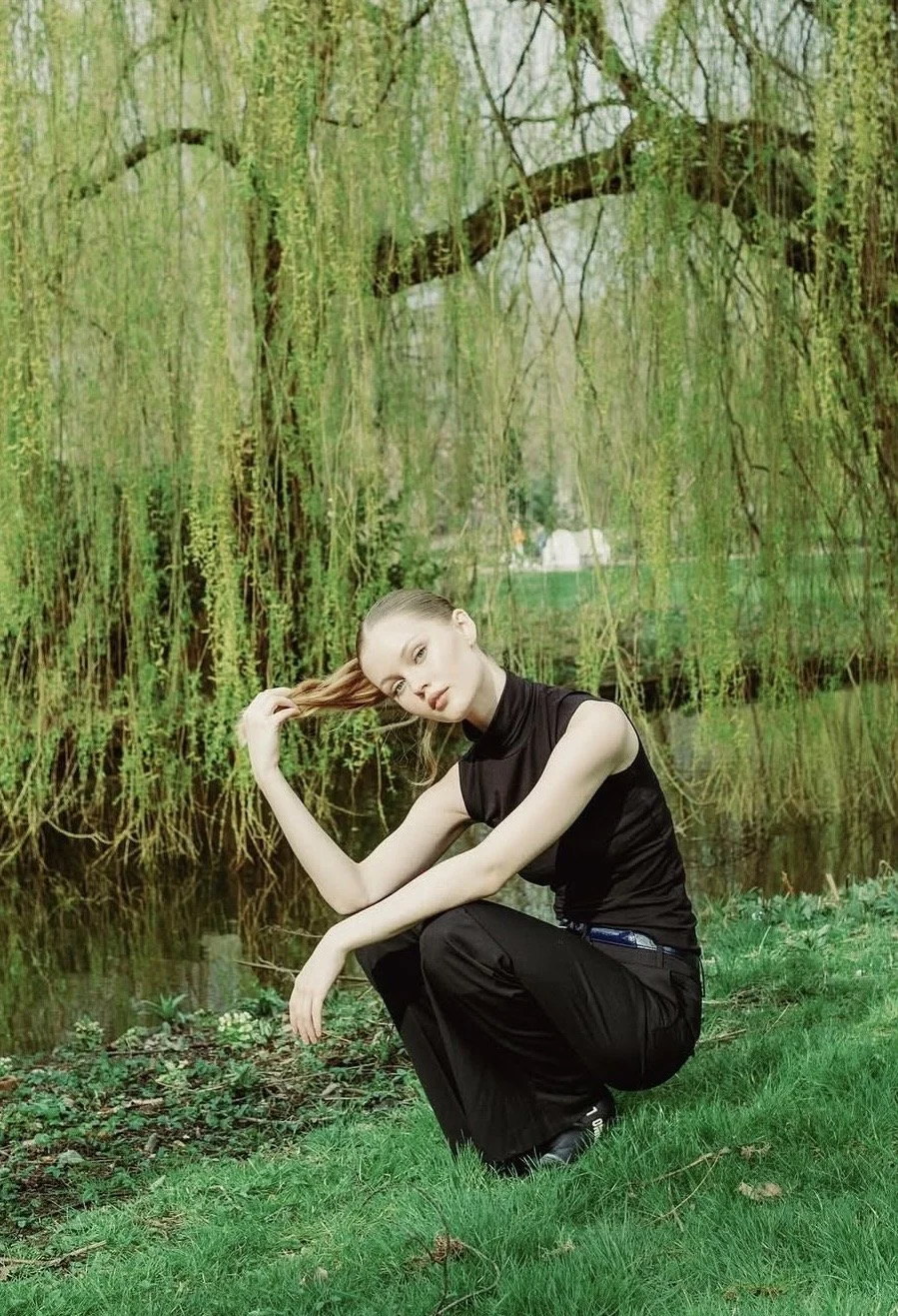
vol I: Radioshow hosts Ann & Helena
ANIMA SESSIONS VOLUME 1
Every song holds a story. Sometimes it's tied to a person, sometimes to a place, and sometimes it brings back a version of ourselves we'd almost forgotten. Music has a unique way of preserving memories, allowing us to revisit them long after the moment has passed.
For this edition of Anima Sessions, we're in conversation with radio show hosts Helena and Ann, the creators of “Never Ending Nostalgia”. Through their student radio show, they pair carefully curated music with personal reflections, exploring the emotions, memories, and shared experiences that songs can carry. Together, we talk about creativity, friendship, nostalgia, and how building something together can become a way of documenting your own life.
How did you get into this?
Ann: It actually all started with Helena. A friend from her study association, who was involved with the magazine “CUL” , suggested that she should host a radio show as RadioArcadia was looking for new show hosts, knowing her love for music Helena then pitched the idea to me to co-host it together, as most of our conversations in day-to-day life revolve around music and film it seemed like a good fit. We also love making playlists together and have played music for friends before, so it felt like a very natural collaboration.
Helena: I've honestly wanted to be part of student radio ever since watching “Pitch Perfect”. It always seemed like something that would be so much fun, but also completely out of reach. Then a friend suggested I apply because she knew how much I love music and making playlists, and she put me in touch with someone from the station. As soon as I started thinking about who I wanted to do it with, Ann immediately came to mind. We already spend so much time talking about music that I knew we'd work well together creatively. Once we sat down to develop the idea, everything came together surprisingly naturally.
Is there someone who inspired you, or who you get input from throughout the process?
Ann: I would say the people around me inspire me the most. The show almost feels like a catalogue of my life because so many of the songs come, I associate with friends and family and often remind me of moments we've shared together. Growing up, I also loved listening to the radio because my uncle is a journalist and radio host. I remember hearing his voice on the radio and thinking that was such a beautiful way of telling stories. That definitely inspired me. Nowadays, though, most of the inspiration comes from creating the show together with Helena. Before every episode we build playlists, exchange songs, and naturally shape the direction of each theme together.
Helena:I don't really have one specific person I look to for inspiration. More than anything, the show is something Ann and I build together. We usually start adding songs to a shared playlist about a week before recording, and as soon as I see what she's chosen, it influences what I add as well. It's a very collaborative process. In the beginning, Elisa from Radio Arcadia also played a big role. She listened to our first episodes and encouraged us to talk more instead of letting the music do all the work. That feedback really helped us develop the format, but now we've found our own rhythm and creative process.
In what way can you infuse your own sense of self into your project?
Ann: For me, the show feels like an extension of who I am. Every playlist reflects different people, places, and moments in my life. Some songs remind me of a specific summer, while others immediately make me think of a friend or family member who introduced them to me. Friends sometimes tell me that a particular song is "so Ann" or "so Helena coded," which makes me realise how much of ourselves naturally comes through in the music we choose. I also love that we don't always have to be serious. Some episodes are emotional, while others are playful and a bit silly, and I think that balance reflects our personalities really well.
Helena: For me, it's all about the memories behind the songs. Every song I choose feels like it has to represent a small part of who I am. One example is when we played “Sweet Home Alabama” (by Lyndryn Skynryn). The song itself wasn't really the point—it was the memory attached to it. I remembered hearing it while visiting my mum's hometown, and suddenly she started singing along and talking about her childhood. It gave me a glimpse of a part of her that I don't think I could have understood otherwise. That's exactly what I love about the show. We get to share these very personal stories while knowing that everyone listening probably has completely different memories connected to the same songs.
Is there anything that surprised you about making the show?
Ann: I think what surprised me most was how comfortable it eventually became. At first, it felt strange knowing that anyone could tune in and listen to us. Now it just feels like a conversation between friends, even though I still have to remind myself that it isn't completely private. Our friendship is meant to come across authentically, but because we talk about memories, we also have to decide which stories belong on the radio and which are better kept between us. Another surprise was how much I enjoy hearing the show back afterwards. At first it made me very aware of how I spoke, and it still remains slightly strange to listen to yourself talk for 1.5 hours, but now I mostly appreciate how the show has become a creative outlet that helps me step away from everyday stress.
Helena: I was honestly surprised by how much easier it was than I'd imagined. I'd spent years thinking opportunities like this were difficult to get into, but in reality I simply applied. Looking back, I think we often create barriers in our own minds before we've even tried. I was also amazed by the people behind Radio Arcadia. Everyone is incredibly supportive, and most of them volunteer simply because they're passionate about creating this space for students. They don't have to spend their time helping us record every week, but they genuinely want other people to create. Seeing that level of passion and generosity has probably been one of the most inspiring parts of the whole experience.
Is there an episode you were especially passionate about?
Helena & Ann: Our Love episode is probably the one that resonates with us the most. We talked about love in many different forms, not only romantic love, but also friendship, family, and the relationships that shape who we become. It felt especially personal because it reflected where we both were in our lives at that moment.
At the same time, our very first episode will always be incredibly special. It felt like our little baby because it was the first thing we'd ever created together. We even had a listening party when it aired and seeing people genuinely excited to listen to something we'd made was a surreal feeling.
That episode was dedicated to both of our dads, who introduced us to so much of the music we grew up with. Being able to share it with them and hear their reactions afterwards made the whole project feel even more meaningful.
What would you tell other women who want to go in the same direction?
Ann: I would honestly recommend it to everyone. Hosting a radio show has been such a rewarding creative outlet because it gives you the chance to share something meaningful with other people while also learning a lot about yourself. I also love that our show only airs once every two weeks. In a world where everything is available instantly and constantly, there's something really special about people having to intentionally tune in at a certain time and listen together. It creates a feeling that's much more personal than simply uploading something online.
For me, the most beautiful part is that it creates community. People discover new music, start conversations, or tell us afterwards that one of the songs reminded them of someone in their own lives. That's something I would wish for anyone who wants to create something. If you're thinking about it, I would simply say: try it. You never know where it might lead, and sometimes the best projects begin just because you decided to say yes.
Helena: I would simply say: go for it. I think we often convince ourselves that opportunities like this are much further away than they actually are. Especially as women, I think we sometimes underestimate ourselves or assume that we need more experience before we're "allowed" to try something creative. My experience has been the complete opposite.
There are so many communities, organisations, and creative spaces looking for people who are genuinely enthusiastic. More often than not, they aren't expecting you to arrive with years of experience; they're looking for people who care and are excited to contribute. That's exactly how this project started for me.
Of course, you also have to realise that projects like this usually aren't about making money. We don't get paid to host the show, but that's never been the point. What we've gained instead is a creative space, wonderful people around us, and something we'll always be able to look back on. Years from now, we'll still have these recordings. We'll hear our voices, remember who we were, what we were thinking about, and what music meant to us at that point in our lives. I think that's incredibly special.
“Women in Motion” is all about movement, not just physically.. What kind of movement do you feel is happening in your project?
Helena: For me, I think the biggest thing we're creating is connection. Every episode starts with our own memories, but the beautiful thing about music is that nobody hears a song without thinking of something from their own life. Even if someone has never experienced what we're talking about, they'll almost always connect that same song to a completely different memory. I love that our conversations become a starting point for someone else's.
Our show also creates a space where people can slow down for a moment. They can discover new music, revisit old songs, or simply listen to two friends talking about something they care about. I think that's really valuable today. It's less about giving advice and more about creating a feeling, a sense of community where people realise that memories, music, and emotions are things we all share in different ways.
Ann: For me, it's emotion, but also growth. Every song we choose is connected to a specific time, place, or person, so every episode naturally becomes a way of looking back. Sometimes I'm talking about a memory that happened only two summers ago, but when I really stop and think about it, it feels like a completely different version of myself. Recording the show constantly reminds me how much life can happen in what seems like such a short amount of time.
I also love that the process itself is completely unscripted. We never sit down with a script, we simply press record and start talking. Sometimes one of us laughs halfway through a sentence, sometimes we can't pronounce an artist's name, sometimes we interrupt each other or stop to look up a random fact. Those little imperfections are actually some of my favourite moments because they make the conversations feel honest. It really is just two friends sharing music.
Looking back, I think that's the movement I feel most. Every episode becomes a small snapshot of who we are at that moment. One day we'll listen back and remember not only the songs, but how we spoke, what we laughed about, what we cared about, and who we were becoming. In that sense, the show doesn't just document music: it documents our own growth.
Ann & Helena: A thank you to “Radio Arcadia” and especially Elisa, for believing in us from the very beginning. Her feedback helped shape our first episodes and gave us the confidence to find our own style. We'd also like to thank everyone working behind the scenes. They volunteer their time simply because they believe in creating a space where students can experiment, create, and tell stories. Without them, Never Ending Nostalgia wouldn't exist, and we're incredibly grateful to be part of such a supportive community.
Interested in following Helena and Ann´s journey? You'll find links to their Instagram profiles, some of their Neverending Nostalgia Playlists and to Radio Arcadia below. Be sure to tune in to Never Ending Nostalgia, and support the creative projects they continue to bring to life.
Women in Motion is Anima Sessions' ongoing interview series, spotlighting women who move, create, and shape the communities around them. Through conversations like these, I hope to celebrate the people behind meaningful projects and share the stories that inspire others to start creating, too.
Writers note: A special thank you to my friends Lara and Sunny, who supported me immensely throughout the creation of anima sessions volume 1.