
VOL VII: CARPENTER CARLA

ANIMA SESSIONS VOLUME 7
I first met Carla several years ago on a night out in Vienna. We happened to start talking while waiting in line for the bathroom, and what could easily have remained a brief encounter became the beginning of a close and lasting friendship.
Looking back, the spontaneity of that first meeting feels fitting for someone whose own path has been shaped by a willingness to follow an interest without knowing exactly where it might lead.
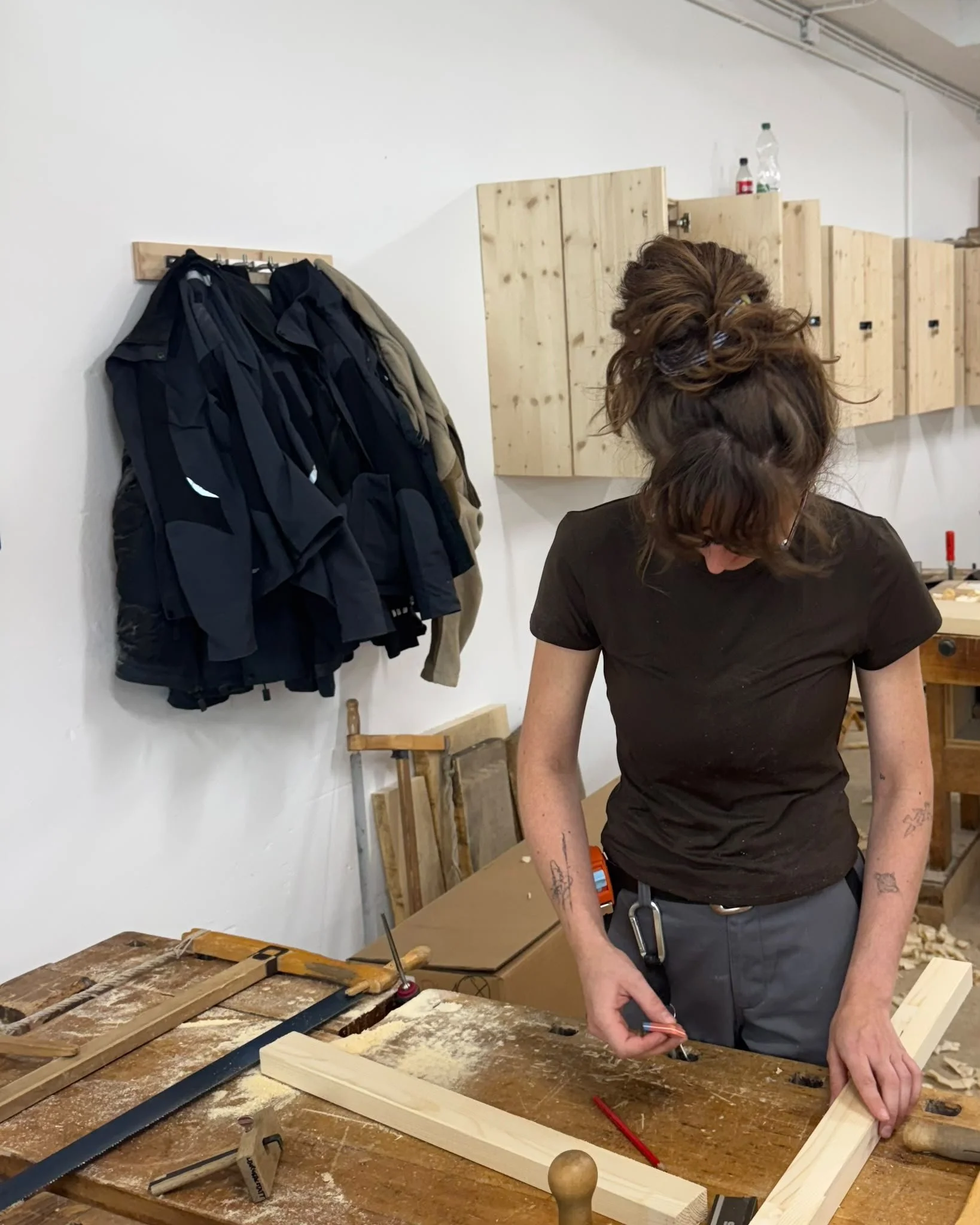
After completing a degree in Theatre, Film and Media Studies, Carla decided to move away from purely theoretical work and begin an apprenticeship as a carpenter. Today, she is completing her training in Vienna, learning the foundations of a traditional craft while exploring the many directions it may open up for her in the future.
In our conversation, we spoke about beginning again without previous experience, entering a male-dominated profession, the value of vocational education, working with your hands and discovering how a craft can completely change the way you see the world around you.
What made you decide to become a carpenter after studying Theatre, Film and Media Studies?
I enjoyed my degree, and the subjects were incredibly interesting, but in the end, it was almost entirely theoretical. After completing my bachelor’s degree, I began longing for something more tangible.
I kept thinking: I need to do something with my hands. I want to be able to touch what I create and see a physical result at the end.
I started researching different possibilities and considered goldsmithing as well. But carpentry immediately felt especially interesting because it is such an old and varied profession.
Being a carpenter doesn’t mean doing only one specific thing. You can restore furniture, build new pieces, work in a workshop, become self-employed or, as I do now, build stage sets. The field is incredibly broad.
I had also always been interested in furniture and interior design. I loved the thought that I could eventually build my own furniture.
Had you ever built anything before beginning the apprenticeship?
No, not at all. I started with absolutely no previous experience, and there was nobody in my family who worked in a similar field.
I was looking for a challenge. I found an apprenticeship where stage sets are built for Vienna’s theatres, and the connection to my previous degree made it feel like a particularly exciting opportunity.
How did it feel to enter such a male-dominated environment?
Before starting, I hadn’t spent too much time thinking about it. I was simply excited about the work, and by the time I began considering the gender aspect more seriously, I was already doing it.
I feel very comfortable at my workplace, and everyone has been kind to me. Another woman began her apprenticeship at the same time, which has definitely helped. Among the fully trained carpenters, there is only one woman and otherwise only men, so having another female apprentice means that I don’t feel completely alone.
I haven’t personally experienced a moment at my current workplace when I felt I was being treated differently because I am a woman. But I am still aware that I am entering a field in which people don’t necessarily expect to see me.
You recently won a carpentry competition in Vienna. What did that experience mean to you?
Everyone in my year took part. We had to read a technical drawing, identify different types of wood, complete a theory test and build an object according to a specific plan.
I won the competition for first-year apprentices in Vienna which felt incredibly affirming. I was standing there in my little dress, surrounded by all these men, and I had won.
It confirmed that choosing this path had been the right decision.
Do you think vocational education is valued enough?
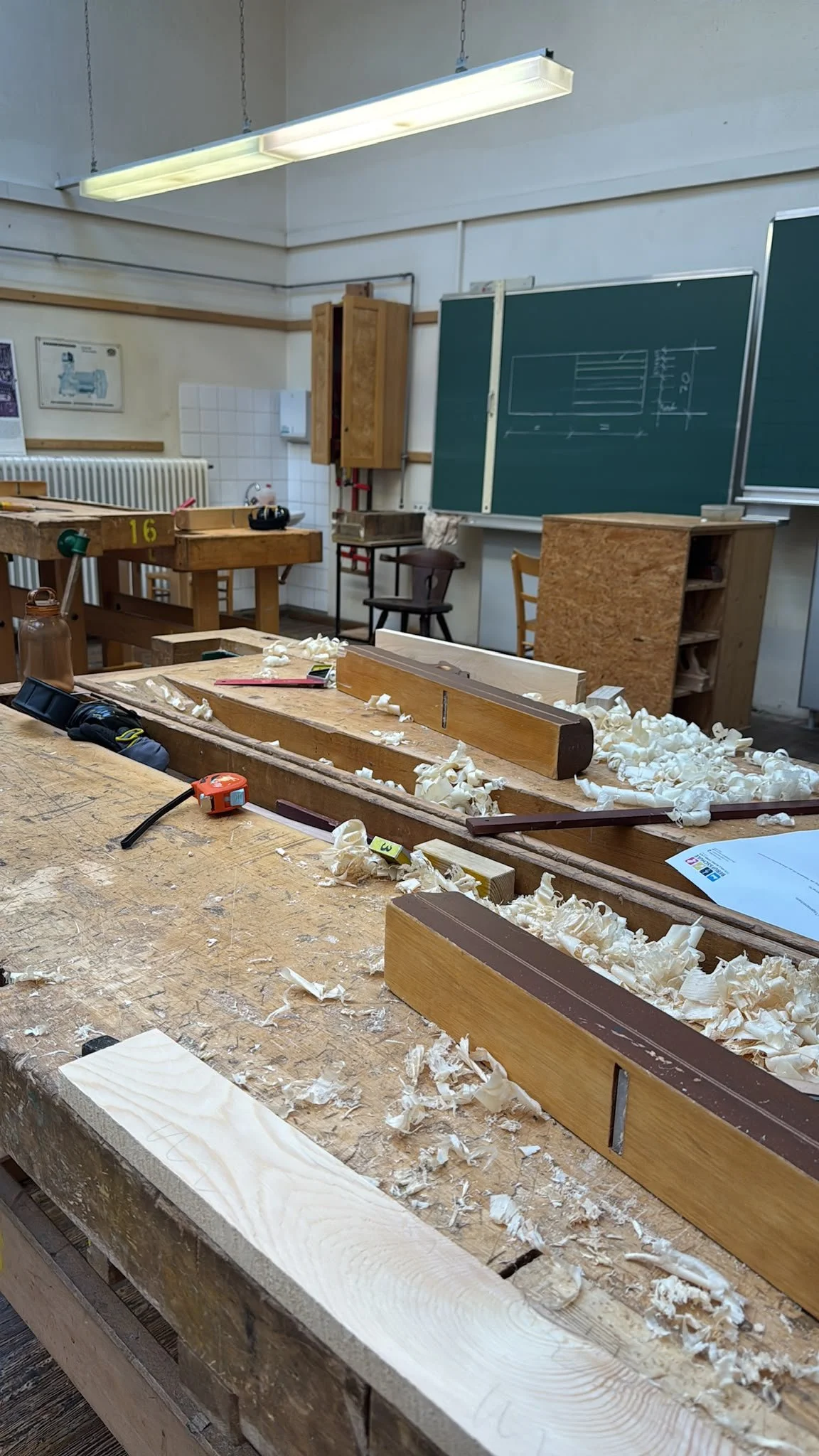
No. There is still this idea that if you have the qualifications to attend university, you should study. An apprenticeship is often treated as though it were somehow less valuable.
But now that I can compare both experiences, I see how demanding an apprenticeship can be. You work full-time, attend vocational school and have to apply what you learn directly. You cannot remain entirely within theory because you need to deliver a physical result.
For me, one year of the apprenticeship has sometimes felt more intense than studying. Of course, you cannot generalise across every degree or every profession, but vocational education deserves a very different standing in society.
It can also give you a clearer understanding of what you will actually do afterwards. At university, you often learn a great deal of theory and only later ask yourself: What do I do with this now?
I do feel that attitudes are slowly beginning to change and that more people are recognising an apprenticeship as a valuable option rather than a second choice.

Does your background in Theatre and Cultural Studies still influence the path you are on now?
My degree was very broad and included elements of cultural, media and theatre studies. We worked mainly with theoretical texts and explored different ways of understanding theatre and culture.
The apprenticeship is a very different experience because it is practical and centred on learning a craft. But I like that these two parts of my background can exist alongside each other. I already have the theoretical perspective from my studies, and now I’m developing the practical skills to create something tangible with my hands.
Even if I don’t yet know exactly how I will combine them in the future, having both opens up many different possibilities.
How creative is carpentry when you are following an existing design?
In my daily work, I don’t create the stage design myself. Someone gives us a plan, and we build it.
But the work still requires a lot of creative thinking because you are constantly solving problems. You have to ask yourself: How can I construct this so that it works and still looks the way it is supposed to?
That solution-oriented way of thinking also transfers into other areas of life. You begin approaching problems differently because you are used to finding practical ways to make something possible.
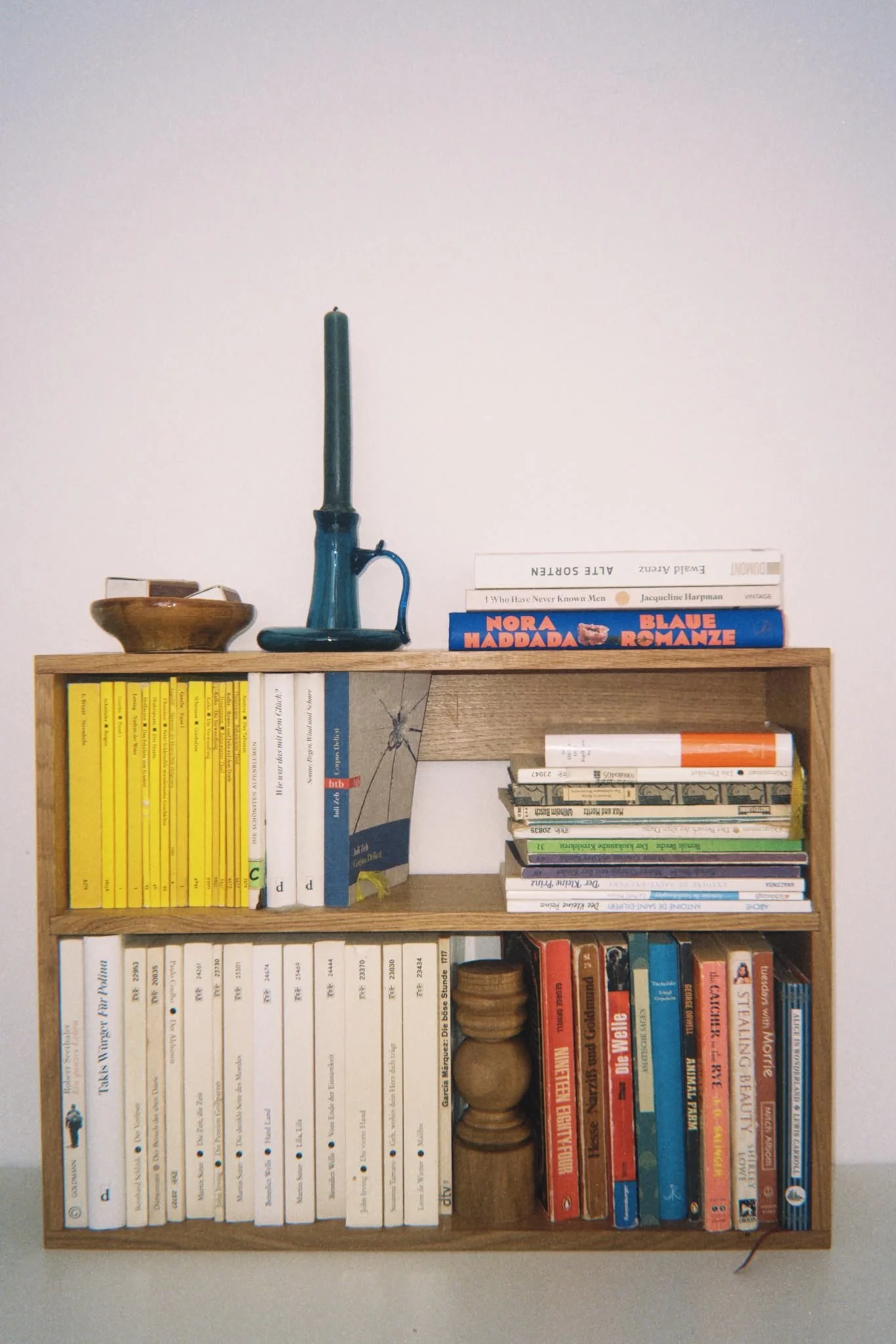
The apprenticeship also gives me the skills to plan and build my own pieces. During the first year, we practised traditional wood joints and created smaller objects. At the end, we were allowed to develop something ourselves, and I built a small bookshelf.
Later, I will also create my final apprenticeship piece. There are certain requirements it has to fulfil, but within those boundaries, I can design and build something of my own.
What has been the most challenging part of the apprenticeship?
At the beginning, almost everything was new. I was lucky that my employer gave us enough time to practise. Sometimes, I spent an entire day repeating the same process until I understood it.
The frustration can be difficult. You might work on something for hours, and it still doesn’t function the way you want it to. You have to learn to continue even when the result isn’t immediately visible.
The physical side is also demanding. You are standing for most of the day, working with your body and completing full working weeks. Moving from university, where I could organise much of my own time, into that rhythm was a significant adjustment.
But you get used to it, especially when you know that this is something you genuinely want.
Did beginning the apprenticeship at an older age help you?
Yes, definitely. Normally, you can begin an apprenticeship at around fifteen, and I honestly don’t know whether I would have managed it at that age.
It helped that I was older and had consciously decided that this was what I wanted. Many people in my class are also in their twenties, and one person is around forty and previously worked in insurance.
That shows that it is never necessarily too late to begin again or train in something completely different, as long as it fits your circumstances.
At the same time, the financial side can be challenging. You work full-time but receive an apprentice’s salary. That system is often designed for someone who still lives at home, which can make it much more difficult when you begin later.
Are there forms of support available to women entering craft or technical professions?
Yes. There are programmes that specifically support women entering craft and technical fields.
I initially learned about them when I wanted to complete an internship. Through that process, I found out that funding may be available, particularly for women beginning these professions later in life.
There are also organisations that work directly with companies and examine how women can be better supported within traditionally male-dominated workplaces.
It is worth researching these possibilities because financial or practical support can make the decision feel much less intimidating.
What has learning carpentry changed about the way you see your surroundings?
I look at furniture completely differently now. When I enter an apartment and see a chest of drawers or a table, I no longer only see the finished object.
I immediately begin wondering: How was that constructed? How are the individual parts connected? Could I build this myself?
Learning the craft has given me a new way of looking at everyday objects. I now see the decisions, techniques and work behind them.
What makes carpentry the right craft for you?
I have always been creatively interested, but I never had one single thing I wanted to focus on. I enjoyed drawing and trying many different forms of creativity.
That is probably why carpentry suits me. It is incredibly varied, and even after completing the apprenticeship, you are never finished learning.
One person might become highly skilled in restoration, while someone else specialises in furniture, stage sets or a completely different area. There is always another technique or material to understand.
It allows me to work creatively without being limited to one narrow direction.
What would you like to do once you complete the apprenticeship?
First, I want to build a strong foundation and find a position where I can continue learning while also expressing myself creatively.
Eventually, I could imagine becoming self-employed and having my own place, perhaps shared with other people. I would love to develop and build my own furniture alongside other projects.
I don’t have one fixed plan yet, but that is also what I like about the profession. The apprenticeship gives me many different directions to choose from.
What advice would you give to someone considering a similar path?
Keep your perspective open and look at professions you may not have previously considered; especially those that are not usually presented as obvious choices for women.
Try the work before committing to a full apprenticeship. Even a short internship can help you understand whether you can imagine doing it every day.
You don’t need to arrive with years of experience or come from a family of craftspeople. If something interests you, find a way to experience it.
And if you realise that it isn’t right for you, that is also okay. Life can be a large playground. You are allowed to try something, change direction and discover what suits you through experience.
The series is called Women in Motion. What does motion mean to you, in your life and in your work?
For me, motion means that there is always more to learn. Even after completing the apprenticeship, I will never reach a point where I know everything about carpentry.
The profession requires you to continue developing, discovering new techniques and pushing your own boundaries.
Motion is also reflected in the path that brought me here. I studied something theoretical and then decided to begin again in a completely different field without any previous experience.
For me, being in motion means allowing yourself to change direction and continuing to move forward, even when the next step challenges you.
Want to keep up with Carla?
You can find links to her social media below.
