
Women in Motion Vol 12
Showcasing Anna Kirchmair
Meeting Anna felt a little like friendship at first sight. From the first time we met, there was an ease between us that made it feel as though we had known each other for years. Conversation came naturally, and that immediate sense of familiarity stayed with me.
Her path into physiotherapy was less straightforward. Anna first went to fashion school in Innsbruck before an internship made her realise that, as much as she enjoyed the creative process, she was missing something essential: being around people.
After training as a medical massage therapist and gaining her first experience in healthcare, she eventually studied physiotherapy in Graz. Today, what interests her most is looking beyond the physical complaint and understanding the person behind it.
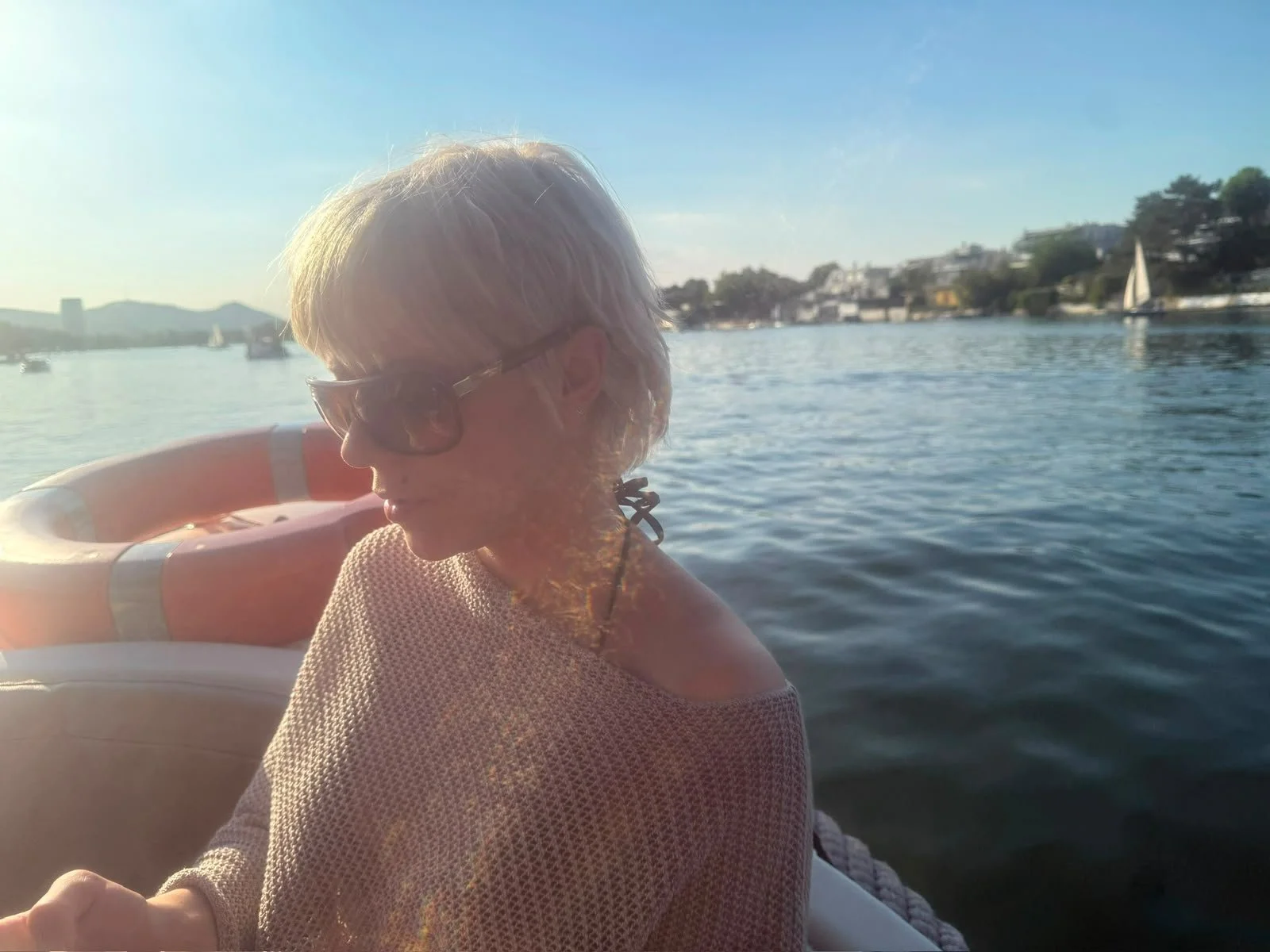
You originally went to fashion school. How did you end up becoming a physiotherapist?
I went to fashion school in Innsbruck and actually really enjoyed it. I loved understanding the process of how an idea develops into a finished product.
During my first internship with a designer, though, I realised how much time you spend working by yourself. I had never really noticed before how important it was for me to have people around me during the day. At school I had been surrounded by so many different personalities, and I suddenly really missed that.
Medicine had also always interested me. I wanted to understand how the body works, how injuries happen and what you can do to help someone recover. That combination of working closely with people and being interested in the body eventually brought me towards physiotherapy.
Before studying physiotherapy, you trained as a medical massage therapist. Was that already part of the plan?
Not at all. I had applied for physiotherapy in Innsbruck during Covid and did not get in. When I received the rejection, I saw that there was a programme in medical massage therapy at the AZW, so I decided to do that instead.
At first I honestly was not very excited about it, but looking back I am extremely happy that it happened that way. The training was very practical and gave me a completely different understanding of anatomy and healthcare.
I also worked alongside physiotherapists during my internships, so when I eventually started studying physiotherapy, I already knew some conditions and had experience working with patients. It was a really good introduction.
How did you experience the physiotherapy degree itself?
It was extremely intense. I would absolutely do it again because I really wanted it, but it was basically three years of constantly taking in information.
There is so much theory that has to fit into a three-year Bachelor’s degree. Sometimes you would have one week of semester break and immediately come back to exams.
The training in medical massage definitely helped me, especially at the beginning and especially with anatomy. But I still think anyone who wants to study physiotherapy should know that you really have to commit to those three years. It is demanding, but you also get an incredible amount out of it.
Did studying physiotherapy change your idea of what a physiotherapist actually is?
Definitely. I think there is still a very specific stereotype of what a physiotherapist is supposed to be: someone who is extremely sporty, very fit, lean and muscular, usually dressed in sportswear and naturally loves exercise.
There is this idea that physiotherapists train several times a week, never struggle with motivation or discipline themselves and have probably already run a marathon or do triathlons in their free time.
Growing up around Innsbruck, where sport is simply very present, probably made that image even stronger for me.
What I really liked about studying in Graz was that they showed us how broad the profession actually is. We learned about orthopaedics, neurology, paediatrics, gynaecology, intensive care and many other fields.
Physiotherapy is so much more than helping someone return to sport. It is really about promoting movement and reducing limitations wherever possible.
Was there an area you initially thought would be perfect for you and then changed your mind about?
Before studying, I did a short internship in an orthopaedic department at a hospital in Innsbruck. There were fractures, new knees, hip replacements, and I thought it was incredibly interesting.
Later I chose a hospital internship again because I assumed I would love it, and afterwards I realised it was not really where I wanted to work.
It was still valuable because it showed me how different physiotherapy can look. In a hospital you might help someone stand up, walk with crutches or start moving again after surgery. In other areas you might work with chronic pain, sport injuries and many different injuries in various stages of wound healing
Seeing all of that helped me understand what kind of work fits me personally.
Was there a moment during your internships where you realised how different practice is from theory?
Definitely. During one of my first internships, my supervisor completely threw me in at the deep end.
On the first day she basically told me, “This patient has had back pain for twenty years. Go and do something with him.”
I remember standing there and thinking, I have absolutely no idea what I’m doing.
At the time it was stressful, but now I understand why she did it. You can learn all the theory you want, but as soon as an actual person is standing in front of you, everything becomes more complex. You have to learn to react to what is actually happening in that moment.
What surprised you most about what physiotherapy can include?
Gynaecology was a big one for me.
Before studying, I had no idea how much physiotherapy can be involved in things like incontinence, bladder weakness, pelvic floor tension, sexuality or postpartum recovery.
And of course it is not only about women — we also talked about male incontinence — but that whole area was something I had not expected at all before starting the degree.
For example, someone can have such a tense pelvic floor that sex becomes painful. Physiotherapy can play a role in treating that.
We also learned about scar treatment after a C-section and recovery after pregnancy. If you want to specialise in that area, you obviously need further training, but I thought it was really valuable that we already learned the basics during the degree.
Did studying physiotherapy also change the way you think about your own body?
Yes, definitely. I learned an incredible amount about my own body, and I also lost a lot of embarrassment around certain topics
During the degree you practise on each other all the time. You palpate different anatomical structures and get very used to talking about parts of the body that people normally do not discuss openly.
Now I can ask a patient about something like incontinence very casually because, professionally, it has become completely normal to me. But I always try to remember that for the person sitting in front of me, it might still feel incredibly private.
Physiotherapy is a very physical profession. Was being so close to people ever difficult for you?
Personally, no. Touch was never something I struggled with, and because of my training in medical massage, I was already used to working physically with people.
But I do think it is something you have to consider before choosing the profession.
If somebody feels a little uncomfortable at first but is open to getting used to it, that is one thing. But if you really do not want physical contact or close interaction with people, physiotherapy might simply not be the right field.
It is a very personal profession.
Does working so closely with people ever become exhausting?
Absolutely.
When there is already a lot happening in my own life and then I go to work and every half hour another person comes in with another personality, another problem and another story, it takes a lot of energy.
You cannot always take a break when you feel like you need one because five minutes later the next patient might already be there.
But that is also what is nice about the profession. You can work in very different environments and eventually find a rhythm and setting that suits you.
You were interested in both neurology and orthopaedics. What made you lean more towards orthopaedics?
For a while I really considered neurology. I think it can be incredibly beautiful work because the process is often slower and there is a lot of interpersonal connection involved.
The goals can also be very individual. Something that seems small from the outside — like helping someone drink independently again with a hemiplegic arm — can be a huge step for that person.
But I realised that certain neurological conditions were simply not the right fit for me. I still work with neurological patients now, so the fields are never completely separate.
What I really like about orthopaedic rehabilitation is the variety. You might meet someone who has never really enjoyed sport in their life, someone who exercises a bit as a hobby, a competitive athlete or a professional athlete.
You work with completely different personalities, movement histories, goals and life situations, and I really enjoy adapting to that.
How much of physiotherapy is actually about understanding the person rather than simply treating a diagnosis?
A huge amount.
You cannot say that one diagnosis automatically means one treatment. Two people can both have knee pain and need completely different things.
You do your assessment, develop an idea of what might be happening and then try a treatment. That could be exercises, mobilisation, manual therapy or something completely different.
Then you reassess. Did it help? Did something change? Do we have to take another direction?
That is what makes it interesting because you are constantly adapting to the person in front of you.
Can you remember a patient where you had to approach things completely differently?
I recently worked with a chronic pain patient who was extremely analytical. Every time I asked one question, he would answer it but immediately open three other topics.
I realised that if we continued like that, we would never really get anywhere within the time we had.
So instead, we first focused a lot on calming his nervous system. We did breathing exercises and really took time for them, rather than treating them as something you quickly do for two minutes.
After that, we focused on the main problem.
It helped him a lot. Sometimes physiotherapy is much more outside the box than people imagine.
How do you keep an overview when physiotherapy covers so many different things?
Honestly, you don’t completely.
You cannot do everything, and I also do not think you need to. At some point it makes sense to choose one or two areas that you really want to specialise in and develop further.
Almost everyone tells you during the degree that once you start working, you will feel like you are starting from zero again. That was definitely true for me.
Then you start reading, asking questions, trying things and learning from people who have more experience.
I especially love learning from physiotherapists who have already been working for many years. Formal education is important, but there is also so much knowledge that simply comes from experience.
What is particularly important to you in the way you want to work in the future?
Time with patients.
Depending on the healthcare system or setting, you might only have a very limited amount of time with someone. And sometimes that makes it difficult to really understand the person and what they need.
I would like to work in a way where I do not constantly feel under pressure to get through everything within a very short appointment.
I could definitely imagine becoming self-employed at some point because I would like to have more freedom in how I structure my work.
It does not need to happen immediately, but eventually I would like to create a setting where I have enough time to look at both the physical complaint and the person behind it.
You keep mentioning meeting people where they are. What does that mean to you?
For me, you cannot separate the physical complaint from everything else happening in someone’s life. Maybe their pain became worse after changing jobs. Maybe they are stressed or something completely different is happening in the background.
Of course I am not a psychologist, but physiotherapy also works with a biopsychosocial understanding of health.
For me, it is important not to only look at the knee, shoulder or back, but to also ask what might be influencing that person at the moment.
Movement seems to be very important to you, but not necessarily in a performance-focused way.
Exactly. I think sometimes we make movement much more complicated than it needs to be.
Not everybody has to start by running or going to the gym. For one person, movement might initially mean walking one kilometre instead of taking the bus. For someone else, the goal might actually be running a marathon.
The important thing is that the starting point fits the person.
And of course walking one kilometre does not have to remain the final goal forever. It can simply be the beginning. If somebody previously barely moved and starts incorporating more movement into everyday life, I am already happy that something has started. From there, you can build on it and progress.
There is such a strong focus now on pace, kilometres, weights and performance. Sometimes I just think: first, move.
Progress can come afterwards.
Is helping people find their own motivation part of physiotherapy for you?
Definitely.
If somebody tells me, “I want to lose weight,” or “I want my knee to hurt less,” I often try to find out what is actually behind that goal.
Maybe they want to be able to play with their grandchildren or walk somewhere without constantly worrying about pain
When the goal becomes personally meaningful, people are much more involved.
I am happy to give someone the push they need to get started. I can provide information, exercises and guidance. But it is not my job to carry someone’s motivation forever.
There has to be some willingness from the person themselves. If someone comes to me without any desire to change, no amount of pushing from my side will make that change sustainable.
During your degree, you also worked on a project around health promotion. What did you take away from that?
In our last semester, we worked with a group of women with migration backgrounds in Graz.
That was honestly one of my favourite experiences during the whole degree because it showed me how differently people can understand health and movement.
We talked about back pain, everyday movement and some of the myths that exist around the body.
For example, people are often told that there is one perfect way to lift something and that your back always needs to be completely straight.
But the goal should actually be for your body to become resilient enough to tolerate the movements you need in everyday life.
That project really reminded me how important education is in physiotherapy.
Medicine has historically often used the male body as a reference. Did you feel that women’s health was represented enough during your degree?
From my experience, women-specific topics were actually covered quite well.
We learned male and female anatomy and also had topics like pelvic floor health, postpartum rehabilitation and C-section scars.
Of course, more general research around training or injuries can still be influenced by the fact that medicine has historically focused more on men, and research is still often male-dominated.
But personally I did not leave the degree feeling like women’s health had been completely forgotten.
And if you want to specialise further in areas such as gynaecology or pelvic floor physiotherapy, there are many additional courses you can do afterwards.
If someone were thinking about studying physiotherapy now, what would you tell them?
Don’t stress yourself too much.
Which is funny coming from me, because I definitely stressed myself.
There is so much information and at the beginning you feel like you need to know everything immediately. But you don’t.
You slowly find the field that fits you. And even if you realise that you do not want to work directly with patients forever, there are other possibilities like research, prevention or health promotion.
You do not have to decide at twenty what you are going to do for the rest of your life.
What does being a physiotherapist mean to you personally?
For me, it means meeting people where they are and helping them find their own access to movement.
I do not see my job as standing in front of someone and constantly saying, “You need to exercise more, you need to lose weight, you need to stop doing this.”
People often already hear those things from doctors or elsewhere.
I would much rather understand what is realistic for that particular person and help them find a way into movement that actually works in their life.
Sometimes someone has lived a certain way for twenty-five years. You cannot expect them to change everything overnight.
I can give someone direction, information and a push to get started, but ultimately the change has to come from them too.
Women in Motion is about movement in many different forms. What does motion mean to you?
For me, motion is very connected to change.
I actually talked about change with my aunt recently, and I realised that I see it as something very positive, especially in my work.
I think many people initially see change as something negative or unsettling. But for me, change also means possibility.
It does not really matter at what age or in what situation you start. If you bring something into motion, you can create change.
And I think people sometimes underestimate that. Even when you cannot change the situation itself, there is often still something you can influence within it.
For me, motion means that something continues. Something can always move forward.s and staying in motion.
