
Silvia and I share the same home, we both grew up in the mountains of South Tyrol. I still remember visiting her as a child and driving further and further up into the mountains to reach her home. Even then, her life seemed closely connected to the landscape surrounding her.
Today, Silvia carries that same landscape within her. She has a grounded yet magnetic energy—deeply rooted, but also free and instinctive. When she speaks about plants, traditional knowledge and the place she comes from, her passion feels immediate and genuine. She does not simply share what she knows; she makes you want to look more closely at the nature around you and rediscover everything that has always been there.
Her journey began unexpectedly, in the middle of a busy evening inside a restaurant kitchen. She was seventeen and completing an internship in the pastry department when she joined the head chef to gather wild herbs for a dish. Amid the noise and urgency of service, she suddenly found herself sitting in a sunlit meadow, learning the names and uses of the plants beneath her feet.
It was a small moment, but one that quietly changed the direction of her life.
Today, Silvia works as a herbal educator, sharing her knowledge through workshops, guided walks and social media. Her work moves between science and intuition, traditional wisdom and personal experience. At its heart lies the belief that nature is always communicating with us—we simply have to learn how to listen.
We spoke about the moment that first opened this world to her, finding the courage to begin before feeling ready, the quiet intelligence of plants and why reconnecting with nature can also mean finding your way back to yourself.
Do you remember the moment your interest in wild herbs began?
It happened almost by accident. I was seventeen and completing an internship in the pastry department of a restaurant. It was the middle of a stressful evening service when the head chef suddenly asked me to go outside and collect wild herbs for a dish.
She came with me and began showing me the plants growing in the meadow. She explained their names, how they could be used and what they could offer us. I remember sitting there in the grass, with the sun shining, while the rush of the kitchen suddenly felt very far away.
Everything she showed me was completely new. Nobody in my family had ever taught me about herbs, and I had never really considered how much was growing directly around us.
That moment created a kind of click inside me. I realised that nature is full of gifts, but we often walk past them because we have never learned how to recognise them. Once I had seen that world, I could no longer unsee it.
How did that first moment grow into the work you do today?
I began with a simple plant-identification book and started teaching myself. I would go outside, look for plants and try to understand what was growing around me. I became completely absorbed in it and eventually based my final school project on wild herbs.
After graduating, I continued working in a hotel. The shifts were exhausting, and I increasingly felt that I was investing all my energy in something that was not truly mine. I knew I wanted to move in a different direction, even if I could not yet see exactly what that direction would look like.
When the lockdown came, I saw an opportunity to change something. I enrolled in a distance-learning programme in herbal education. It suited me because I enjoy studying independently, but it also allowed me to learn directly from the landscape around me.
Vegetation is different everywhere. The plants growing in South Tyrol are not necessarily the same as those found in another region. Through the course, I created a herbarium, wrote a diploma thesis and spent countless hours outside identifying plants.
The landscape became both my classroom and my teacher.
Did you already know how you wanted to use this knowledge?
Not at the beginning. I simply knew that I wanted to continue learning.
I had previously worked in childcare and discovered how much I enjoyed introducing children to nature. While I was still completing my herbal education, I began offering workshops in primary schools. Children approach plants with so much curiosity. They touch, smell and ask questions without worrying whether they already know enough.
Working with adults came later. My first adult workshop was part of a large event with around sixty participants. Other, far more experienced herbal educators were presenting too, and I was the youngest among them.
I remember thinking, “Am I really qualified to stand here? Do I know enough?”
But at some point, I decided to stop listening to that voice and simply begin.
What was that first workshop like?
Terrifying—and incredibly important.
I was nervous because I had never done anything like it before. I was surrounded by people who had been working in the field for much longer than I had, and it would have been easy to compare myself with them.
But once I started speaking, something shifted. I realised that I knew more than I had allowed myself to believe. I also understood that experience does not begin before you take the first step. It grows because you take it.
Looking back, I am grateful that my first experience pushed me so far outside my comfort zone. It showed me that I could stand there, trust what I knew and find my own way of sharing it.
You are never completely ready. At some point, you simply decide to begin.
What helped you move beyond the feeling that others knew more than you?
I had to understand that knowledge is not the only thing people respond to. They also feel whether somebody genuinely loves what they are speaking about.
Of course, it is important to be informed and responsible. But passion carries something that cannot be imitated. When you truly care about a subject, people notice it.
I still experience self-doubt, but I no longer see it as a reason to stop. Growth happens when you enter situations that challenge you. If you always remain hidden because somebody else might know more, you never discover what you are capable of offering.
Even when something goes wrong, you learn. Sometimes the mistake is the moment that teaches you the most.
How did your workshops develop from there?
After that first experience, I began creating more workshops of my own. Instagram became an important space for sharing my knowledge and showing people what I was doing. Word of mouth also helped, and gradually more people began attending.
Eventually, municipalities and organisations started contacting me directly and inviting me to offer workshops. That is one of the most beautiful forms of recognition: when someone discovers your work, connects with it and wants to bring it into another space.
My aim is not for people to leave thinking they simply had a pleasant afternoon. I want them to carry something home with them—knowledge they can use, a plant they can recognise or perhaps a new way of seeing a landscape they have walked through hundreds of times before.
Maybe they notice a plant beside the path and, for the first time, know its name. That small moment can change their relationship with nature.
How do you create a workshop?
I usually begin with a subject that genuinely interests me. I cannot teach something with energy if I do not feel curious about it myself.
Then I try to look at the subject through the eyes of somebody encountering it for the first time. What would they want to know? What would make the knowledge feel accessible rather than overwhelming?
I research the topic, write a script and prepare the practical materials. My workshops normally combine theory with a hands-on element. Plants are not something we should only speak about. We need to see them, touch them, smell them and work with them.
The location matters too. I place a lot of value on choosing spaces that carry a certain atmosphere. An old farmhouse or a traditional room filled with history creates a different feeling from an ordinary classroom.
The place becomes part of what people remember.
Which subjects are especially important to you?
I love exploring the active compounds found in plants and their scientifically recognised effects. I also offer workshops on spring herbs, natural cosmetics, women’s herbs and ideas such as detoxification—what it actually means and whether we really need it.
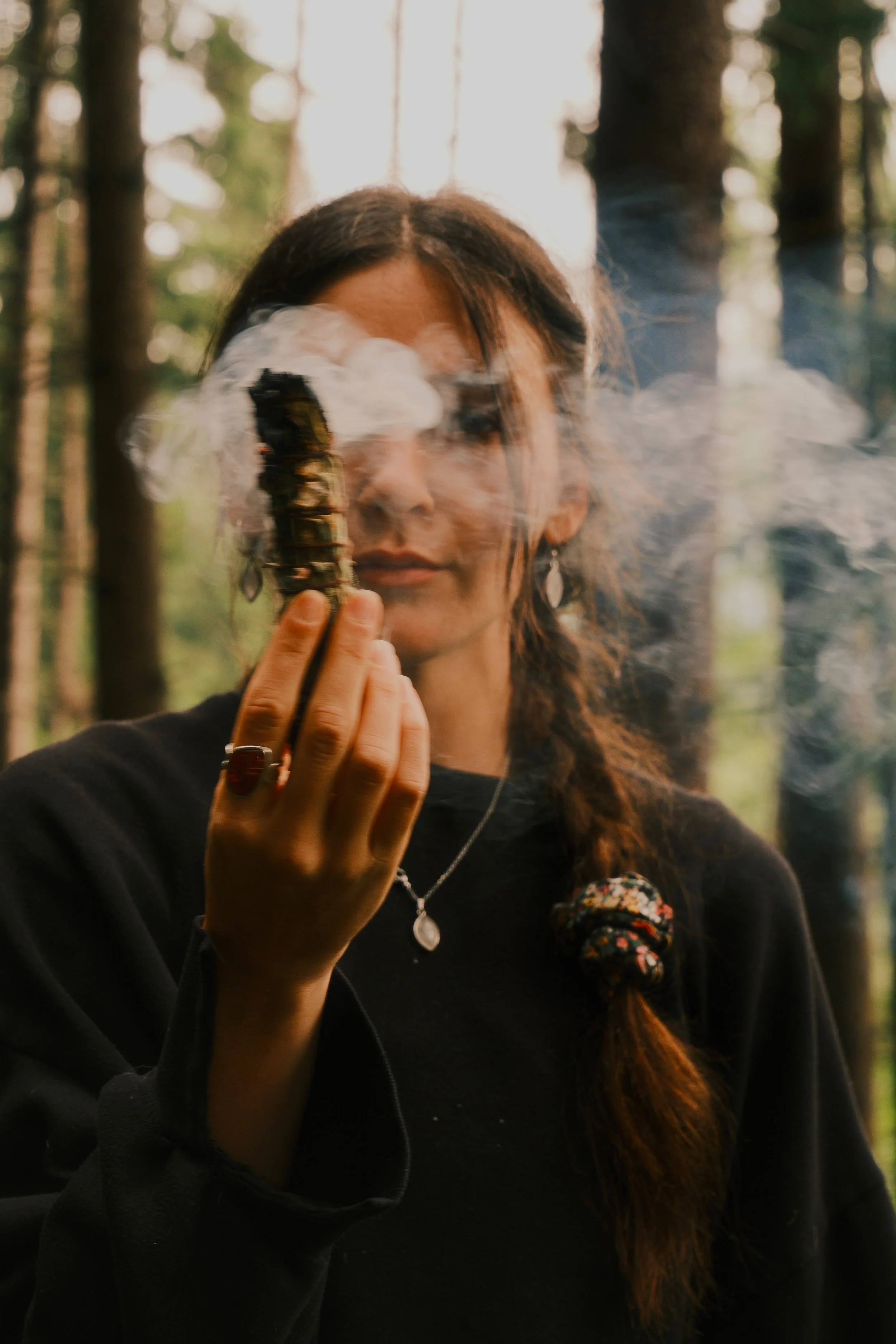
But incense and traditional herbal fumigation are closest to my heart.
Burning plants is an ancient ritual found across many cultures. Plants were burned in Indigenous traditions, throughout Asia and here in the Alpine regions. It is a practice that connects us to something very old.
When a plant meets the flame and its smoke begins to move through a room, all the elements seem to come together. There is the plant from the earth, the fire, the air carrying the smoke and the water that once nourished it.
For me, it is both simple and deeply powerful.
What happens during one of your incense workshops?
I introduce the different plants and their traditional uses, but I do not want to tell people exactly which mixture they need.
Instead, I invite them to choose intuitively. They smell the plants, hold them in their hands and notice which ones draw them in. Afterwards, we look at what those plants traditionally represent or how they have been used.
Often, people are surprised by how closely their choices reflect what they are experiencing in that moment.
We also include breathing exercises and moments of stillness. The workshop becomes more than learning about herbs. It becomes an opportunity to turn inwards and listen.
What role does intuition play in your work?
A very important one.
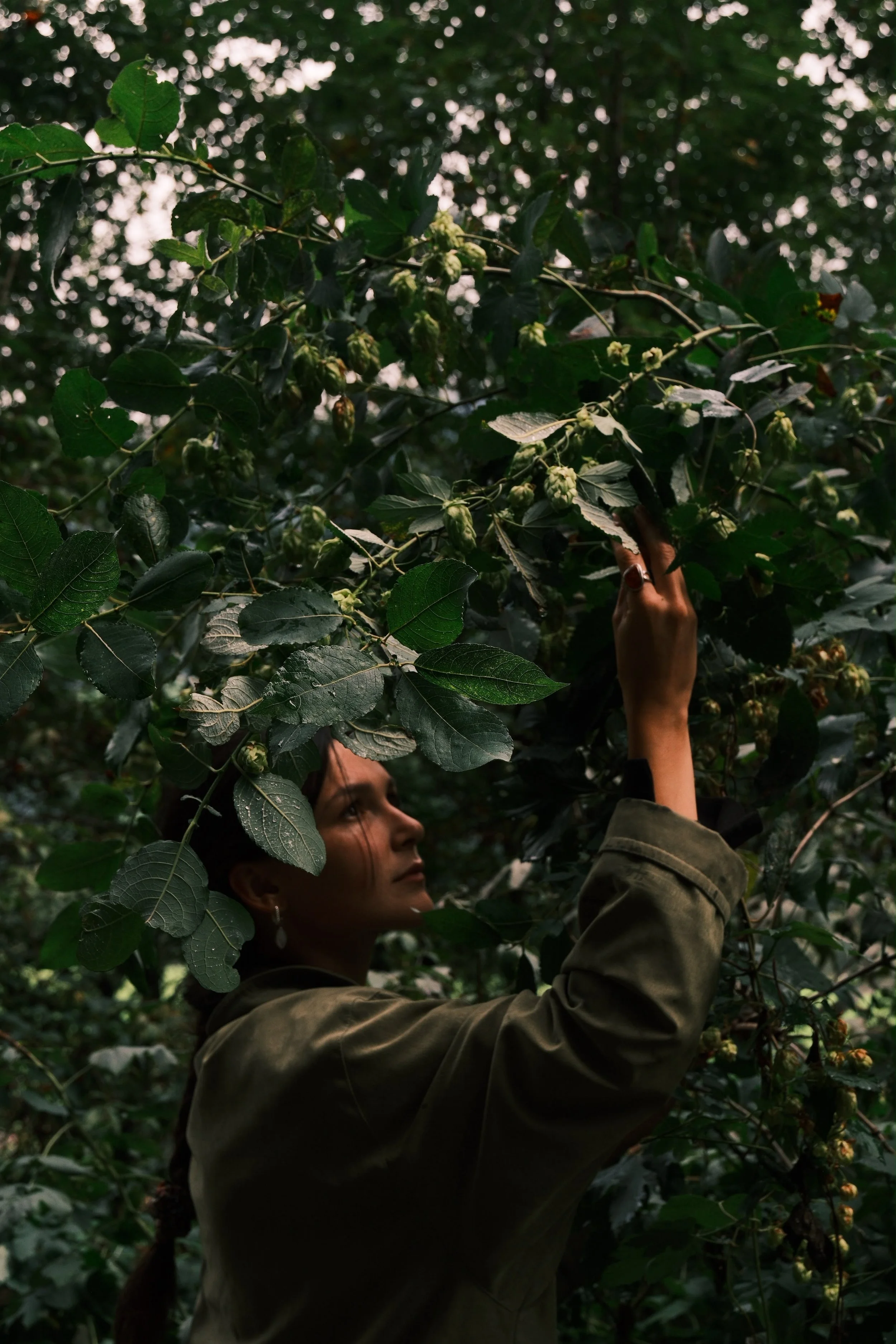
When I go out to gather herbs, I do not always follow a fixed route. Sometimes I allow myself to be guided by a feeling. I might suddenly take a different path or walk towards a particular place—and then find exactly the plant I had been looking for.
It can sound unusual when you try to explain it logically, but I believe we all have this ability. We have simply become very good at ignoring it.
The body communicates with us constantly. It often knows when something feels right or wrong before the mind has found the words to explain it. Yet society teaches us to distrust that knowledge and search for answers outside ourselves.
Working with plants has taught me to listen again.
Why do you feel so deeply connected to South Tyrol?
There is a feeling of belonging here that is difficult to put into words. I feel rooted in the mountains, the forests, the animals and the plants growing around me.
When I am in the mountains, I experience a sense of abundance. Everything is already there. The landscape reminds me that I am part of something older and larger than myself.
Sometimes I am walking and suddenly feel that I am in exactly the right place at exactly the right moment. It creates a deep sense of trust—as if nature is telling me, “You belong here. There is a place for you.”
The plants growing around our homes also connect us to where we come from. Learning about them is not only a way of understanding nature; it is also a way of understanding our roots.
Is there one plant that has accompanied you personally?
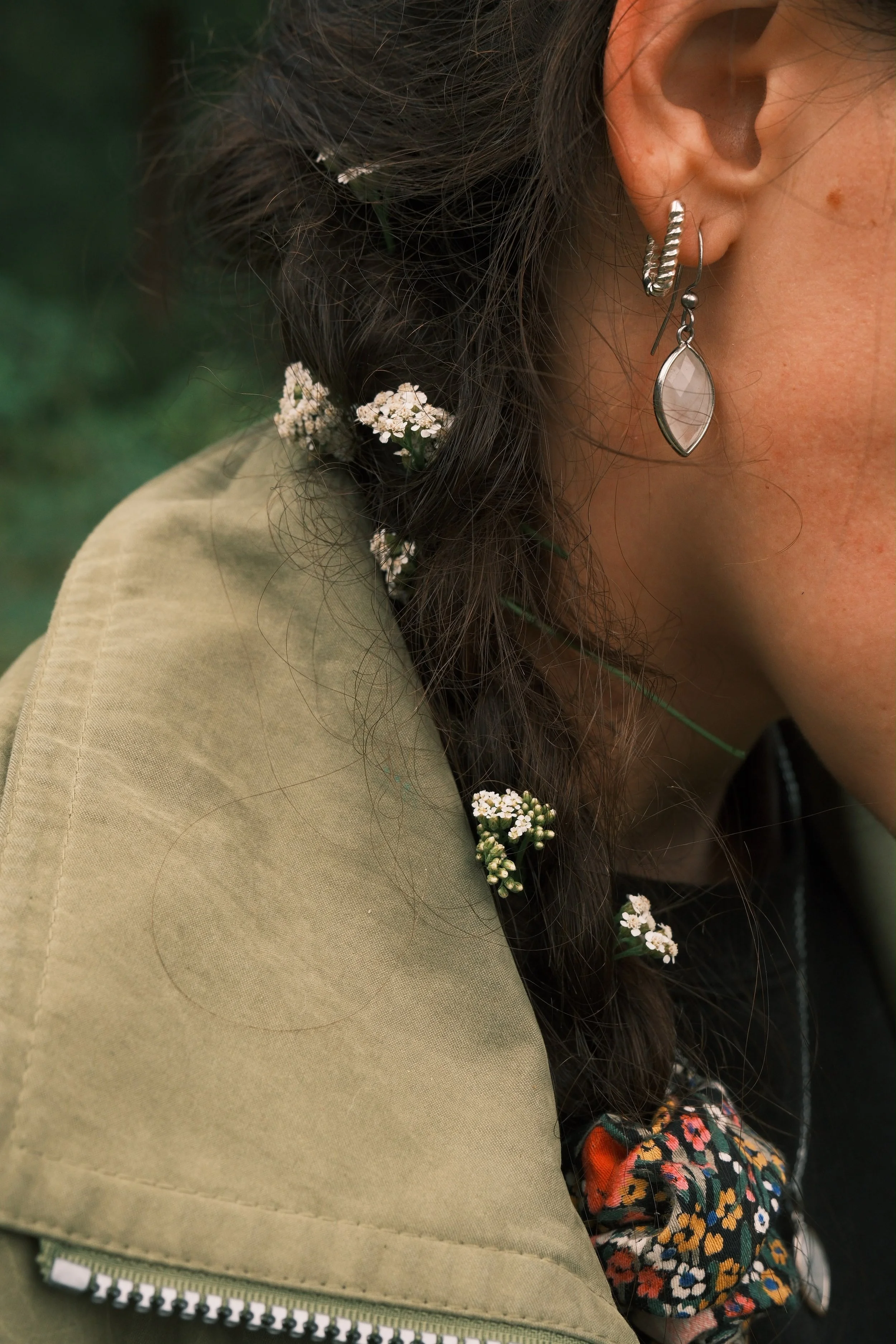
Yarrow has accompanied me for a long time. I used to experience very severe menstrual pain—sometimes so intense that I could barely move. I began working with yarrow in teas, baths and compresses, often in combination with other plants, and it supported me greatly.
Beyond my personal connection to it, I am fascinated by its history. Its Latin name, Achillea millefolium, refers to Achilles, who was said to have used the plant to treat the wounds of soldiers.
Yarrow is sometimes also called the eyebrow of Venus. There are so many myths and names woven around it. When I see it, I do not only see a plant. I see all the people who recognised and worked with it long before us.
Are there other plants that feel special to you?
Masterwort is another one. It is a mountain plant that grows at higher altitudes and carries a great deal of Alpine history.
I had not really known it before I began studying plants. One day, I found it in the mountains with the help of an identification book. It felt like discovering something that had always belonged to the landscape but had remained invisible to me until then.
In South Tyrol, masterwort was traditionally burned and sometimes used in place of frankincense. Its scent is strong, fresh and deeply connected to the mountains. It carries stories, traditions and a feeling of home that is difficult to describe.
Rosemary is also important to me. It might appear ordinary because so many people know it, but it is an incredibly versatile plant. I especially enjoy using it in natural cosmetics and hair care.
Sometimes the plants we consider most ordinary contain entire worlds.
What does creating your own herbal remedies mean to you?
For me, it is an act of self-determination.
We have become dependent on the cosmetics and pharmaceutical industries for almost everything. At the same time, much of the practical knowledge that once passed from grandparents and parents to children has disappeared.
Learning to make a simple balm, oil or household remedy gives some of that independence back. You understand what you are using, where it comes from and how it was made. You can reduce waste and create something that responds more consciously to your own needs.
I am not against conventional medicine. It is necessary and valuable. But I believe there should also be space for traditional knowledge and for learning how we can support ourselves.
It is about widening our possibilities, not rejecting one world for another.
Does “natural” always mean gentle or suitable for everyone?
No, and that is very important.
Every person is different, and every body responds differently. A plant or product can be described as gentle, natural or suitable for every skin type and still cause a reaction.
I experienced this myself with witch hazel hydrosol. It is generally considered mild and well tolerated, but my skin reacted badly to it. For a long time, I searched for the cause everywhere else. When I stopped using the hydrosol, the reaction disappeared.
That experience reminded me that general recommendations are never more important than listening to your own body.
Nature is powerful. Working with plants responsibly means respecting that power rather than assuming that everything natural is automatically harmless.
What would you tell a woman who wants to follow a path that others might not understand?
Follow it—and do not let everybody around you convince you that they know what is right for you better than you do.
If you feel strongly drawn towards something, try it. You cannot know where the path will lead before you begin walking it. But even if it does not unfold exactly as you imagined, you will know that you listened to yourself.
Other people will always have opinions. They might question whether your idea is realistic or whether you have enough experience. But they are not the ones who have to live with the decision.
You know yourself best.
And you do not need to feel completely ready. Nobody ever does.
When do you feel most like yourself?
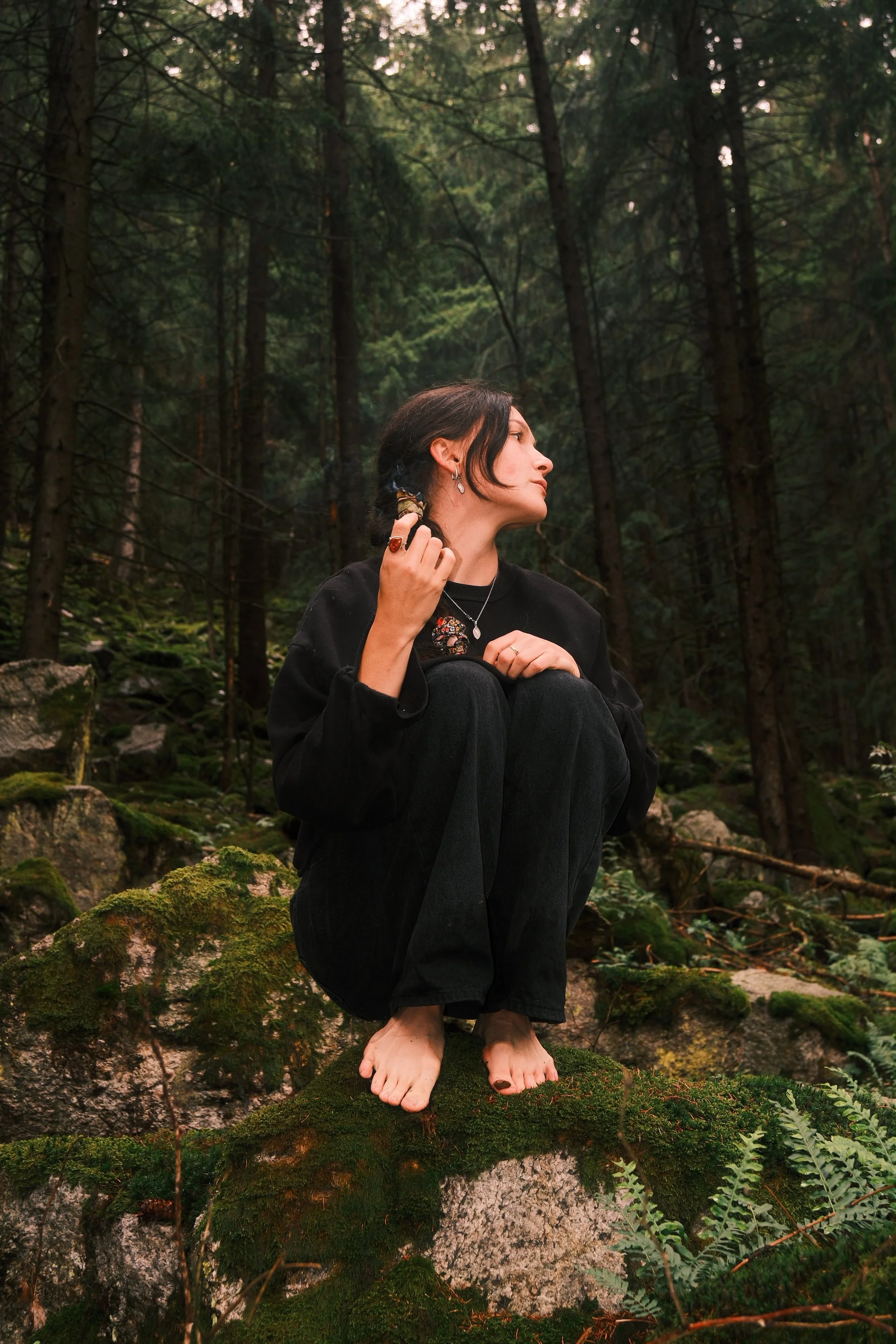
When I am in nature—especially in summer, barefoot on the forest floor or sitting quietly in the sun.
In those moments, everything else becomes less important. I do not have to play a role or become somebody for another person. I can simply exist.
Nature does not ask who you are, what you have achieved or what you still need to prove. It does not care what you look like or whether you have found all the answers.
It simply holds you as you are.
That is where I feel most grounded, most connected and most like myself.
What does “Women in Motion” mean to you?
For me, being a woman in motion means living in connection with cycles.
Nature never remains the same. The seasons change, plants retreat into the earth and nothing blooms throughout the entire year. Winter does not mean that life has disappeared. It means that life is gathering its strength somewhere beneath the surface.
Women move through seasons too. We experience periods of expansion and retreat, certainty and doubt, creation and rest. Sometimes we move forward visibly; at other times, the transformation is happening quietly within us.
There are highs and lows, but nothing remains still. We continue to change, to grow and to reinvent ourselves.
Being a woman in motion means trusting that rhythm. It means understanding that rest is also part of movement and that a difficult season is not the end of the story.
After every winter, something begins to grow again.
Want to keep up with Silvia? Follow her Insta below to not miss any updates and upcoming workshops
