
Women in Motion Vol 14
Showcasing Nikita
I first met Nikita in at university, but it was her unmistakable individuality that stayed with me. Her style was bold and entirely her own, and whenever she spoke about something she loved, her passion was impossible to miss. There was something about her that made me want to know more, to hear her story and discover what moved her. From the beginning, she made me curious to learn more about her.
Some time later, she invited me to one of her dinners at Bar Pekky in Amsterdam Noord. The food was insane, but what stood out just as much was the feeling she created around it. It was warm, personal and generous, less like being served a meal and more like being invited into her world.
Her relationship with cooking began long before these dinners. Growing up in a family where food was closely connected to care, Nikita eventually found her own way of carrying those memories forward. Today, cooking allows her to stay connected to her family and culture while creating a sense of home for the people around her.
How did your relationship with food and cooking begin?
Growing up, I was actually a very picky eater. That began to change when I started taking sports more seriously.
Food stopped being something I simply had to eat and became something that could give me energy, help my body recover and prepare me for the next day. I became interested in nutrition and in understanding what different foods could do for the body.
Things my mother cooked that I previously did not like suddenly had a different meaning. Instead of thinking, I don’t want to eat this, I started thinking about how it could give me energy or help my body heal.
Cooking was also always present in my family. My mother cooked for us every day, and my father, grandfather and uncle all loved cooking too. I grew up watching them in the kitchen and seeing how many different dishes they could bring together for everyone.
A lot of my happiest memories are connected to food: eating together, talking about what we were having and watching our favourite shows while we ate.
When did you begin cooking for yourself?
Before I moved away for university, my dad told me that I needed to learn how to cook because I could not rely on eating out all the time.
He wanted to teach me basic Indian dishes, but I was not interested in that at first. I wanted to make grilled chicken, pasta and the kinds of foods we did not normally cook at home and would usually order from somewhere else.
Once I moved away, though, I started missing the food I had grown up with. That was when I began trying to recreate it.
At first, I followed my mother’s recipes exactly. I would call her and ask for her opinion. Over time, I started changing things, adding my own ideas and combining her recipes with things I saw on Instagram or food blogs.
My cooking now is probably a combination of all of those influences, but my mother is still the person I call when I need advice.
Did cooking immediately become an important part of your life after moving away?
Not immediately. When I first moved away, I lived alone and did not feel very motivated to cook only for myself.
I was also not doing particularly well during that period, and sometimes it was difficult to motivate myself to eat properly. I mostly lived on bread, pesto and cheese because they were easy.
That changed when I moved in with the people who later became my best friends. I started cooking for them, and suddenly I wanted to spend more time in the kitchen again.
Through cooking for them, I realised how much food connected me to home. My grandfather and uncle had passed away, and they were both people whose food I had always imagined sharing with my friends. Because they could no longer do that themselves, I felt that I had to carry it forward.
Cooking became a way for me to experience home in a different place while also allowing my friends to understand what home felt like to me.
How did you first find your way into working with food?
I had my first study delay and wanted to do something independently from my education. I wanted to prove to myself that my life could be about more than university.
I found a job through a random Facebook post at a small food business near Science Park. Based on the post, I had imagined meeting an older woman, but instead, Zainab, a young, cool woman arrived. It immediately challenged the image I had created in my head.
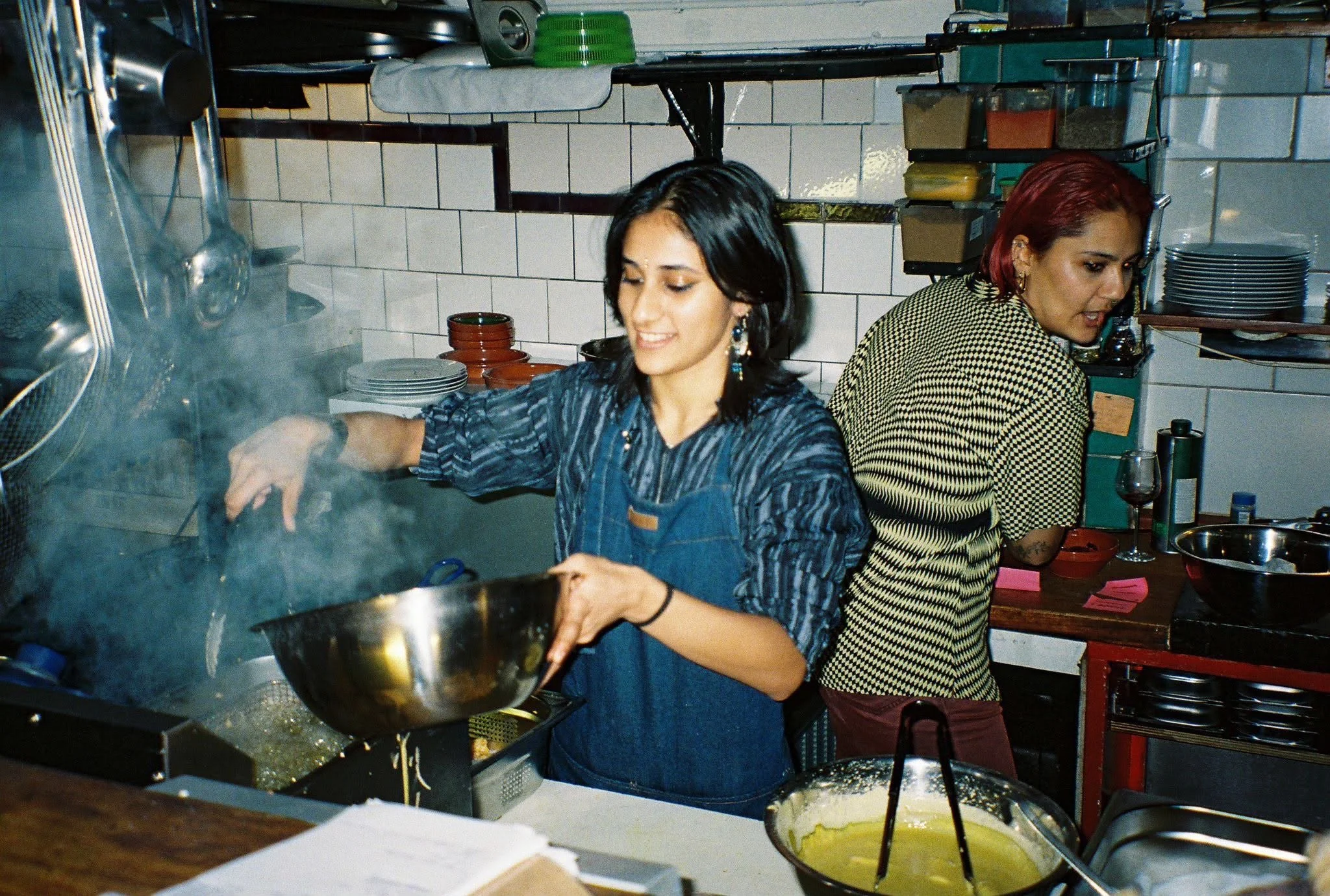
At first, I was mainly serving food, but I would regularly bring her things I had cooked at home. One day, she asked me what we could do with tomatoes that were going soft and I made a tomato chutney with her.
From there, we started cooking together, and I gradually became more involved in the kitchen and the organisation of the space. Eventually, we created the menu together and changed it every week. I also helped her with festivals and the food truck.
She treated me as an equal, which gave me the opportunity to learn through actually doing the work rather than simply watching.
Was there a moment when you realised cooking could become more than a side job?
There have been several moments when I have found myself returning to places where I once thought, I would love to do this, but I don’t know if I ever could.
I remember visiting a particular kitchen for the first time and thinking it was such an incredible space. I could not imagine myself ever working there. A year later, I was having an interview there and eventually cooking in that same kitchen.
Moments like that make me think that maybe I was meant to find my way into food. But at the same time, none of it happened without effort.
I had to keep putting myself out there. There were many moments when I could have stopped trying, decided not to make something or not spoken to someone. If I had done that, I would never have encountered many of the opportunities that followed.
Maybe some things were meant to happen, but I still had to continue moving towards them.
Did you ever consider stopping because cooking was distracting you from your studies?
Other people sometimes saw it as a distraction, especially when university was not going well. There was this idea that I needed to focus completely on my studies, get good grades and follow a very specific path.
But I never experienced cooking as a distraction. It gave me something to look forward to and reminded me that my life was bigger than university.
Working in kitchens showed me that there are many different ways a life can look. It gave me a sense of purpose at a time when I really needed one.
I never truly wanted to stop. Sometimes the circumstances around me made continuing difficult, but cooking itself was never the problem. Cooking and eating has become a way to take care of myself, shut off the world and calm my mind.
How did you begin organising your own pop-ups?
When the place near Science Park closed and my boss moved to Berlin, I was worried that I would not find another way to continue cooking.
My friends and I were already regulars at Bar Pekky, and one of my roommates worked behind the bar. Whenever I had extra food, I would send some along for Hendrik, the owner.
One evening, I told him that my boss had left and that I did not know what I was going to do next. I knew I wanted to continue cooking, but I did not know where.
He simply asked me, “Why don’t you do pop-ups here?”
That was how it started. He helped me in the beginning with things like organising myself, placing orders and creating a space in which I could cook. My friends helped with preparation, transportation and service.
From there, other opportunities developed through conversations, Instagram and recommendations. Someone would try my food at an event and later ask me to cater a birthday or another private gathering.
Most of it grew very organically. I spoke to people, told them what I was doing and stayed open to where those conversations could lead.
What does preparing a pop-up or catering event actually involve?
The first challenge is deciding what kind of food I want to make. That depends on the people, the location and the budget.
I want my food to remain accessible, but I also need to cover the costs and learn how to pay myself properly. I do not think I have completely figured out that balance yet. I do not want people to feel that they have to pay fifty euros to eat my food, but I also know that the way I currently work is not always sustainable.
Once I have decided on the menu, I make lists of the ingredients, quantities and everything that needs to be prepared.
The days before an event usually involve running around the city, visiting several different shops and carrying as much as possible on my bike. For everything I cannot manage alone, I ask friends to help me.
I normally have at least one friend helping with part of the preparation or service. Speaking my plans out loud to someone also helps me organise my thoughts.
I am not naturally a morning person, so I try to prepare as much as possible the day before. That way, I can sleep and avoid having too many unfinished tasks in my head on the morning of the event.
What is the day of an event like for you?
The day starts early, and there is always a lot happening.
I always leave enough time to dress properly because I enjoy making the occasion feel special. Getting ready together almost feels like preparing for a large family celebration. You do all the work, dress up and then welcome everyone.
There is also almost always some kind of unexpected problem. Once, just before service started, I spilled oil all over my best friend’s jeans and the floor. But I remembered from Zainab that salt works surprisingly well for cleaning up oil.
You deal with whatever is happening in front of you and then move on to the next thing.
After the event, there is still all the cleaning. That is obviously the least glamorous part, but it is also satisfying when everything is finished. I have a cigarette, go home and know that the job is done.
What do you find most challenging about hosting by yourself?
When I do my pop-ups, it is often mainly me. People naturally want to speak to me while I am cooking and serving, but during service, I cannot always be fully present with them.
I want to give people my complete attention when they speak to me, and that is difficult when I also have to think about the kitchen, the food and everyone else in the room.
Once the physical work is finished, I always try to sit down and speak to everyone properly. By then, my feet and back might hurt, but I can finally enjoy what has been created.
People also want to tell me what they thought of the food and how it made them feel. Hearing that is incredibly fulfilling. When someone says they felt comfortable or at home—even if they did not grow up with those flavours—I feel that I achieved what I wanted.
What do you want people to experience through your food?
I want people to feel at home. To eat without guilt, enjoy what’s in front of them and appreciate whoever they’re sharing it with. And if they’re eating alone, to enjoy that time with themselves too. Food should be more than something we consume because our bodies require it. Preparing and sharing a meal can be a way of taking care of yourself beyond the most basic need to eat.
For me, feeding someone is a way of caring for them. It’s about the food, but also about noticing people, making them feel welcome and giving them space to enjoy themselves. Sometimes that means a table full of friends, and sometimes it’s just a conversation with someone who needed a little company.
You also study psychology. Do you feel that this influences the experiences you create?
Probably, but it happens unintentionally.
People sometimes tell me that I should connect psychology and food more explicitly or do something therapeutic with it. But I never wanted to become a therapist.
My intention has always been to create meaningful connections with people and create a sense of belonging. Even if I do not consciously apply specific theories from my degree, studying psychology has shaped how I understand people.
I notice what someone might need, how a room feels and when I need to step in somewhere. That is also useful when I am organising events or working with other people.
I want people to see food more than something they need in order to function. Eating can also be a time to care for yourself, enjoy something and connect with other people.
Is there a particular dish or tradition that immediately connects you to home?
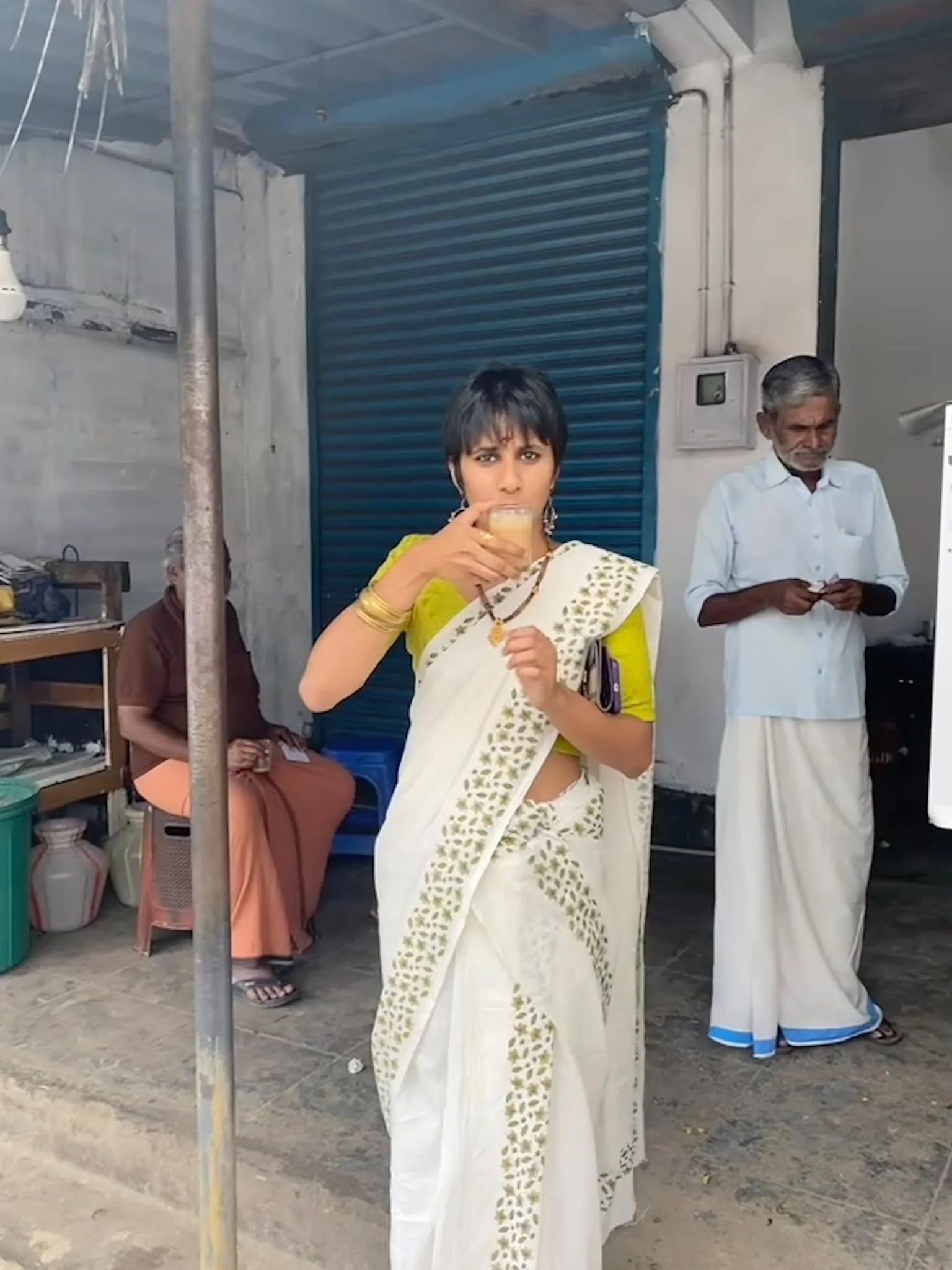
One experience that always comes to mind is the Sadhya we eat during Onam, a harvest festival celebrated in Kerala.
The meal is served on a large banana leaf and consists of many different dishes. There is rice, a variety of vegetables, lentils and beans cooked in different ways, pickle and dessert.
Many dishes are things we might eat regularly in combination with each other, but during Onam, they are all brought together in one meal to commemorate the harvest.
Everything has a particular place on the banana leaf, and the meal brings together salty, sour, sweet and spicy flavours. You eat it with your hands and mix the different components as you go.
There is an order to it, but to me it is also about discovering how the different flavours work together.
For me, it is the entire experience that makes it special—the banana leaf, the variety of flavours and the fact that everyone sits down and eats together.
I can find sadhya in the Netherlands, but it will always feel strange to pay around forty euros for something that feels so familiar when I am back home.
What does home mean to you now?
I do not think home is one stable place for me.
India feels like home because my family is there and because I can eat the foods I grew up with. Dubai also feels like home in a different way because I grew up there and have so many memories there. The Netherlands now feels like home because of the community I have created here.
A place by itself does not necessarily mean anything to me. It becomes home because of the people, the food and the memories connected to it.
Food is one of the few things I can carry between all of those places. Even if I am somewhere completely different, I can make something and reconnect with a particular person, moment or part of my childhood.
That is why cooking is so important to me. It allows home to be something I can create rather than only somewhere I can return to.
Is there a moment in your work that you feel particularly proud of?
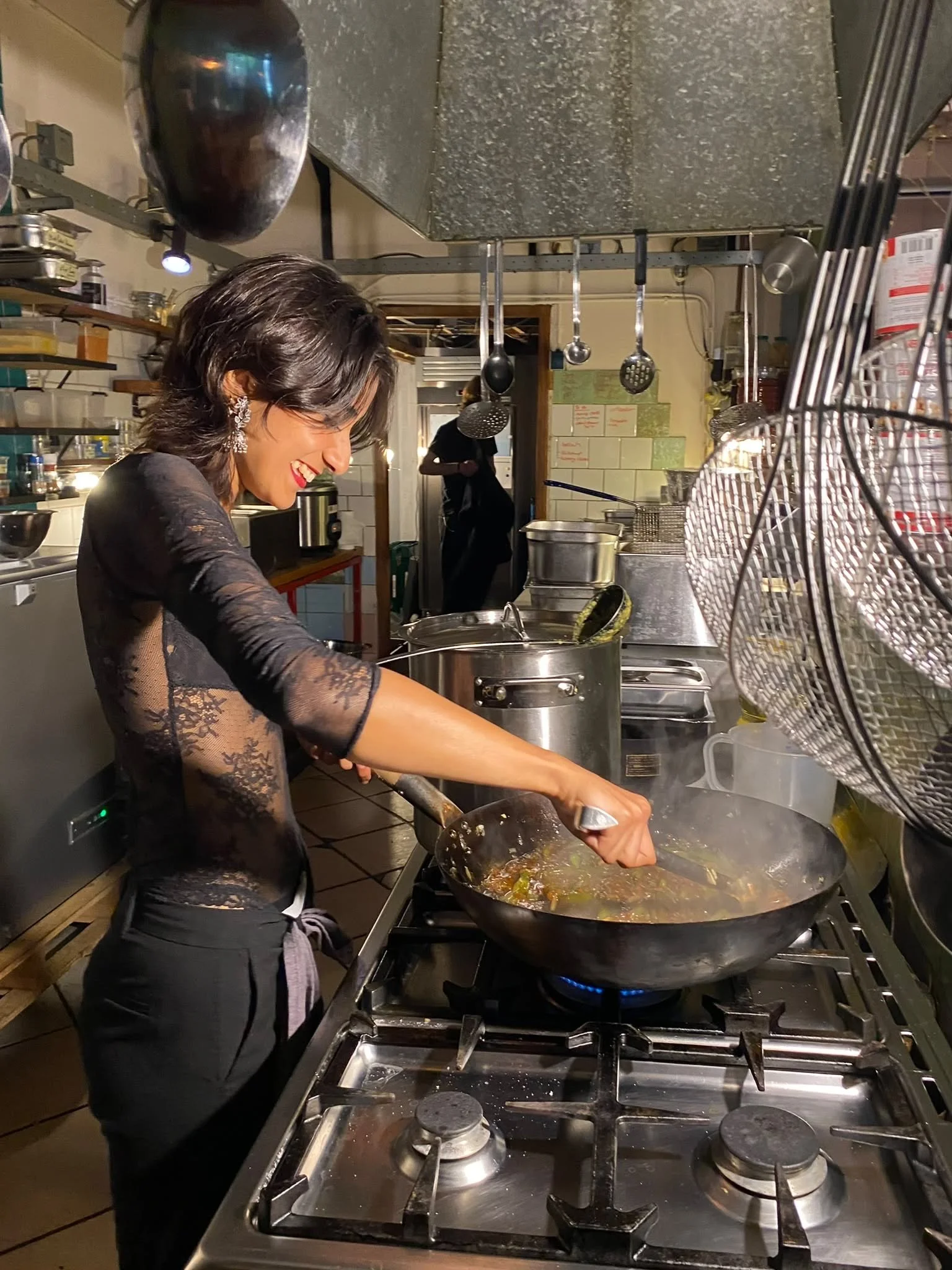
My dinners at Bar Pekky completely changed my relationship with the Netherlands.
After living here for almost six years, I still did not feel that I fully belonged. I did not have many Dutch people in my life and often felt like an outsider rather than part of the local community.
Through Bar Pekky, I met a group of people I probably would never have encountered otherwise. They now feel like family to me.
They embrace my culture and my food, and they look forward to what I’m cooking. But those friendships have also become a big part of my everyday life. We celebrate birthdays, share little wins and spend time together outside the pop-ups. I feel included even when I can’t follow every word of a conversation in Dutch. It gave me a sense of belonging and made me want to stay here. It even made me want to learn the language.
Food allowed me to create a place for other people, but in doing so, I also found a place for myself.
Has your food also become part of the feeling of home for other people?
One of my proudest moments is seeing how my Romanian best friend, who had barely eaten Indian food before meeting me, now considers it comfort food.
For her birthday, I told her I would cook anything she wanted. I said she could choose something complicated from any cuisine in the world.
She asked for the simplest meal, dal and rice.
That meant a lot to me because it showed me that something connected so strongly to my home had also become part of hers.
She had connected that food to our friendship and to feeling cared for. That is exactly what I want my cooking to do.
What would you eventually like to create?
Far in the future, I would love to have a space where people can come and eat without being required to pay. If they want to contribute, they can pay what they are able to.
There’s a tension for me in charging for something that feels so personal, especially when I’m cooking food from home. I know the ingredients, time and work need to be paid for, and I’m still learning how to value my own labour properly. But the part I love most is feeding people and sitting down with them.
I also do not want there to be a strict separation between the kitchen, the people serving and the people eating. I imagine one large space where everyone can participate.
I would cook, but I would also sit down, speak with people and eat with them. The people I love could be involved too. There would not be this feeling of, “I am here to serve you, and you are here as the customer.”
Everyone would be part of creating the experience. It would feel like one large family gathering.
That idea is probably something for much later in my life. Right now, my priorities are gaining experience, continuing to learn and finding a way to stay here.
What do you still want to learn?
I never want to reach a point where I believe I have nothing left to learn.
Cooking is one of the few areas in which I genuinely enjoy being taught. I like watching other people work and discovering completely different ways of organising a kitchen.
I once worked with the chef behind “Roti Mami”, and her way of working was much more structured than mine.
I normally plan as much as possible, but I can still end up preparing different things at the same time during service. In her kitchen, everything was ready before the guests arrived. Once service began, we were only plating and sending the dishes out.
Watching that workflow showed me how much organisation can change the experience inside a kitchen.
I enjoy having control and knowing where everything is, but that kind of professional structure develops through time and repetition. I have already become much more organised than I was when I started.
You enjoy having control in the kitchen. How does that work when you cook with other people?
It depends on the situation and the power dynamic.
If I have been hired to help someone with their concept, I take a step back and ask how they want things done. I still read the room and step in when I notice something that needs attention, but I am there to support their way of working.
When it is my own event, I can be a micromanager. I usually have a clear idea of how I want things done, so I give people specific tasks and explain what I’m looking for. I’m still learning how to balance that with giving people room to work in their own way.
I think I could eventually become a good kitchen or restaurant manager because I notice what needs to be done, from the smallest details to the overall goal.
I also understand the different sides of the work. I do not want the kitchen and front of house to feel like completely separate worlds. Both sides experience pressure in different ways, and everything works better when they understand one another.
I would want to create an environment in which it all comes together and feels like one team.
The dinners look joyful and effortless from the outside. What is the reality behind them?
They are definitely not effortless.
The work takes an enormous amount of mental and physical energy. I spend the entire day standing, carrying things, planning, solving problems and interacting with people.
I also choose to wear heels while doing it, which probably does not help.
After an event, I often need an entire day in bed without speaking to anyone. Luckily, I am very good at doing nothing. I love staying at home, watching something, eating my food and switching off.
The work can look easy from the outside because I genuinely enjoy doing it. But enjoying something does not mean it is not exhausting.
Those quiet days afterwards allow me to recover and make me appreciate the busy moments even more.
What advice would you give to someone who wants to begin creating their own food experiences?
Start by organising your workspace and creating a place for everything. Think about what you can prepare in advance so that, once people arrive, you can focus on the food and the experience.
At the same time, do not expect yourself to know everything immediately.
Work with what you know now. Observe other people, learn through doing and notice what did not work so that you can change it the next time.
Do not punish yourself for not already working like someone who has years of professional experience. You will learn by watching other people, but you will also learn by making mistakes.
Some things will still slip out of your hands, and some circumstances will be outside of your control. When that happens, focus on what you can actually do in that moment.
Most importantly, remember that you are doing it because you enjoy it. It does not need to be perfect from the beginning.
Is there any advice from your family that you carry into your work?
My dad has always taught me to be practical when a problem appears.
You look at what is happening, consider the possible solutions and think about what you can actually do in that moment.
There is no point in panicking about everything that could go wrong. You deal with the problem in front of you and then move on to the next thing.
That has helped me a lot during service. Something will inevitably go wrong, but stopping to panic will not solve it.
You do what you can with the circumstances you have. If something cannot be fixed now, you remember it and approach it differently the next time.
Women in Motion is about movement in many different forms. What does motion mean to you?
For me, motion means continuing to make room for the things that make me feel like myself, even when I don’t know exactly where they’re taking me.
When I think about the women in my life, I think about all the ways they keep creating, caring and learning, for themselves and for the people around them. Cooking is one of the ways I do that. It connects me to my family, my culture and the people around me, while giving me room to keep growing.
Want to keep up with Nikita? Below you find a link to her socials.
