
vol iv: Baker & chef giovanna
ANIMA SESSIONS VOLUME 4
Giovanna and I first crossed paths through shared curiosity about the meaning food can carry. When we met at a bakery in Amsterdam, my first impression of her was shaped by the genuine excitement with which she spoke about food – and by the insane cookies she made .
Our conversations about our favourite foods quickly became conversations about much more: where we come from, what we remember, and why certain tastes make us feel comforted or connected.
A favourite food is rarely just something we enjoy eating. It can hold traces of our childhood, our culture, the people close to us, and the experiences that have shaped us. This connection between food and the mind became the starting point for our conversation.
Today, Giovanna describes herself as a baker first and, more broadly, as someone who works with food. Her relationship with baking is shaped by curiosity, creativity, and a desire to create experiences that people remember.
In our conversation, we spoke about her journey into baking, the memories carried through taste, finding confidence without formal culinary training, and her dream of creating a space where food, creativity, and people can come together.
How did your journey into cooking and baking begin?
I’ve always been somebody who loves food. And when I say I love food, I think there’s something everybody lives for. I genuinely think I live to eat and to witness food come to life. It’s something that gives me a lot of energy.
I love walking through a supermarket. I love seeing how people interact around a table. I love observing the atmosphere in a restaurant, from how the service is given and how the staff interact with one another to how people interact at the table.
I’ve always had this excitement around food and everything it encompasses. From a very young age, I had an affinity for bread and pastry. My step-mother is a big pastry fanatic, so she would always bring something home, like tarts and other pastries.
Then one day, I walked into Chez Rosie, which became my first job in a bakery. It used to be a bakery in Amsterdam. I had this intuitive thought that I needed to speak to the owner. So I spoke to her, sent her my CV, got the job, and fell in love with it.
So you simply walked in and decided to go for it?
I wanted to do work that felt meaningful to me. When I entered Chez Rosie, I felt something genuine. I could tell that the people there truly loved what they were doing, and I wanted that infectious energy. I wanted to love what I did, too. So I just went for it.
What do you love most about food, bread, and creativity?
I think what I love is how food connects to memory. Taste is a very delicate and powerful sense. It can transport you back to places. I love when people eat something and say, “Wow, this reminds me of this dish,” or, “This reminds me of this time,” or, “This reminds me of when I was a kid.”
It gives us this power of imagination that I think we’re lacking. It creates this childlike energy and a very childlike happiness. I love that about food.
I also love that it can be shared. Food requires this communal interaction around a table, where somebody brings something from a different story or a different place, along with the story of bringing it. Then it all comes together. I really love that.
And I love that food is colourful. It’s something vibrant in its essence. Food isn’t just about a piece of bread. It’s about the softness of the bread, the crunchiness of the exterior, the colours you put on top, and the different textures. They all come together and create a form of art.
The difference between a piece of bread and a great piece of bread is about the layers. I love that food is colourful and creative, and that you can create all these different sensations.
When you talk about food being connected to memory, is there a particular dish or taste that comes to mind for you?
Bread has always been a very meaningful taste for me because I grew up Indian and Chinese. I would eat roti every day at home, which is a form of bread made from flour and water.
In Chinese culture, there are also many Chinese pastries that I would eat after school. You would go somewhere after school, get some bread, and eat it with your friends. Or you would get a piece of bread in the morning before school.
For me, it really comes back to the foundations and the basics. It’s my foundation. It feels like coming home. Roti is served with your side dishes, and I have a very strong connection to these elements that made me who I was as a child. Bread was probably 70 percent of my diet.
These simple foods are often the most fulfilling. They don’t need anything more.
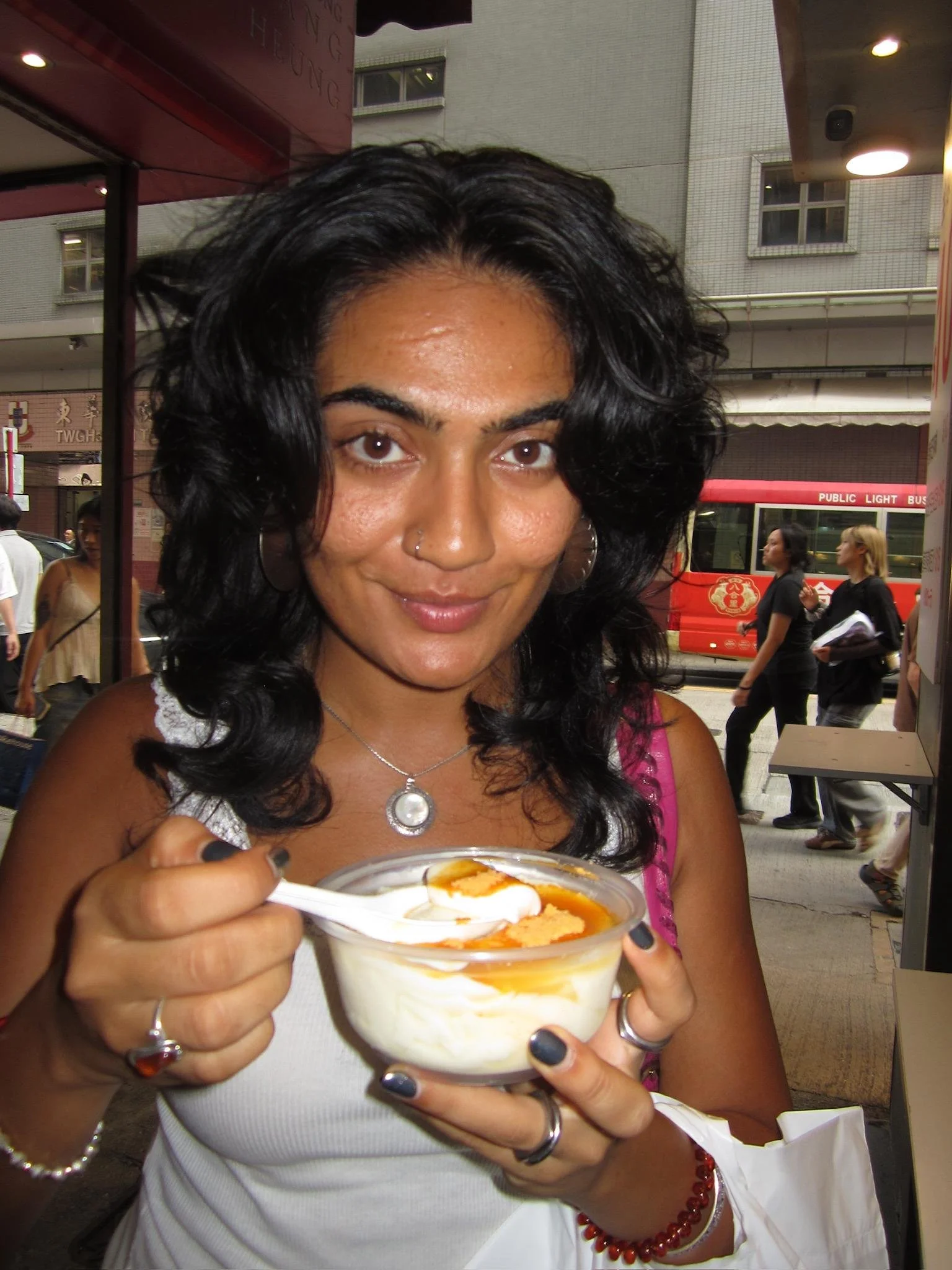
Is there something you’ve made that holds a special place in your heart?
A very special thing for me is always the cookies. They opened the world for me. They opened up the possibility of creativity.
The brown-butter chocolate-chip cookie, as simple as it is, is something I’m really proud of. I’m proud of how we adjusted the recipe and where that has brought me now. When I think about it, last summer I was making them for a private dinner, and now I’ve reached the point where I’m making cookies for a wedding. That feels huge.
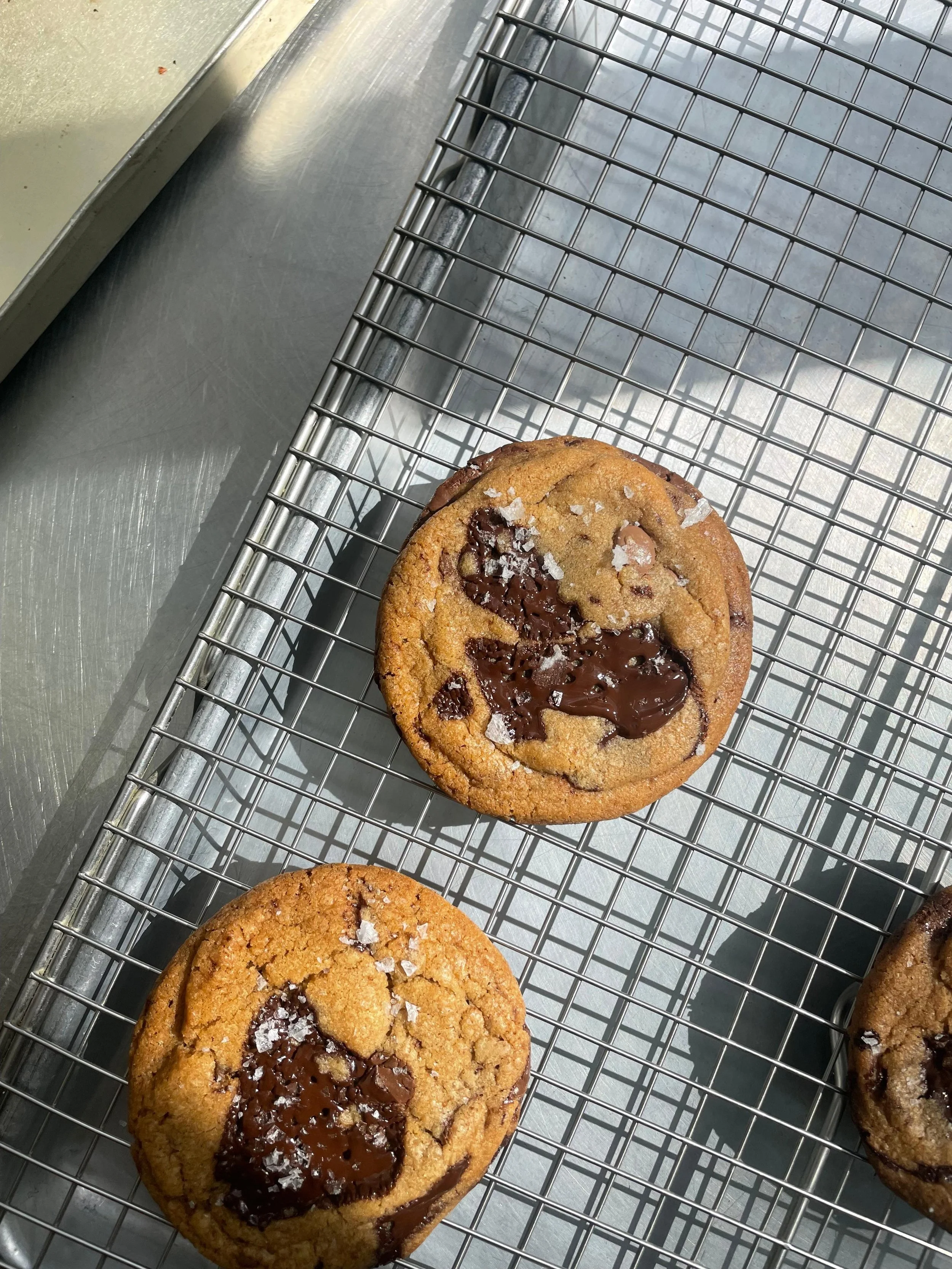
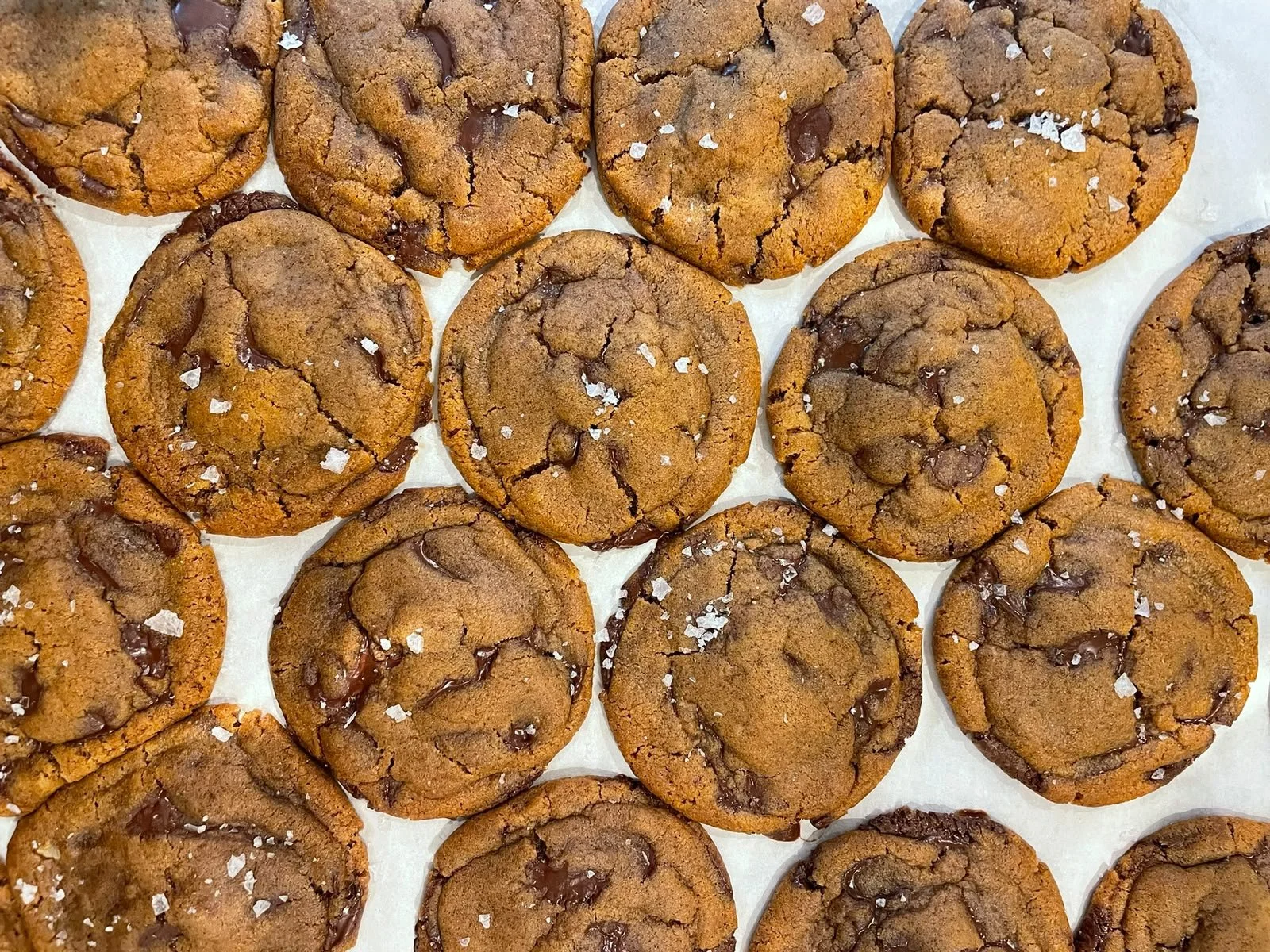
One of the women who attended both my cookie class and my bread-making class is getting married, and I’m creating a special cookie for her wedding. I remember thinking, “Wait a minute, what? This is crazy.” Somebody trusts me enough to make something for such an important occasion.
I’m really excited about this project. I think it’s going to be a very big milestone for me, so the cookies are especially memorable.
What would you love people to feel when they eat something you’ve made?
I want people to feel a sense of comfort. In Ratatouille, there’s a moment when he eats a piece of cheese and a strawberry. These beautiful lines appear, and it becomes this sensation of dance. That’s what I want people to feel.
I don’t want eating something I’ve made to be a flat experience. I want it to have layers.
Was there something that was particularly challenging in this process, or something that taught you more about yourself?
It created a huge reconnection with myself, but it also made me face my imposter syndrome. I didn’t get a degree in food. I didn’t formally learn or study it; I have a master’s degree in psychology. So I kept thinking, “Why me? Why me? I’m not even in food. This was just something I decided to do to pay my student bills.”
I’m so glad and honoured that my friends supported me throughout this entire process. It really made me confront this feeling of not being good enough, and I’m still confronting it.
As I said, I know there’s a lot left for me to learn. There’s a part of me that feels the need to be the best at everything, this perfectionistic part. I’m trying to tame that part and be graceful with it. I’m trying to remind myself: You’re a learner. Explore. Be creative. This is about the process, and there is no end goal. The end goal is simply meeting yourself and accepting yourself.
I think this process has been more about coming back to myself than anything else. It really has been. I don’t know what could make me feel closer to myself than working with food. It involves creation and creativity, but it’s also a form of care for yourself and for other people. It’s kind of everything.
What advice would you give to somebody who also wants to enter that world?
If you don’t ask, the answer is always no. Just do it. Go and ask, “Can I work here? Can I start?”
People are going to say, “No, you don’t have experience,” or, “No, you don’t have this.” But somebody is going to believe in you, and somebody is going to give you an open door. Chez Rosie was my open door, and I’m so grateful to her.
One day, when I have my own place or feel that I’ve achieved some kind of monumental success, I will always thank her. So, for me, it’s about being afraid, going out and asking, and doing it anyway.
It’s so easy and so difficult at the same time. Don’t think too much. Go and do it with the fear, with feeling afraid, with feeling like you’re going to be rejected, and with feeling like you don’t have enough experience. Just go and ask. Somebody is going to believe in you, and eventually you’ll know: “I’ve got it.”
You mentioned that you’re more afraid of mediocrity than of not becoming successful. What does that mean to you?
I think that’s also my Achilles’ heel. I’m not afraid of not making money or not becoming successful. I’m more afraid of mediocrity. I’m afraid of creating something that is just fine.
Food, for me, is this whole experience, like the moment in Ratatouille when he eats the cheese. I want food to be able to evoke that feeling in people. I want it to be outstanding.
I recently ate something that made me say “wow” over and over again. I couldn’t stop saying it. That’s what I want to give people: a memorable Ratatouille experience.
Is there a dream project you would love to create one day?
I would love to open my own place one day, but it wouldn’t be as simple as opening a bakery. I want to open a social hub. I would love it to be a space that people can make their own.
Nowadays, “community centred” is a trend, but when I say community-centred, I really mean it. I would ask people from the community how they want the space to be, what their favourite thing of the month is, which flavours they’re looking forward to, and how they would like it to change.
I want it to sell pastries and work with seasonal produce. In the evening, I would like to make it available for events. I want people to make it their own space.
I want it to be a breathing space, a place where creativity lives, not just for me. I’m not telling myself that I need to achieve it by a particular time. I’m thinking, “You know what? Let’s see when I feel ready for it.” It will happen when the time is right.
The series is called Women in Motion. What does motion mean to you, and how do you create motion through your food and culinary work?
Motion, for me, really connects to intuition and to the image of a flowing river. Water doesn’t get stuck when it hits a rock; it flows around it. You flow with it.
Motion is about surrender, intuition, letting go, and presence. That’s how I think about motion.
Want to keep up with Giovanna?
Below, you can find links to her social media. Stay tuned for what Giovanna is up to next.
