
vol iii: dj and event producer Jasmin
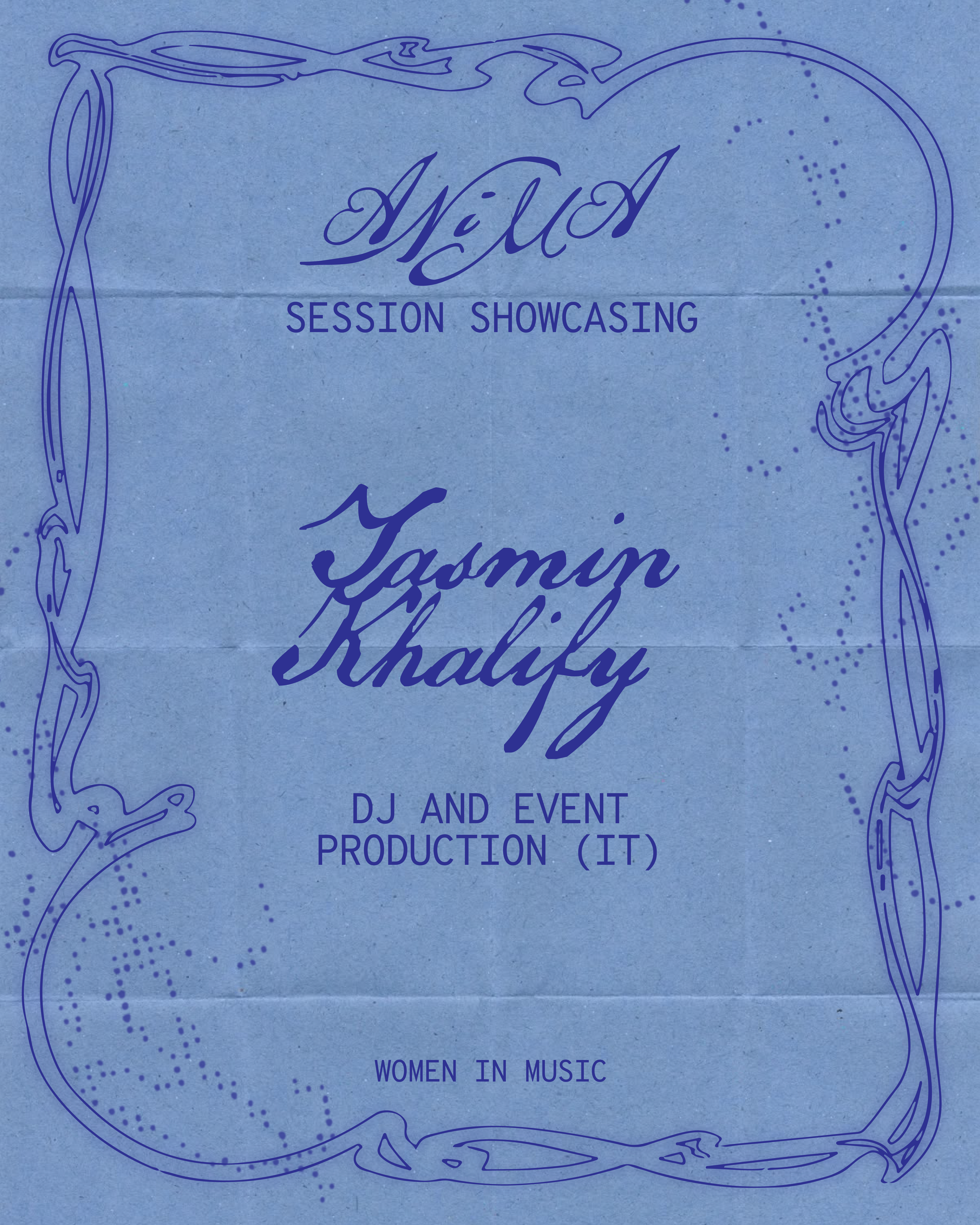
ANIMA SESSIONS VOLUME 3
I first met Yasmin in December at a Spazio AMA event in Bolzano, where she was DJing that evening.
What first caught my attention was the music, but what stayed with me was the person behind it. There was something quietly inspiring about the way she moved through the space. I left that evening feeling inspired - not only by her set, but by the curiosity and initiative that seemed to shape everything she did. I wanted to know more about the person behind the decks, and a few months later, that curiosity became this conversation.
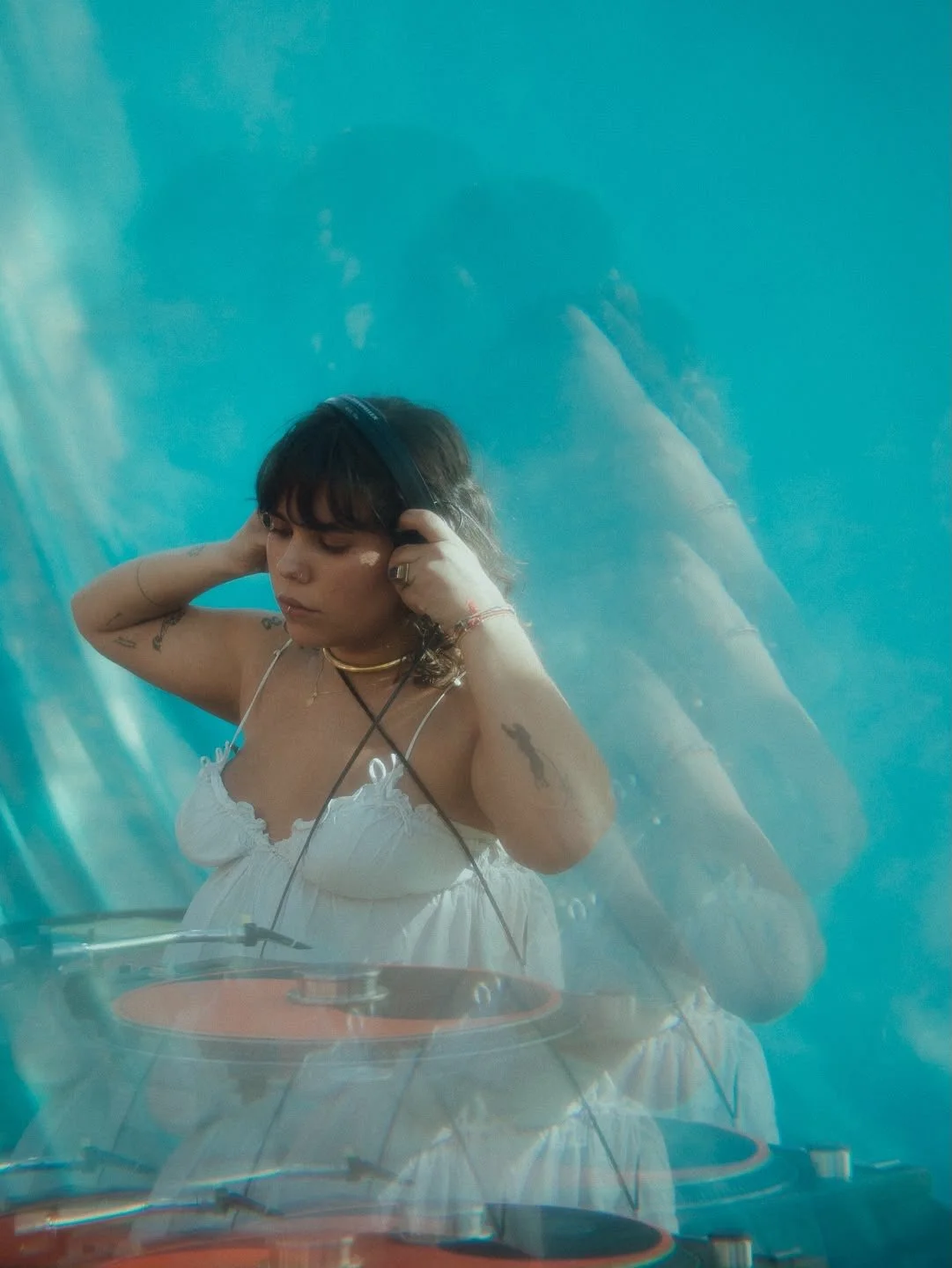
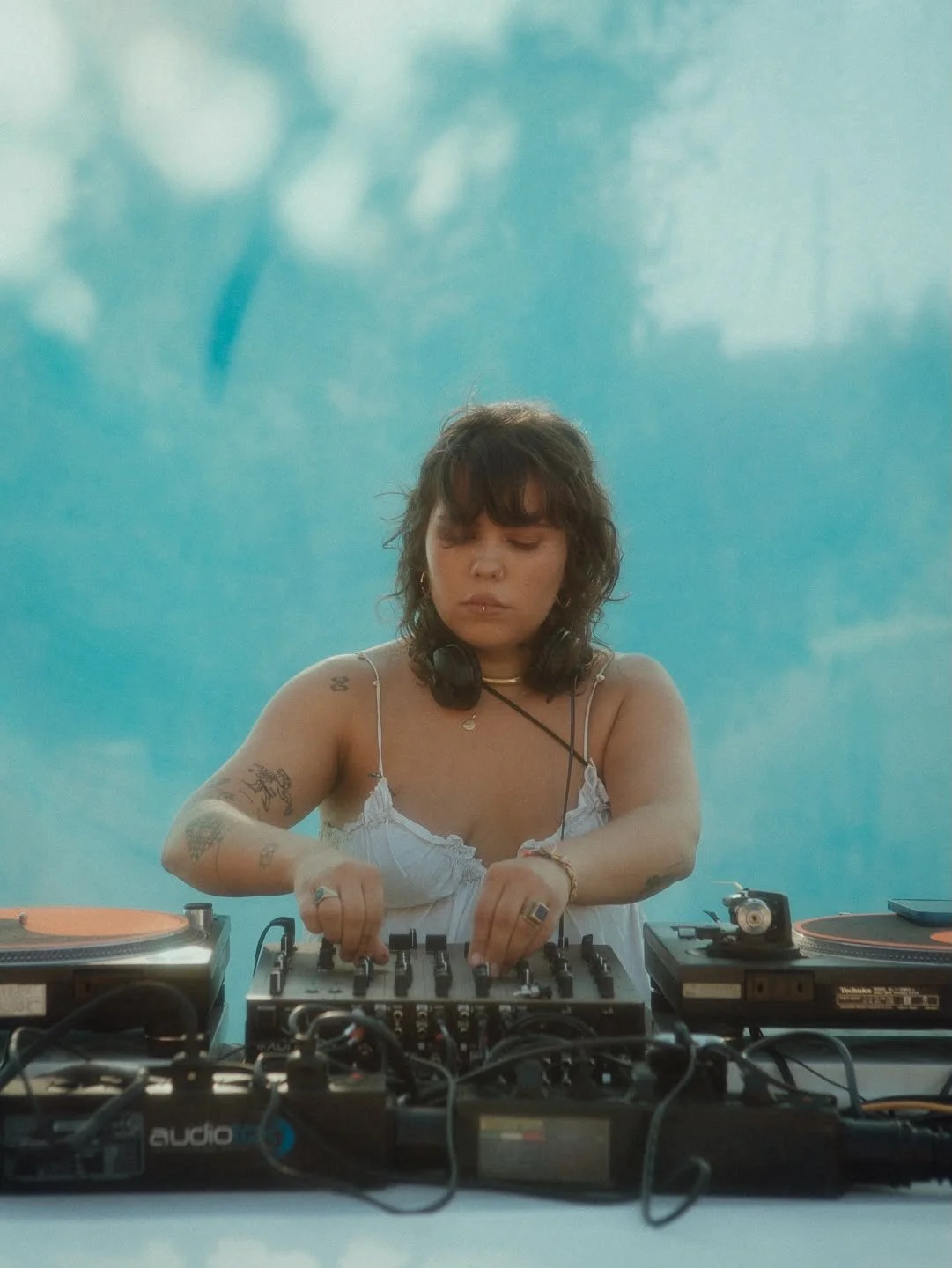
Today, Yasmin works as both a DJ and event producer and is one of the co founders of Spazio AMA, a cultural collective based in South Tyrol that organises exhibitions, concerts, club nights and interdisciplinary cultural projects. Alongside her work there, she collaborates with festivals including Transart and the Vienna Festival (Wiener Festwochen), dividing her time between Bolzano and Vienna.
In our conversation, we spoke about music, taking initiative, building cultural spaces, and how many of the opportunities in her life began simply by deciding to give something a try.
How did you first get into DJing?
I've always been interested in electronic music. I started going to house and techno parties when I was around fifteen, so I've been part of that scene for quite a long time. Looking back, I think it was never only about the music itself. It was also the people around it and the sense of community that came with it.
After spending some time abroad, I came back thinking that I'd actually really like to learn how to DJ myself. At the time I already knew a few DJs, so I kept asking friends if they could teach me. Nobody ever said no. It was always, "Yeah, of course, we'll do it," but somehow it just never happened. At some point I realised that if I kept waiting, I'd probably still be waiting, so I bought DJ Mattia Lorenzi's old setup and decided to start on my own.
Gabriel from ALPI showed me the basics in the beginning, and later I also joined a workshop organised by David Piras. But after that, most of it was just practising on my own. I played at friends' parties, spent a lot of time digging for music and slowly started figuring out what kind of sets I wanted to play.
For me, playing a DJ set is a bit like telling a story. Every track is part of a bigger narrative, and I love thinking about how one song leads into the next and how that journey unfolds over time. More than anything, DJing is a way of introducing people to music that I love. There’s something really special about seeing someone connect with a track they've never heard before or creating a moment that people experience together. That's what motivates me much more than the idea of performing.
I still don't think I've completely found my musical identity. House and techno will always be a big part of it, but recently I've also become really interested in ambient music, and I'd love to experiment more with live sets in the future. I think that's something that's always evolving.
What was the electronic music scene like growing up in South Tyrol?
I actually feel quite lucky because there were a lot more collectives around Bolzano when I was growing up than there are today. There was Feierabend, Mik and a few others, and those were the places where I first really became part of the scene.
One of the memories that has always stayed with me is from when I was around thirteen or fourteen. There was a carnival party around Bolzano where someone was playing house music, and I remember standing there thinking there was something about it that felt completely different. Looking back now, I think that was probably the first moment I really fell in love with electronic music.
Today there are still great events like House Beats, but there aren't as many collectives organising things regularly anymore. It's funny because I've gone from attending those events to helping organise them myself. I love creating those experiences, but it also changes the way you experience nightlife. Sometimes I miss simply going out and dancing without thinking about anything else. Now I'm always talking to people, checking whether everything is running smoothly or thinking about what still needs to be done. It's a different experience, but one that I really enjoy.
Has being a woman influenced your experience in music?
Not in the beginning.
When I first wanted to learn how to DJ, I honestly didn't think about gender at all. I wasn't doing it because I wanted to prove a point or because I was a woman. I simply loved electronic music and wanted to learn how to play it. Even today, I hope I'm booked because of what I do, not because of my gender.
At the same time, being a woman in the scene has definitely shaped my experience. Especially in the beginning, I sometimes felt like I had to prove myself more. It wasn't necessarily something other people said to me, it was more an insecurity I put on myself. I felt like I had to show that I really knew what I was doing because people might assume otherwise.
What I didn't expect was how much of a sense of community would come with it. Over time, I've noticed that when women are behind the decks, more women seem to come to the front of the crowd. It creates a different atmosphere. I've had women tell me they felt more comfortable or represented, and I think that's really special. There's almost a sense of sisterhood that comes with it.
So while I don't want gender to define my work or be the reason people book me, I do appreciate the community that's grown around women supporting other women in the scene. That's something I didn't expect when I started, but it's become one of the most meaningful parts of the experience.
How did you become involved in event production and Spazio AMA?
It actually started with my graduation. Instead of organising a traditional graduation ball, a few friends and I decided that we'd rather organise a party ourselves. At the time, I was president of the student committee, so I ended up taking care of most of the organisation. I was contacting sponsors, dealing with permits, coordinating everything, it was a lot of responsibility, especially looking back now. I was only eighteen.
One of the organisations we contacted wasn't able to support us financially, but they introduced us to one of their curator Ali Paloma instead. Through her I met the people at Spazio AMA, and after the event they asked if I'd like to become involved in some of their projects. It wasn't something I had planned. It all happened very naturally, and I just kept saying yes to new opportunities.
You seem to take on a lot of different projects. Where does that drive come from?
I've always enjoyed creating things. If I have an idea that I believe in, I usually just want to try it. I don't spend too much time wondering whether I'm ready or whether it will work out. Of course there are moments where things become stressful or difficult, but I think having a clear vision of what you want to create makes it easier to keep going.
At the same time, I don't think I would have done any of this completely on my own. The people around me have always been really important. Being part of collectives and cultural spaces showed me that you don't have to build everything by yourself. You learn from other people, support each other and create things together.
How has working with Spazio AMA changed your life?
It opened so many doors that I never expected. Through Spazio AMA I started meeting people from different festivals and cultural organisations. That's how I became involved with Transart, where I met people from the Vienna Festival, and eventually that led me to Vienna. Now I've worked there for two festival seasons.
Looking back, it's funny how connected everything is. If we hadn't organised that graduation event, I probably wouldn't have met the people from Spazio AMA. If I hadn't met them, I probably wouldn't have worked at Transart, and without Transart I probably wouldn't have ended up in Vienna. None of it was planned, it was really one thing leading to another.
What advice would you give to someone who wants to get into DJing or event production?
I think the most important thing is to be proactive. If you admire someone's work or you're curious about what they do, just reach out. Most people are much more open than you might expect. You can't always wait for opportunities to come to you—you have to take that first step yourself.
For DJing, I'd definitely recommend going to workshops if you have the chance. They give you a space to ask questions, meet people, and build confidence. More importantly, it´s important to remind yourself that DJing isn't about performing or proving yourself, it's about sharing music you love and creating moments with other people. I also think there should be more workshops specifically for women because they can make it much easier to get started and feel comfortable exploring your own musical voice.
The same goes for event production. If you have an idea or simply want to learn, there are already people and organisations doing great work that you can approach. In Bolzano, for example, ZOONA is a really nice place if you're looking for support or want to connect with people in the cultural scene. And of course there are collectives like Spazio AMA. Go to events, introduce yourself, ask if you can help. That's really how I learned, by being present, meeting people and getting involved.
What keeps inspiring you creatively?
I think it's seeing what other people are creating. Every event is different, every DJ plays differently, every exhibition has its own atmosphere. I love experiencing those things because they always give me new ideas.
This year, for example, Chris Imler and Saeko Killy were invited to the Wiener Festwochen. When I heard Saeko Killy's set, I was really inspired by it. Afterwards, I reached out to tell her how much I had loved it. She was incredibly kind and ended up offering to give me lessons, which was so special to me. It reminded me that if someone's work resonates with you, it's always worth making that first move and starting a conversation.
At the same time, I don't want to copy anyone. I think inspiration is more about collecting different influences and then finding your own way of bringing them together. That's true for music, but also for organising events. I'm still discovering what my own style is, and I actually like that it keeps changing.
What does being a "Woman in Motion" mean to you?
For me, it's about staying curious and allowing yourself to keep moving creatively and personally. I don't think you have to know exactly where you're going. Most of the opportunities I've had came from saying yes to something that interested me and seeing where it would lead.
Whether that's DJing, organising or working with different cultural projects, I think it's important to stay open to new experiences and not be afraid to try something you've never done before. That's probably what being in motion means to me.
Want to keep up with Yasmin?
You can find links to her social media, upcoming events and current projects below.
FUTURE EVENTS TO SEE YASMIN
