
Anima Sessions Volume 17
Showcasing Kickboxer Veronique Smit
What first drew me to Veronique was her warmth. There is something light in the way she speaks, a humour that makes it easy to settle into a conversation with her. She listens, laughs, and speaks openly about the things she is still trying to understand. As we talk, I recognise that same warmth in the way she describes the people around her.
Kickboxing entered her life at fifteen, almost casually, through an invitation to join a class. It became a place where she learned to feel at home in her body. The shy girl who first walked into the gym began to discover her strength, then her confidence, then the possibility of guiding someone else. Today, Veronique teaches and competes. When she walks into the ring, she is smiling.
But there are quieter discoveries happening alongside those visible ones. She is learning what to do with the feelings that do not fit easily into the discipline of a fight. How to recognise pain without immediately moving past it. How to let herself be cared for. How to keep the strength she loves while making space for the parts of her that need something gentler.
Our conversation moves through all of this: the joy of testing her limits, the pressure of being watched, femininity as something still unfolding, and the particular relief of returning to people whose love has never depended on the result.
How did kickboxing first enter your life?
I started when I was fifteen. A friend I had known since primary school asked me to join a class with her, and I said yes. I really liked the woman who was teaching us. She is a very good friend of mine now.
The friend I started with eventually stopped, but I continued. At some point, I went to the teacher and said I wanted to move up a class. That was how I started training with her rather than being taught by her.
She was a few years older than me and so patient. When she began competing, we were still training together, so I became part of that whole preparation. They really took me along on her journey. I was training as though I had a fight coming up, even though I wasn’t fighting yet.
Then my trainer said, “You’re next, if you want to.” And eventually, her journey became mine as well.
What do you think you found there that you needed at fifteen?
I think it was one of the best things that could have happened to me at that time. I was very shy. I wasn’t confident, and I didn’t feel comfortable in my own body.
The sport gave me so much. Now, I can hardly imagine not feeling comfortable in my body. I love it. I love feeling strong.
When I look at myself then and now, I can see how much I have grown. I am more confident, more social, more comfortable interacting with people. I dare to do more.
And the gym became such an important place for me. It really is my second home.
You also became a teacher. How did that happen?
My trainer asked whether I would like to start teaching. At first, I assisted my friend. She was the main teacher, and I helped her. Later, I had classes of my own.
Someone I train with told me a few months ago that they could really see how much I had grown since I first started teaching. That felt special because it is also how I feel.
It has changed me in so many ways. Physically, mentally, in my confidence, in the way I connect with people. The people at the gym have been there through all of that.
Do you remember your first fight?
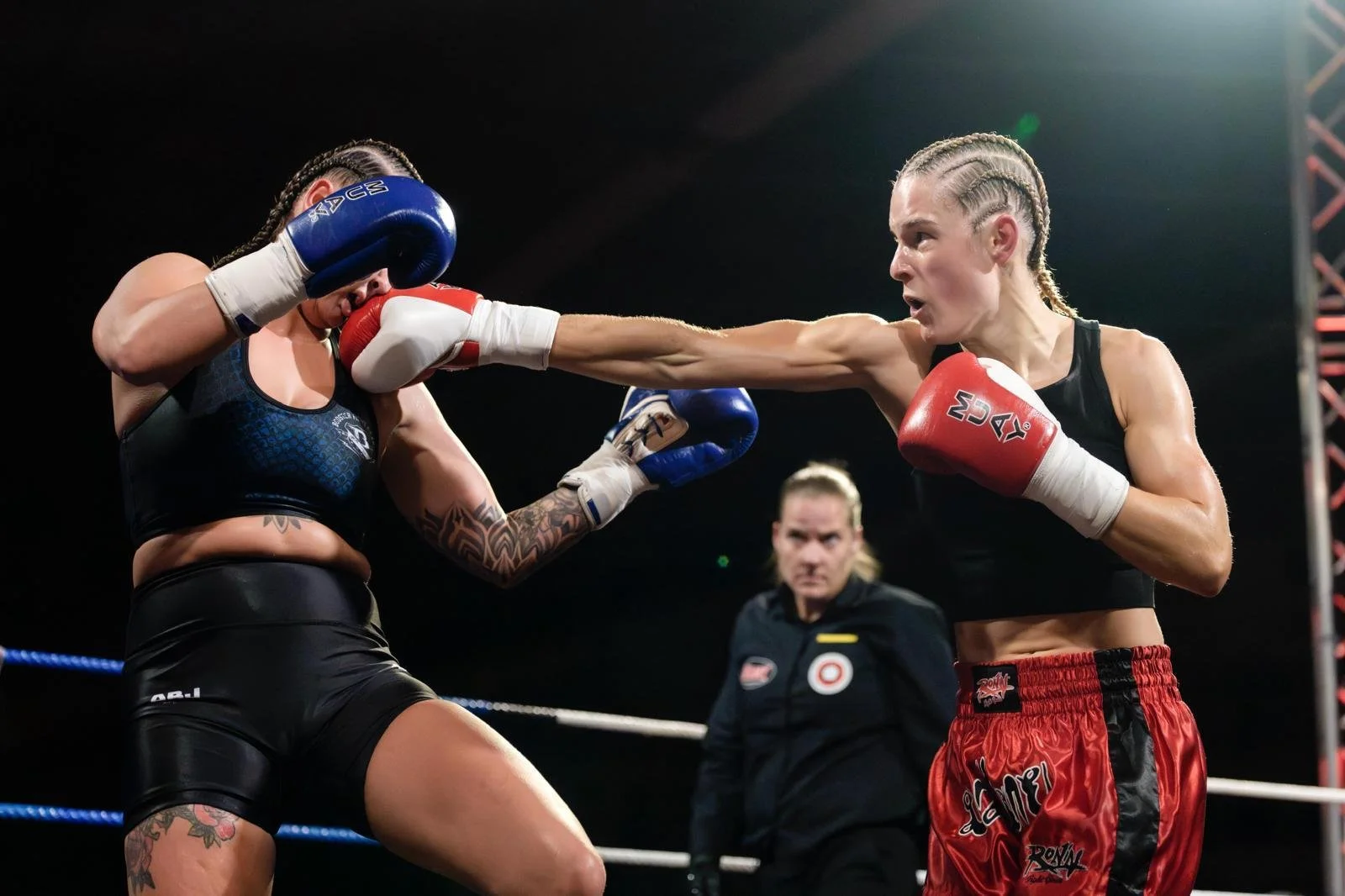
Very vividly. I was so excited.
I remember being in the changing room with another fighter who had much more experience. She was crying because she was scared. I wasn’t scared in that moment. I was eager. I had no idea what was waiting for me.
I had trained hard, and I wanted to give everything. My friend had already done a few fights, so she knew the routines and what happened beforehand. Having her there gave me good guidance.
I lost that first match. I think I had underestimated my opponent a little. But afterwards, I heard that she had experienced me as a difficult opponent—that I hadn’t gone down without a fight.
That gave me a boost. I thought: okay, I can do this.
What made you want to return after losing?
Before the first fight, you don’t really know what the experience will be. Afterwards, I knew. I knew what it felt like to be in the ring, and I knew I could do it.
It also helped that I wasn’t alone. My friend was fighting too. We were going through this together, and that really supported me.
The first fight was a way of discovering whether this was something for me. Once I had experienced it, I wanted to continue.
You speak about competing as a journey. What happens along the way that matters most to you?
Personal growth. That is the biggest thing.
Every fight gives me a little more ground in knowing myself. I discover something else I can do, something else I can get through.
There is so much preparation. You train for months, and then there is this one moment—just a few rounds—in which you have to show what you have learned.
Of course, I want it to go well. But if it doesn’t go according to plan, I still have everything I gained in the preparation. I have pushed my boundaries. I have learned about myself. I have done things that were hard for me.
Maybe I don’t get the win, but I still gain experience. That stays with me.
Are there particular moments in training when you feel that growth happening?
During difficult sparring sessions, especially when I am physically exhausted and still have to stay present.
Those moments can bring me to a point where I think I have nothing left. Then I discover that I can still do something more. Afterwards, I look back and think: wow, I got through that.
Training has shown me that I sometimes reach the limit in my mind before I reach it in my body. Finding that out has changed the way I see myself.
There have been very difficult moments, but I am still standing. That gives me confidence.
Does the mentality that helps you through those moments ever become difficult outside the gym?
Yes. I can’t just leave the gym and switch it off.
In kickboxing, there is this mentality of not showing that you are in pain. Keep going. Keep smiling. My trainer tells me to smile, even when it is hard.
I feel I have carried some of that into my life outside the gym, and it doesn’t always do me good.
Sometimes I tell myself that something doesn’t hurt me, mentally or physically, when it does. I keep acting as though I am fine. And if I do that for long enough, it becomes difficult to recognise what I am actually feeling.
I am aware of it, and I am trying to take off that fighting face. But when you have learned to hide your emotions, it is hard to suddenly show them again. To other people, but also to yourself.
What does making space for your emotions look like for you now?
I think I need to slow down first.
I would love to have an environment in which I feel safe expressing my emotions. But even if that environment is there, I need to know what I am feeling before I can express it.
I want to feel that there is space for me. Space to think, to understand what is happening inside me, and then to share it.
When I was younger, I showed my emotions more easily. If I was sad, I cried. If someone else cried, I would cry too. I was very empathetic, and I still am.
But the way I respond to my own feelings has changed. I want to be more understanding towards myself.
You mentioned a friend who helps you with that. How does she support you?
She is very in touch with her emotions, and she helps me reflect.
Sometimes I tell myself I am fine and start living as though I am fine. Then she notices something. She might say she can see that I am masking how I feel.
That makes me stop and think. Why does she see that? What is happening that I am telling myself is okay?
I think I need that sometimes; someone who knows me well enough to notice what I am moving past.
I don’t feel that I am without emotion. I am empathetic towards others, and I like that about myself. But towards myself, I can be unfair. That is what I want to work on.
How do you hold that alongside your love for the sport?
I feel those things can exist together.
Kickboxing has given me so much, and I love it. My gym, the people, the growth I have experienced there—I would never simply leave all of that behind.
At the same time, I want to learn how to let these different parts of me live together. I am already working on it.
If I can keep the strength and confidence I have gained while also being more open with my feelings, I would be very proud of myself. That would be another kind of personal growth.
We also spoke about femininity. What are you discovering about your own?
I am still trying to understand what femininity means to me and how I want to express it.
Sometimes that is through appearance, through clothing or make-up. Sometimes it is more about being in touch with my emotions.
I love my confidence. I love feeling comfortable in my own skin. I like my muscles, and I think they are beautiful.
But when I stand beside someone people might describe as very feminine, I sometimes notice how different I am, and that can make me insecure.
Then I try to remind myself that I love how I look. The way someone else expresses her femininity doesn’t take anything away from mine.
I think being strong can be very feminine. I feel feminine. I am still finding my own way in it.
As you started winning fights, more people began recognising you. What did that feel like?
At first, it was surprising.
My trainer shared news about my fights with a newspaper, and I remember coming to work afterwards and the children knowing I had won. They were so excited.
At another fighting event, a girl asked whether she could take a photograph with me. I almost felt shy. I wasn’t used to someone recognising me like that.
Then there were more articles and posts from the organisation hosting the fights. More people started knowing who I was, little by little.
It was nice, but it also brought pressure.
Where did you feel that pressure most?
In the expectation that I would keep winning.
There was a post saying I had won last time and asking whether I could do it again. I told my trainer that I felt the pressure. He reminded me that it was publicity, but I still felt it.
When people say, “You’re going to win,” they mean to encourage you. But it can also make you feel that losing isn’t allowed.
For myself, I know it is okay to lose or have a draw. I would like to hold on to that more, even when other people have expectations.
I do this for myself. I have a strong motivation that comes from within, and I want to protect it.
How do you reconnect with that motivation when it feels further away?
I watch my old fights.
I remember how I felt during them and afterwards. I remember the happiness.
That brings me back to why I love doing this.
What happens emotionally in the days before a fight?
So much. It is a roller coaster.
You are stressed, then happy that you get to do it. You start doubting yourself, then someone reminds you that you are good enough and your confidence comes back. Then you think about your opponent and wonder whether you can take her.
Sometimes I lie awake at night.
But when I arrive and I am with my team, I feel supported. I feel happy, even if I am also scared. I meditate too, which helps me turn some of that fear into motivation.
And when you see videos of me walking into the ring, I have this enormous smile. I am just happy to be there.
Can you describe what being in the ring feels like?
It can feel as though something takes over.
We practise combinations and responses in training. If this happens, you do that. You have a plan.
But I remember one fight where our plan was to hit and move away, and I ended up fighting at a much higher pace. Afterwards, my trainer asked about it, and I said that it hadn’t been the plan—it was what happened in the moment.
For me, there is a fight-or-flight response that gets activated. It feels very instinctive. The experience is so intense, and then suddenly it is over.
What do you wish people understood about the sport?
How technical it is.
I don’t go into the ring thinking about anger I want to release. There are tactics, combinations, counters, footwork. You are thinking about when to act and how to respond.
There is so much happening between two people who have trained for that moment.
And when the fight is over—what stays with you?
Happiness. Relief.
You go back to the changing room, take off your gloves, and sometimes cry a little because so much is coming out at once.
Then you return to the audience, and there are people waiting for you. I have such amazing support.
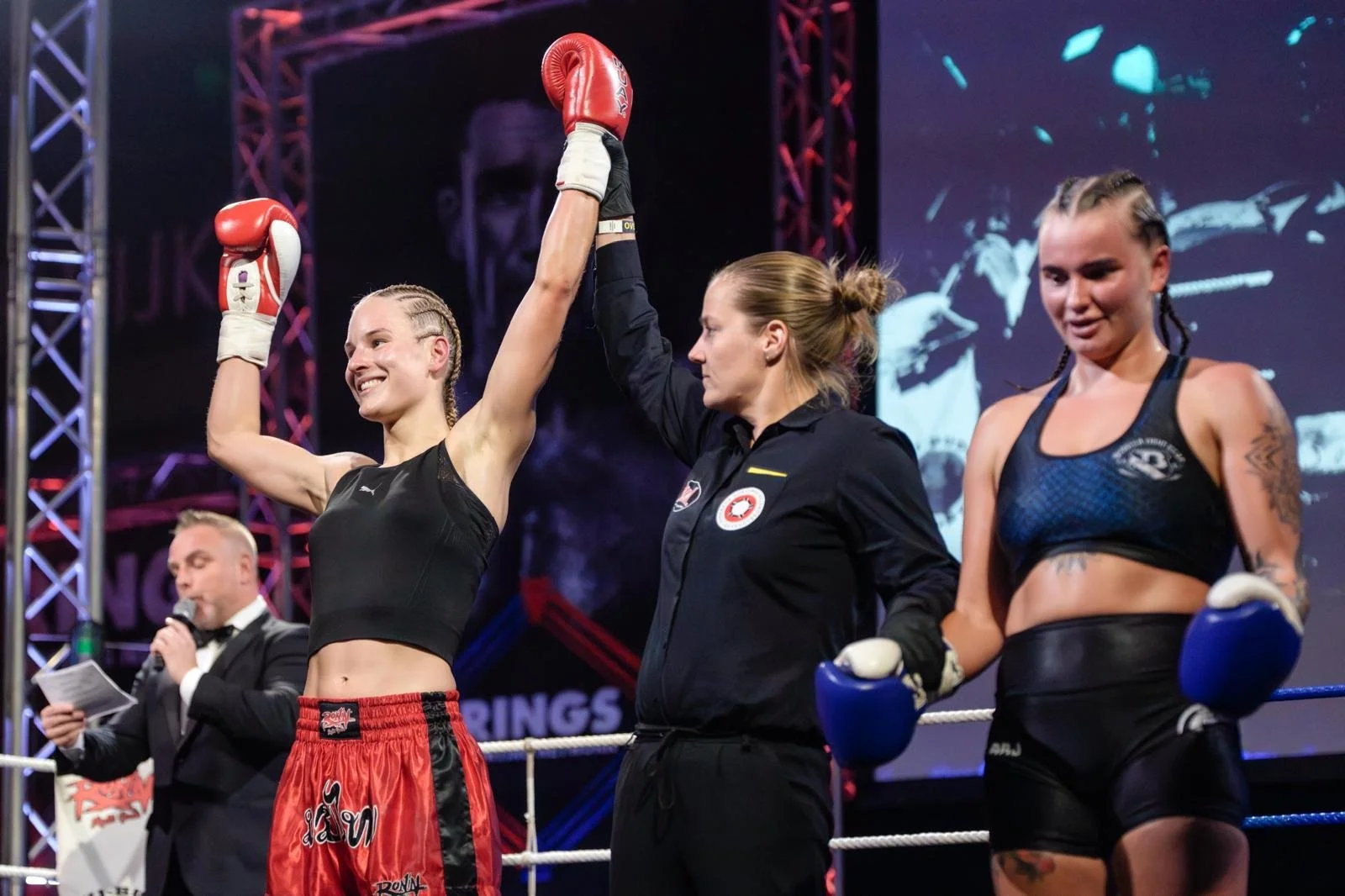
When you are standing beside your opponent and the referee is holding both your hands, there is still that moment of waiting to hear who won. But my supporters are already cheering.
They don’t wait for the result. They are happy for me either way.
That is such a good feeling.
How do you celebrate afterwards?
With good food. A lot of good food.
My brother and I have a tradition of making tiramisu. We eat it after every fight.
Sometimes we get home at midnight or one in the morning, and we sit there eating tiramisu and watching the videos. I am usually still so awake. I can’t sleep straight away.
The next day, we have a family day. We go for a walk or go out for dinner. We calm down together.
I really love that.
What does strength mean to you now?
Being able to come back after a setback.
Having a bad training session doesn’t mean I am bad at the sport. It means something didn’t go my way that day.
I can come back to the gym the next time and try again. When you thought you couldn’t do any more, and then you return and show yourself that you can—that is strength to me.
What would you tell the younger version of yourself who first walked into that class?
You are capable of much more than you think.
I still tell myself that now.
And what would you tell another woman who is curious about kickboxing?
I hope she doesn’t let the image of the sport scare her away.
I do this sport, and I feel feminine. I might be figuring out parts of that, but kickboxing doesn’t belong only to men. Women, men, everyone in between can do it.
If you enjoy it, do it.
And that goes for anything. If you really like doing something, don’t let anyone or anything hold you back.
When do you feel most like yourself?
The first thing that comes to mind is my sport. Which is interesting, because it also brings out a particular part of me.
I feel so happy right after training, when I am with the girls. We have given everything, and then we sit together. We are tired, happy, and sharing that same feeling.
I love those moments.
I also feel most like myself when I am surrounded by family. Especially the day after a fight, when there is such relief and we can just be together.
What does “Women in Motion” mean to you?
I think of it in two ways.
First, women moving the assumptions around this sport. There is still a masculine image attached to kickboxing, and women are changing that by being part of it. We are moving something forward. I would love to contribute to that.
And then I think about movement itself, and how much good it can do.
You don’t have to be in a ring. You can go for a walk, alone or with friends. You can find something you enjoy.
I really wish everyone had the opportunity to practise a sport regularly. To experience what movement can give them.
